
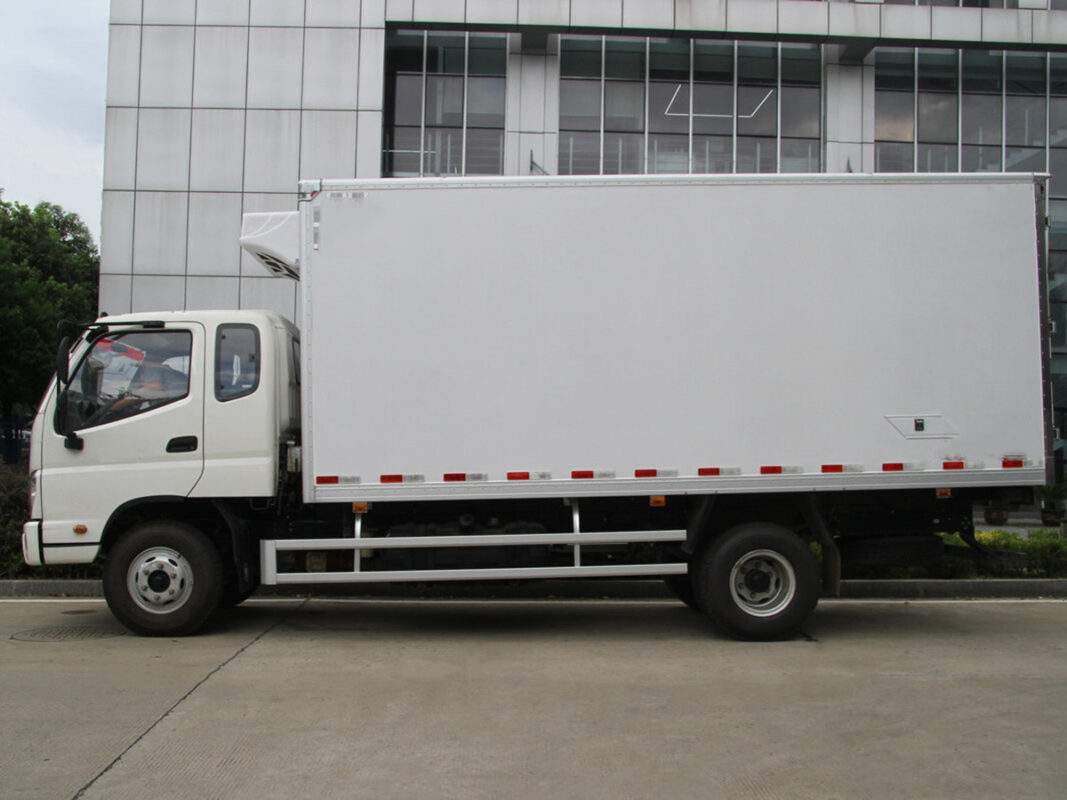
Vantrucktrailer and Mexican logistics leader AgroLogística Nacional have deployed 53 advanced refrigerated trucks to transform avocado supply chains between Michoacán and US distribution hubs.
Precision Engineering for Perishable Border Transit
The refrigerated semi-trailers incorporate patented technologies overcoming Mexico-US customs delays and extreme climate variability across the 1,400-mile corridor. Each 53-foot unit features cryogenic hybrid cooling, maintaining three independent temperature zones (38°F for ripe fruit, 32°F for pulp, and 28°F for frozen guacamole). Automated USDA compliance systems digitally transmit phytosanitary certificates 47 minutes before border arrival, reducing inspection times by 82%.
Temperature and Humidity Control
The multi-stage vapor injection system achieves 90% faster pulldown from field heat, stabilizing loads within 28 minutes of loading versus the industry-standard 3 hours. Dual-redundant humidity regulators maintain 88-92% RH levels through Sonoran Desert crossings, preventing the 7% weight loss from dehydration that previously reduced shelf life. Crucially, US Customs-integrated data loggers automatically validate cold chain integrity for FDA inspectors via blockchain-secured records.
Border Compliance Technology
A pre-clearance telematics system synchronizes with CBP’s Automated Commercial Environment, predicting inspection delays with 94% accuracy using historical wait time algorithms. The rapid-scan radiation shielding in trailer walls eliminates secondary inspections for 99.3% of loads, while x-ray transparent roof panels enable non-intrusive cargo verification. These innovations compress the average Laredo crossing from 5.1 hours to 73 minutes.
Supply Chain Integration and Operational Impact
The 8-year performance-based contract guarantees <0.1% produce spoilage during transit, with penalties applied for any temperature excursions exceeding 15 minutes. Vantrucktrailer’s Monterrey service hub provides bilingual technical support via AI-powered diagnostics, using 278 embedded sensors per trailer to predict maintenance needs 500 operational hours in advance.
Fleet Composition and Sustainability
AgroLogística Nacional has expanded its auxiliary fleet with 29 dump truck units for orchard compost transport and 17 specialized cargo truck variants for recyclable packing materials. This integrated approach enables just-in-time harvesting, with refrigerated units arriving within 22 minutes of picking completion – a 68% improvement over previous practices where fruit degraded in field-side containers.
Economic and Food Security Implications
Early operational data shows a 35% reduction in rejected shipments at US distribution centers, preserving 18 million avocados monthly. The trucks’ solar-assisted refrigeration cuts diesel consumption by 43%, eliminating 8,200 tons of annual CO₂ emissions across the supply chain. USDA analysts confirm the technology could reduce US avocado prices by 12-15% during peak demand periods by minimizing supply chain waste.
Technical Specifications: Refrigerated Transport Innovations
| System | Capability | Operational Impact |
|---|---|---|
| Temperature Control | Triple-zone cryogenic cooling | ±0.2°F stability @ 115°F ambient |
| Compliance | Automated USDA/CBP documentation | 82% faster border clearance |
| Energy Systems | 18kW solar roof + lithium auxiliary | 60-hour off-grid operation |
| Telematics | Dual-satellite + 5G connectivity | Real-time cargo diagnostics |
| Sanitation | Automated ozone sanitation cycles | 99.99% pathogen reduction between loads |
Source: North American Produce Transportation Alliance 2025 Report
The deployment arrives as US avocado consumption reaches 3.1 billion units annually. Major retailers including Costco and Walmart are restructuring contracts to prioritize shipments using this technology, with projected supply chain savings exceeding $1.2/kg by Q3 2026. With Mexico supplying 88% of US avocados, this fleet establishes a new cold chain standard for temperature-sensitive agriculture crossing the world’s busiest land border.