
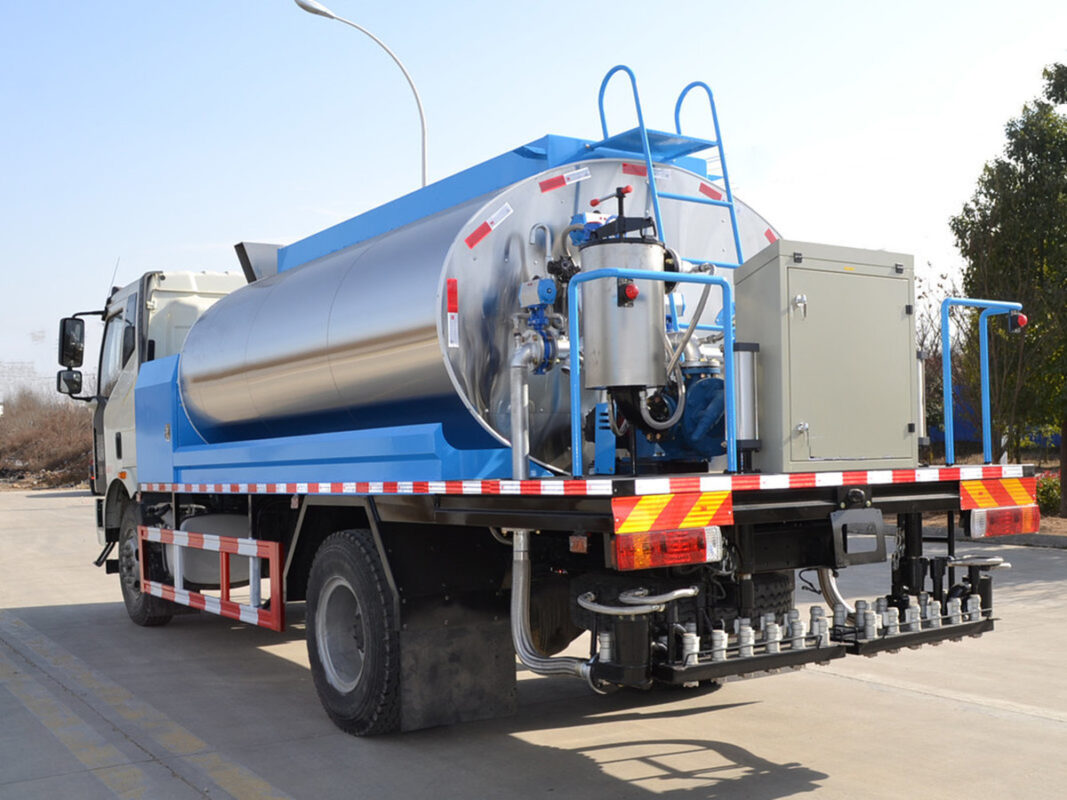
Maintaining optimal asphalt temperature between 135°C and 163°C isn’t merely an operational preference – it’s the fundamental determinant of pavement density, durability, and service life. When hot-mix asphalt (HMA) drops below 120°C, viscosity increases exponentially, preventing adequate compaction and creating air voids that accelerate cracking under freeze-thaw cycles. Conversely, temperatures exceeding 177°C cause premature binder aging, reducing flexibility and causing raveling. The 30-second workability window at the paver screed demands unprecedented thermal precision, with every 10°C temperature drop reducing compaction density by 1% – translating to 40% shorter pavement lifespan according to FHWA studies. Modern thermal management systems address this through integrated engineering solutions that combat heat transfer physics throughout the delivery cycle.
Advanced Insulation Engineering
Modern asphalt transporters deploy multi-layered insulation systems that reduce heat loss to under 0.5°C per hour:
Composite Material Science
- Ceramic microsphere-infused polyurethane foam creates cellular barriers with thermal conductivity values below 0.022 W/mK
- Double-wall stainless steel construction with 100mm vacuum-sealed interstitial spaces prevents conductive heat transfer
- Automated inflation systems maintain optimal foam expansion during transit to eliminate settling gaps
Geometric Optimization
KOLD-HOLD’s patented conical tank design reduces surface-to-volume ratio by 18% compared to cylindrical tanks, while internal wave-form baffles increase heat retention surface area without impeding material flow. These innovations enable certified 3-hour heat retention – critical for large-scale infrastructure projects with remote batch plants.
Active Heating System Architectures
Beyond passive insulation, precision heating systems maintain thermal uniformity:
Burner-Free Thermal Solutions
- Thermal oil circulation systems pump 260°C heated fluid through welded tank jackets at 500 L/min flow rates
- Inductive heating elements embedded in discharge gates maintain 155°C zones even during extended pauses
- Phase-change material (PCM) matrices absorb/release latent heat during loading/unloading cycles
Intelligent Control Integration
Roadtec’s SHAFT system employs infrared temperature mapping with 32 sensors per tank quadrant, dynamically adjusting heat output through PID controllers. This prevents localized hot spots that degrade asphalt binders while eliminating cold zones that cause material bridging. The system’s predictive thermal algorithms factor in ambient temperatures, wind speed, and transit duration to pre-condition loads before departure.
Operational Protocols for Thermal Preservation
Material handling procedures significantly impact thermal consistency:
Loading Phase Strategies
- Segregated compartment loading places coarse aggregates at tank peripheries to create thermal mass buffers
- Layered temperature sequencing loads higher-temperature mixes first to create thermal reservoirs
- Anti-stick nanocoatings on internal surfaces prevent material adhesion that creates insulation gaps
Transit Efficiency Tactics
- Geofenced pre-heating activation triggers supplemental heating when trucks enter 10km project zones
- Aerodynamic tank shrouds reduce convective cooling by 65% at highway speeds
- Circular discharge patterns maintain material homogeneity without agitation-induced heat loss
European contractors using these protocols report consistent 145-155°C discharge temperatures even after 200km hauls and 4-hour transit cycles.
Real-Time Thermal Monitoring Ecosystems
Continuous temperature intelligence prevents quality deviations:
- Fiber-optic distributed temperature sensing (DTS) creates 3D thermal maps with ±0.5°C accuracy
- Wireless thermal probes embedded in asphalt transmit core temperatures via LoRaWAN networks
- Automated discharge abort systems halt material flow when gate sensors detect <135°C material
Volvo’s Connected Temperature solution exemplifies this integration, streaming thermal data to both paver operators and QC managers while automatically generating asphalt temperature compliance certificates for DOT documentation.
Material Formulation Synergies
Chemical innovations extend the thermal workability window:
- Warm-mix asphalt (WMA) additives like organic waxes and chemical surfactants reduce mixing temperatures by 28°C
- Polymer-modified binders (PMB) maintain viscosity stability across wider temperature ranges
- Rejuvenating agents counteract thermal aging during extended transport
These formulations synergize with thermal management hardware, allowing Northeast US contractors to achieve specification densities at 123°C ambient temperatures where conventional mixes require ≥142°C.
Cross-Industry Thermal Management Applications
The thermal precision developed for asphalt transport now benefits broader industries:
- Dump truck operations utilize ceramic-insulated beds for hot industrial byproducts like steel slag and power plant gypsum
- Cargo truck fleets leverage phase-change material technology to maintain pharmaceutical payloads within ±1°C ranges
- Vantrucktrailer combinations employ predictive thermal algorithms to optimize refrigeration unit cycling during multi-stop deliveries
The Nebraska DOT’s recent Interstate 80 rehabilitation demonstrated this technological confluence, achieving 98.2% density specifications using infrared thermal monitoring, aerodynamically optimized transports, and WMA chemistry – proving that thermal management mastery directly translates to infrastructure longevity and taxpayer value.