1. The Arterial Network of Modern Commerce
The unassuming cargo truck—a technological symphony masquerading as a steel box on wheels—forms the central nervous system of 21st-century economies, carrying 72% of all U.S. freight tonnage despite representing just 4% of transportation vehicles. Unlike rail or maritime shipping, its unique capability for point-to-point precision delivery enables unprecedented supply chain responsiveness, compressing replenishment cycles from weeks to hours while reducing inventory carrying costs by an average of 37% across manufacturing sectors. The transformation began with standardized trailer dimensions but accelerated through digital integration: today’s telematics-equipped fleets generate 4.7 terabytes of operational data daily per million trucks, feeding AI systems that optimize routes in real-time around weather disruptions, traffic congestion, and even geopolitical border delays. FedEx’s recent implementation of autonomous platooning corridors between Dallas and Atlanta demonstrates the scale of efficiency gains—14% fuel reduction and 22% higher lane utilization achieved through millimeter-wave communication between trailers separated by just 1.8 seconds of following distance at 65 mph.
2. The Standardization Revolution
Containerization’s Ground Evolution
While maritime shipping pioneered container standardization, trucking perfected its execution through intermodal chassis designs allowing seamless transfers between ships, trains, and trucks without rehandling goods. J.B. Hunt’s dual-mode container fleet slashes drayage costs by 41% through patented twistlock-free coupling systems that cut transfer times to 78 seconds per unit. Crucially, ISO-certified corner castings and cross-bolted frames withstand 9G vertical impact forces during rail transfers while maintaining perfect alignment for truck mounting.
Palletization Ecosystem Integration
The true efficiency emerges in pallet-handling automation: Walmart’s robotic trailer unloaders identify and extract mixed SKU pallets in 3.2 minutes using LiDAR volumetric mapping synchronized with warehouse management systems. These systems leverage machine-readable pallet tags containing not just contents but compression sensitivity data and stacking height limits, enabling AI to optimize trailer loading sequences that reduce in-transit damage by 68%.
Global Dimension Harmonization
Europe’s adoption of 13.6-meter megatrailers and North America’s 53-foot dominance created fragmentation until adaptive air suspension allowed fleets like DHL to deploy variable-length trailers expanding from 48 to 53 feet at distribution hubs. This flexibility increased payload volumes by 19% without violating regional length regulations—a $3.2 billion annual savings across continental logistics networks.
3. Technological Transformation
Predictive Logistics Networks
UPS’s ORION (On-Road Integrated Optimization and Navigation) system processes 1,000 data points per second from 120,000 vehicles, incorporating historical delivery patterns, real-time traffic, weather radar, and even local event schedules to dynamically reroute fleets. Its machine learning core now forecasts parking space availability at urban delivery points with 94% accuracy, reducing idling time by 28 minutes per driver daily.
Autonomous Convoy Operations
TuSimple’s Level 4 autonomous freight corridors between Phoenix and Tucson demonstrate the safety revolution: multi-spectral sensor arrays combining thermal imaging, 360° LiDAR, and radar detect obstacles at 1,000 meters—eight times beyond human capability. Their platooning algorithms maintain 65 mph speeds with just 0.8-second reaction times, increasing highway throughput by 40% during peak congestion.
Blockchain-Enabled Transparency
Maersk’s TradeLens platform creates immutable supply chain ledgers where cargo conditions—from temperature to shock events—are recorded every 0.8 seconds via IoT sensors. Pharmaceutical clients like Pfizer trace shipment integrity in real-time, with smart contracts automatically triggering investigations if humidity exceeds 2% thresholds during transit.
4. Specialized Capability Expansion
Cold Chain Integrity Systems
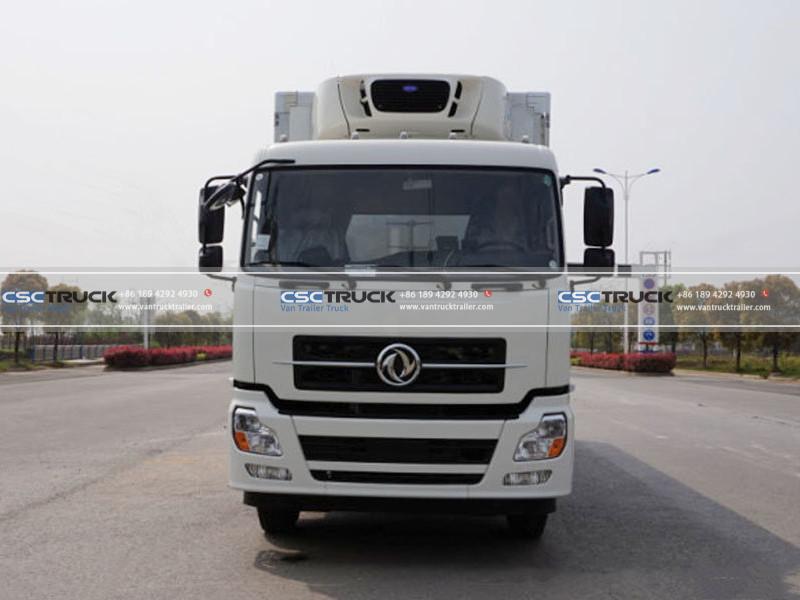
The modern refrigerator truck functions as a climate-controlled micro-warehouse with capabilities unthinkable a decade ago. Lineage Logistics’ cryogenic trailers maintain -40°F temperatures for vaccine transport using liquid nitrogen injection, while their multi-zone compartments simultaneously preserve seafood at 28°F and tropical fruit at 55°F within the same unit. Advanced phase-change material panels absorb thermal spikes during door openings, maintaining temperature stability for 6 hours without power—a critical failsafe during port delays.
Dangerous Goods Management
Chevron’s hazardous material fleet employs vapor concentration sensors, emergency isolation valves, and e-static discharge systems meeting ATEX Zone 0 standards. Their telematics-integrated safety platform automatically reroutes trucks away from populated areas if impact sensors detect potential tank breaches, while coordinating with municipal emergency responders.
Oversized Load Robotics
Sarens’ self-configuring heavy transport trailers feature hydraulic axle steering that enables 90-degree “crab walking” through construction sites. When moving 400-ton turbine generators, laser-guided alignment systems automatically adjust tire pressures across 96 wheels to distribute weight within 2% variance—eliminating road damage and permit violations.
5. Sustainability & Economic Impact
Decarbonization Pathways
Tesla Semi’s 1,000-volt architecture achieves 1.7 kWh/mile efficiency—70% lower than diesel equivalents—while Daimler’s hydrogen fuel cell trucks now offer 1,000-mile ranges with 20-minute refueling. Crucially, regenerative braking systems recover 38% of kinetic energy during mountain descents, feeding power back into traction motors or auxiliary systems. The electric refrigeration units on modern cold chain trailers reduce emissions by 12 tons annually per unit versus diesel-powered alternatives.
Micro-Economy Activation
In rural India, Mahindra’s last-mile cargo trikes have created hyper-local distribution ecosystems where farmers deliver produce directly to village markets within 4 hours of harvest. These 3-wheel electric vehicles carrying 1-ton payloads on 15kWh batteries increased farmer incomes by 63% while reducing spoilage from 40% to just 8% for perishable goods.
Resilience Engineering
During the 2024 Panama Canal drought, Walmart’s predictive inventory redistribution used cargo truck flexibility to reroute 19,000 containers through Mexican ports. Their cross-dock synchronization algorithms maintained store shelf availability at 99.3% despite 14-day transit delays, demonstrating how trucking agility mitigates global supply chain fragility.
6. The Synchronized Logistics Organism
The ultimate revolution lies not in individual trucks but in their orchestration within integrated networks. A refrigerator truck transporting Pfizer’s vaccines now functions as a mobile data center, its edge computing module processing real-time stability metrics while coordinating with nearby cargo trucks carrying backup refrigeration units and dry ice reserves. These support vehicles deploy as modular power stations during emergencies, their hydrogen fuel cells supplying emergency cooling when primary systems falter.
Consider the Port of Rotterdam’s digital twin integration: arriving container ships trigger automated cargo truck dispatches before docking, with trailers precisely timed to meet cranes. As containers lower onto chassis, their embedded IoT sensors instantly verify temperature history and structural integrity while blockchain bills of lading self-authenticate. During transit, platooned trucks traveling the A15 highway feed traffic data to municipal systems that dynamically adjust traffic light sequences, creating uninterrupted “green waves” that reduce idling emissions by 41%. The cargo truck itself evolves beyond transport—equipped with onboard 3D printers, it fabricates replacement parts for delivery vehicles at remote sites; with robotic unloaders, it transforms into temporary warehousing where drones retrieve urgent medical supplies directly from moving trailers. This continuous data exchange between vehicles, infrastructure, and control centers creates a self-optimizing logistics nervous system that anticipates disruptions before they cascade—proving that the true revolution lies not in moving freight faster, but in transforming physical motion into predictive intelligence that reshapes global commerce from the ground up.