The transportation of livestock represents a critical yet often misunderstood nexus between agricultural logistics and ethical responsibility. Each year, billions of animals traverse highways en route to pastures, markets, processing facilities, or breeding operations, their well-being intrinsically linked to the design, operation, and regulation of the trailers that carry them. Ensuring animal welfare during these journeys is not merely an ethical imperative; it is a complex scientific and operational challenge demanding continuous innovation. Modern livestock trailers are far more than simple metal boxes on wheels; they are sophisticated, purpose-built environments engineered to mitigate stress, prevent injury, provide essential sustenance, and safeguard health throughout transit. This commitment to welfare stems from a growing societal expectation, stringent regulations, and the practical understanding that calmer, healthier animals arrive in better condition, translating to both ethical and economic benefits across the supply chain. The evolution from rudimentary hauling to today’s technologically advanced systems reflects a profound shift towards recognizing the sentient needs of animals in motion.
The Paramount Importance of Animal Welfare in Transit
Transportation is widely acknowledged as one of the most potentially stressful events in a production animal’s life. The convergence of unfamiliar environments, confinement, noise, vibration, social mixing or separation, temperature fluctuations, and motion can significantly impact an animal’s physiological and psychological state. Compromised animal welfare manifests through injuries (bruises, lacerations, fractures), metabolic stress (increased cortisol, dehydration, exhaustion), suppressed immune function, and in severe cases, mortality. These outcomes represent not only an ethical failing but also substantial economic losses due to carcass downgrades, condemnations, reduced meat quality (e.g., Dark, Firm, Dry – DFD pork or Dark Cutting Beef), and increased susceptibility to disease. Consequently, the design and operation of livestock trailers are foundational pillars in mitigating these risks, ensuring animals arrive at their destination in a state that reflects both humane treatment and optimal production value. The industry’s focus has shifted decisively towards minimizing the duration and intensity of stressors inherent in transport.
Regulatory Frameworks and Industry Standards: Setting the Baseline
A robust foundation for animal welfare during transport is established through a combination of national legislation, international guidelines, and industry-led certification programs. Key frameworks include:
- The World Organisation for Animal Health (WOAH) Terrestrial Code: Provides internationally recognized standards covering fitness for transport, journey times, stocking densities, handling procedures, and vehicle requirements.
- National Legislation (e.g., US 28-Hour Law, EU Regulation EC 1/2005): Enforce specific requirements on maximum journey durations, mandatory rest/feed/water periods, driver training, and trailer specifications like ventilation and floor quality. Non-compliance carries significant legal and financial penalties.
- Industry Certification Programs (e.g., PQA Plus, BQA, FAI Farms): Often exceed regulatory minimums, incorporating specific trailer design and operation standards into comprehensive animal care audits, driven by retailer and consumer demand for higher welfare products.
These frameworks mandate critical aspects of trailer functionality, driving continuous improvement in design and operational protocols to meet and exceed baseline animal welfare expectations. Compliance is the absolute minimum standard; leading operators view these regulations as a starting point for excellence.
Trailer Design Fundamentals: Engineering for Comfort and Safety
The physical structure of a modern livestock trailer is meticulously engineered to address the core stressors of transport:
- Robust Construction and Flooring: Floors utilize high-tensile steel, durable composites, or specialized rubber matting over metal grating, providing secure footing, reducing slippage, and minimizing leg injuries. Non-slip surfaces are crucial, especially during acceleration, braking, and cornering. Floors must also be designed to handle significant weight and resist corrosion from waste.
- Optimized Internal Layout: Strategic placement of partitions, gates, and pens creates manageable group sizes, prevents dangerous crowding or piling, minimizes aggression in mixed groups, and facilitates easier loading/unloading. Curved inner walls and rounded edges eliminate sharp corners that could cause injury. Dedicated spaces for vulnerable animals (e.g., calves, sick/injured stock) are increasingly common.
- Effective Manure Management: Slatted floors allow urine and feces to fall through into dedicated collection pans or onto the road surface, keeping animals cleaner and drier. This reduces ammonia buildup, skin conditions, and slippage hazards. Some advanced designs incorporate waste storage tanks for biosecurity and environmental compliance.
Climate Control and Ventilation: Mastering the Microclimate
Maintaining a suitable thermal environment is arguably the most critical and challenging aspect of livestock transport. Inadequate ventilation leads to rapid heat and humidity buildup, suffocation, and stress, while excessive drafts cause chilling. Modern systems are highly sophisticated:
- Passive Ventilation Systems: Strategically placed side vents (often adjustable), roof vents (cupolas), and open sides (with protective baffles or mesh) utilize natural airflow generated by the vehicle’s movement (“ram air” effect) to exchange air. Proper design ensures airflow reaches all animals evenly without creating localized drafts.
- Active Ventilation Systems (Mechanical): Essential for stationary periods (loading, unloading, rest stops, traffic jams) and extreme climates. Roof-mounted powered fans, sometimes thermostatically controlled, actively draw fresh air in and expel hot, humid, ammonia-laden air. These systems are vital for preventing heat stress in cattle and pigs during summer months.
- Temperature Monitoring and Alarms: Increasingly, trailers are equipped with sensors that monitor internal temperature and humidity, alerting the driver via in-cab displays or telematics systems to take corrective action (e.g., opening vents, activating fans, seeking shade, moving) before conditions become critical. Some systems even offer zone-specific monitoring within large trailers.
Minimizing Stress and Injury: Beyond Basic Design
Engineering solutions extend to features specifically targeting behavioral needs and physical safety:
- Loading and Unloading Systems: Well-designed ramps with non-slip surfaces, appropriate slopes (ideally < 20 degrees), solid sides to prevent animals seeing drop-offs, and good lighting significantly reduce balking, falls, and injuries during the critical loading/unloading phases. Hydraulic or mechanical liftgates are common for smaller animals or fragile stock.
- Space Allowance (Stocking Density): Adhering to scientifically validated and legally mandated space allowances is paramount. Overcrowding is a major welfare infringements, leading to increased stress, injuries from trampling or crushing, heat stress, and exhaustion. Conversely, under-stocking can cause instability and falls during transit. Density must be adjusted for species, size, breed, weather, and journey duration. Modern trailers often have clear markings to guide loaders.
- Suspension and Ride Quality: Air-ride or specialized cushion suspensions significantly dampen road vibrations and shocks, providing a smoother ride that reduces fatigue, stress, and potential injuries like bruising or lameness. This is particularly important on long journeys or rough roads.
Biosecurity and Health Management: Protecting the Herd
Livestock trailers can be vectors for disease transmission. Robust biosecurity protocols integrated into trailer design and operation are essential:
- Cleaning, Disinfection, and Drying (CD&D): Trailers must be designed for easy, thorough cleaning. This includes smooth, non-porous surfaces, removable partitions, accessible corners, and effective drainage. High-pressure wash systems and approved disinfectants are used between loads, followed by complete drying, to kill pathogens like viruses, bacteria, and parasites. Dedicated wash bays are standard at many facilities.
- Dedicated Trailers or Compartmentalization: For high-health status herds (e.g., breeding stock, disease-free zones), using trailers dedicated to specific farms or implementing internal compartments with separate ventilation can prevent cross-contamination between groups.
- Pest Control: Sealing potential entry points and maintaining rigorous cleanliness helps prevent infestations of flies, rodents, or birds that can spread disease.
The Human Factor: Training and Operational Protocols
Even the most advanced trailer is only as good as the people operating it. Driver training and adherence to strict protocols are fundamental:
- Comprehensive Driver Certification: Drivers require specialized training in animal behavior, handling techniques (low-stress handling principles), species-specific needs, recognizing signs of distress or illness, emergency procedures, biosecurity, and trailer operation (especially ventilation systems). Programs like BQA Transportation certification are vital.
- Pre-Journey Planning and Checks: Meticulous planning includes route selection (avoiding extreme weather, minimizing stops), checking weather forecasts, ensuring adequate rest periods are feasible, verifying fitness of animals, and conducting thorough pre-trip inspections of the trailer (tires, brakes, lights, flooring, gates, ventilation systems, water supply).
- Vigilant Monitoring During Transit: Drivers must actively monitor animals during stops (without entering the trailer while moving), observe behavior through inspection ports or cameras, respond promptly to environmental changes, ensure ventilation is functioning correctly, and provide necessary water/feed during extended stops as per regulations.
Choosing the Right Equipment: Matching Trailer to Task
Selecting the appropriate livestock trailer configuration is crucial for optimizing animal welfare and operational efficiency:
- Species-Specific Designs: Trailers are tailored: Cattle trailers feature robust vertical dividers; Hog trailers have lower decks and specialized ventilation; Poultry transport modules maximize bird density with integrated climate control; Horse trailers prioritize individual stalls and smooth rides.
- Scale and Operation: Vehicle choice depends on herd size and transport distance:
- Small Operations/Short Hauls: Adapted cargo trucks (e.g., 3/4 or 1-ton pickups) with gooseneck or bumper-pull livestock trailers offer flexibility for small groups of animals like horses, sheep, or goats.
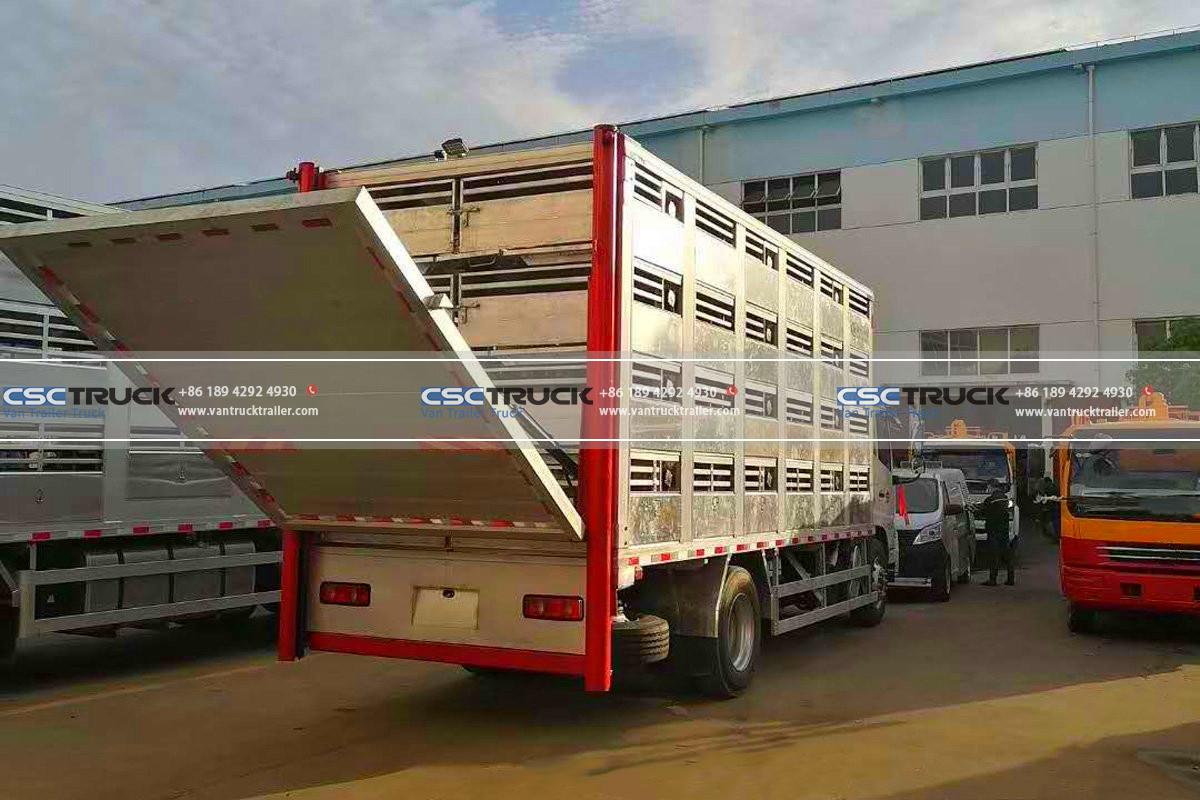
- Mid-Sized Operations/Regional Transport: Dedicated livestock dry van truck bodies mounted on straight truck chassis provide greater capacity and integrated features for hauling larger groups of cattle, pigs, or multiple horses over moderate distances.
- Large-Scale Commercial Transport: Multi-level semi-trailers remain the standard for efficiently moving high volumes of livestock (cattle, pigs, sheep) over long distances, incorporating the most advanced ventilation, flooring, and monitoring systems. For specialized tasks demanding both substantial capacity and maneuverability, particularly in urban or multi-farm collection scenarios, a well-equipped Vantrucktrailer configuration – combining the payload capacity of a trailer with the agility often associated with a large truck – can be an optimal solution, seamlessly integrating advanced welfare features into a versatile platform suitable for diverse livestock transport needs within complex logistical networks.
The journey towards optimal animal welfare in transit is continuous, driven by scientific research, technological innovation, evolving regulations, and heightened consumer awareness. The modern livestock trailer stands as a testament to this progress, transforming what was once a purely functional necessity into a sophisticated system designed with the physiological and behavioral needs of its living cargo at its core. By prioritizing animal welfare through intelligent design, rigorous protocols, and skilled operation, the livestock transportation industry fulfills its ethical obligations while simultaneously enhancing the sustainability, efficiency, and quality of the global food and fiber supply chain.