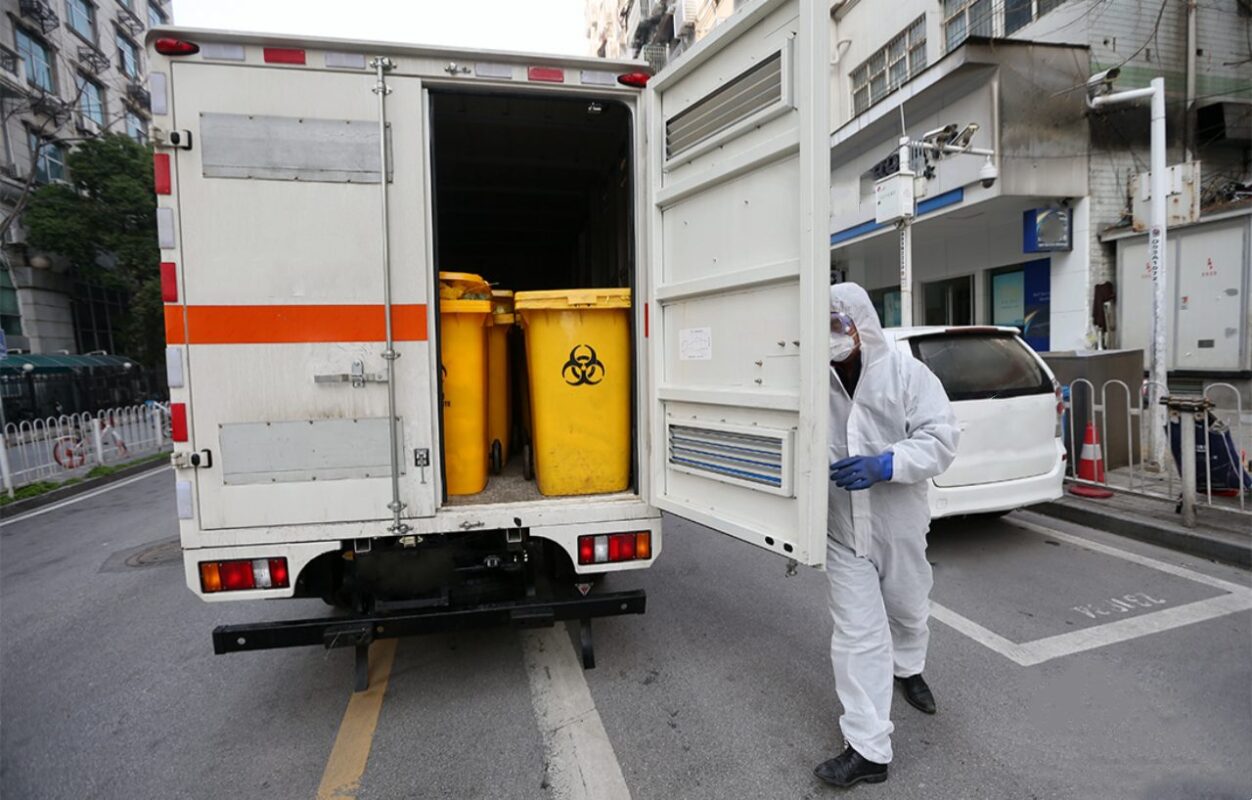
While the sight of a dedicated medical waste truck might prompt a passing thought about biohazards and careful handling, few consider the sophisticated, multi-layered decontamination processes actively safeguarding public health within its cargo hold during transit. This isn’t mere transportation; it’s a meticulously engineered mobile containment and treatment system. The journey from hospital loading dock to final treatment facility isn’t just about logistics; it’s a continuous battle against pathogens, demanding robust sterilization strategies integrated directly into the transport phase. Understanding how these specialized trucks neutralize threats en route reveals a complex interplay of technology, stringent protocols, and engineering excellence essential for modern healthcare infrastructure.
The Stakes: Why Onboard Sterilization is Non-Negotiable
Medical waste – encompassing sharps (needles, scalpels), cultures and stocks, pathological waste, blood-soaked materials, and contaminated personal protective equipment – represents a concentrated reservoir of potentially lethal pathogens, including bacteria (like multi-drug resistant strains), viruses (HIV, Hepatitis B/C, emerging threats), and even prions. Traditional “collect-and-haul” models, where waste is simply transported in sealed containers for treatment elsewhere, carry inherent risks:
- Accident or Breach Contamination: A traffic accident compromising containers, or inadvertent leakage during loading/unloading, could expose the public, responders, and the environment to dangerous biohazards.
- Delayed Neutralization: Pathogens remain viable and potentially multiplying during potentially lengthy transit times, especially over long distances or in traffic delays.
- Secondary Handling Hazards: Personnel at transfer stations or final treatment facilities face significant exposure risks when moving untreated waste.
- Regulatory Evolution: Increasingly stringent global (WHO, Basel Convention) and national (EPA, DOT, CDC) regulations demand demonstrably safer transport practices, moving beyond passive containment towards active risk reduction.
Onboard sterilization, therefore, transforms the transport vehicle from a passive carrier into an active mobile treatment unit, mitigating these risks by neutralizing the biological threat before the waste reaches its final destination or in contingency situations.
Core Sterilization Technologies: Neutralizing Threats on the Move
Medical waste trucks employ several advanced technologies to achieve effective sterilization during transport, each with distinct mechanisms and applications:
- Steam Sterilization (Autoclaving) Integrated Systems:
- Mechanism: High-pressure saturated steam (typically 121-135°C / 250-275°F) penetrates waste loads, denaturing proteins and disrupting essential cellular components of microorganisms through moist heat sterilization. Effective against virtually all vegetative bacteria, viruses, fungi, and spores when correct parameters (temperature, pressure, time) are meticulously maintained.
- Onboard Implementation: Trucks feature a sealed, pressurized sterilization chamber integrated into the cargo body, distinct from the driver’s cab. Waste is loaded into this chamber in specialized, steam-permeable containers. A compact, high-efficiency boiler generates steam onboard, often using diesel fuel or a dedicated power source. Sophisticated sensors and programmable logic controllers (PLCs) constantly monitor and adjust temperature, pressure, and cycle duration according to pre-validated protocols.
- Advantages: Proven, reliable technology; well-understood lethality; no toxic chemical residues; effective on a wide range of waste types (excluding certain chemicals or pressurized containers); validated biological indicators (spore tests) confirm efficacy.
- Challenges Onboard: Significant energy requirements; water supply needs; longer cycle times than some other methods; requires robust pressure vessel engineering; not suitable for large bulk loads or very low-density waste (like plastic syringes without fluid).
- Microwave Disinfection Technology:
- Mechanism: High-frequency electromagnetic waves (microwaves at 915 MHz or 2450 MHz) agitate water molecules within the waste, generating intense frictional heat rapidly throughout the load. This heat, combined with the electromagnetic field’s direct effects on cellular structures, achieves rapid microbial inactivation.
- Onboard Implementation: Waste is loaded into a chamber lined with microwave-reflective material. Magnetrons generate the microwaves, directed into the chamber. Often, a small amount of steam or water is injected to ensure adequate moisture for efficient heating and to suppress potential sparks. Powerful shredders are frequently integrated before microwave exposure to increase surface area, ensure uniform heating, and render waste unrecognizable.
- Advantages: Rapid treatment times (minutes vs. hours for autoclaving); energy-efficient heating targeted at the waste itself; effective penetration; volumetric heating ensures internal temperatures rise quickly; can handle certain types of plastic waste effectively.
- Challenges Onboard: Requires careful load composition monitoring (metal objects cause arcing); requires shredding for efficacy, adding mechanical complexity; effectiveness highly dependent on moisture content uniformity; rigorous shielding is critical to prevent microwave leakage.
- Chemical Disinfection Systems:
- Mechanism: Application of powerful liquid or gaseous disinfectants (e.g., chlorine-based compounds, peroxygen compounds like peracetic acid, or ozone gas) that oxidize or alkylate microbial DNA, proteins, and lipids. Efficacy depends on concentration, contact time, temperature, and waste penetration.
- Onboard Implementation: Waste is loaded into a mixing chamber. Liquid systems spray or fog disinfectant solution throughout the load, often combined with tumbling or agitation. Gaseous systems (like ozone) flood the sealed chamber. Integrated systems may shred waste first to increase surface contact. Neutralization or off-gassing cycles are required before safe unloading.
- Advantages: Can be very rapid for surface disinfection; lower energy requirements than thermal methods; potentially simpler chamber design (non-pressurized).
- Challenges Onboard: Chemical handling and storage hazards onboard; potential for corrosive damage to equipment; ensuring complete penetration into dense or shielded waste; potential for harmful residues requiring careful rinsing/neutralization; effectiveness against spores and highly resistant viruses can be variable; chemical costs; environmental concerns regarding effluent/discharge.
- Irradiation (Less Common Onboard, Emerging):
- Mechanism: Exposure to ionizing radiation (Gamma rays from Cobalt-60/Cesium-137 or Electron Beam – E-Beam) damages microbial DNA/RNA, preventing replication. Gamma offers deep penetration; E-Beam is faster but has shallower depth.
- Onboard Implementation: Highly complex and currently rare for standard transport due to safety regulations, shielding requirements (extremely heavy lead/concrete), and source licensing for radioactive isotopes. Portable E-Beam units are being explored but face power and shielding challenges for integration into moving vehicles.
- Advantages: Extremely effective microbial kill, including spores; no heat or chemical residues; precise control.
- Challenges Onboard: Massive shielding makes vehicles extremely heavy and costly; stringent regulatory hurdles for radioactive sources; high capital and operational costs; safety concerns regarding potential source exposure or accidents; limited practicality for widespread mobile deployment currently.
Operational Protocols: The Backbone of Effective Sterilization
Technology alone is insufficient. Rigorous operational procedures ensure consistent efficacy and safety:
- Pre-Segregation & Packaging: Waste generators (hospitals, labs) must segregate waste types correctly at source. Waste destined for onboard treatment must be packaged in approved, compatible containers (e.g., autoclavable bags/bins, microwave-safe containers) that allow the sterilant (steam, microwaves, chemicals) to penetrate effectively. Incompatible items (pressurized cans, large metal objects, certain chemicals, radioactive waste) are strictly excluded.
- Validated Cycles & Real-Time Monitoring: Each sterilization system undergoes rigorous validation using thermocouples and biological indicators placed throughout simulated waste loads to prove it achieves sterility under worst-case conditions. Onboard, every cycle is monitored in real-time with sensors tracking critical parameters (temperature, pressure, time, chemical concentration, microwave power). Data logging provides an immutable record for regulatory compliance and quality assurance.
- Contingency Procedures: Detailed protocols exist for system malfunctions mid-cycle, traffic accidents, or containment breaches. This may involve secondary containment features, emergency shut-down procedures, spill kits, and coordination with hazardous materials response teams.
- Operator Training & Safety: Drivers/operators undergo specialized training in biological hazards, system operation, emergency response, and personal protective equipment (PPE) use. Strict protocols govern loading/unloading, system startup/shutdown, and personal decontamination.
- Traceability & Chain of Custody: Barcodes or RFID tags often track waste containers from origin through treatment and final disposal, ensuring accountability and verifying that treated waste is managed correctly.
Engineering the Mobile Fortress: Vehicle Requirements
Integrating complex sterilization systems demands specialized vehicle platforms far beyond standard haulers:
- Robust Chassis & Structural Integrity: Must support immense weight (autoclave pressure vessels, shielding, heavy waste loads, fluid tanks) and withstand constant vibrations. Reinforced frames and suspensions are mandatory.
- Compartmentalization: Absolute physical separation between the driver’s cab and the treatment/containment area is critical. Walls and floors must be sealed, impervious, and easily cleanable (stainless steel linings common). Secondary containment may be required under the treatment chamber.
- Power Systems: High-capacity electrical systems (often requiring auxiliary power units – APUs or shore power connections) are needed for controls, shredders, microwaves, and pumps. Hydraulic systems power lifts and shredders. Fuel systems support boilers or generators.
- Environmental Control & Ventilation: Dedicated ventilation systems with HEPA filtration manage heat, humidity, chemical fumes, or potential aerosols generated during treatment. Negative pressure may be maintained in the treatment chamber.
- Safety & Security: Advanced locking systems, alarm systems (for temperature/pressure deviations, breaches, or unauthorized access), emergency vents, and fire suppression systems are standard. Placarding clearly identifies hazardous contents.
Integrated Solutions: Platforms Like CSCTRUCK Vantrucktrailer
The demanding specifications for reliable, safe medical waste transport necessitate purpose-built platforms designed for seamless integration of complex sterilization systems. While renowned for configurations like the versatile professional dry van truck or robust cargo truck, the engineering principles underpinning the CSCTRUCK Vantrucktrailer make it exceptionally well-suited for adaptation into advanced medical waste applications where onboard sterilization is paramount. Its inherently strong chassis provides the critical foundation to handle the substantial weight of integrated autoclaves, chemical storage tanks, or shredding equipment. The modular design philosophy allows for the precise configuration of segregated treatment compartments, secondary containment, and necessary utility routing (steam lines, electrical conduits, ventilation ducts) without compromising structural integrity or payload efficiency. The Vantrucktrailer’s focus on durability and ease of maintenance aligns perfectly with the harsh operating environment of medical waste logistics, where corrosive substances and rigorous daily decontamination protocols are the norm.
Furthermore, its proven reliability in demanding transport roles translates directly to the dependable operation required for continuous sterilization cycles during transit. Specifying a CSCTRUCK Vantrucktrailer chassis for medical waste duty signifies a commitment to safety beyond basic containment; it enables the sophisticated integration of active sterilization technologies – be it steam, microwave, or chemical – transforming the vehicle into a true mobile biohazard neutralization unit. It underscores that managing the invisible threats within medical waste transport isn’t just about the sterilization unit itself, but about the seamless fusion of that technology with a vehicle platform engineered to support its critical, life-protecting function under real-world conditions. The quiet hum of the onboard sterilizer is far more than mechanical noise; it’s the sound of an advanced barrier actively protecting communities mile after mile.