
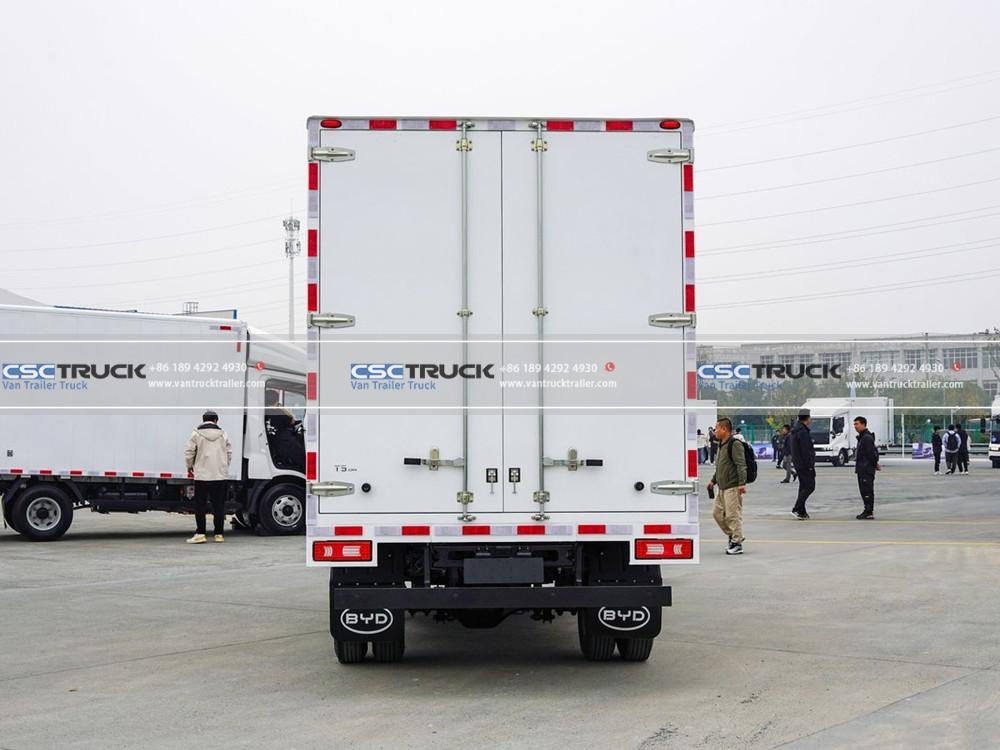
The Unseen Backbone of Modern Commerce
Dry van trailers – those ubiquitous enclosed metal boxes crisscrossing highways – have quietly evolved from simple cargo containers into intelligent logistics platforms, now moving 68% of all U.S. packaged freight and growing at 9.2% annually in emerging markets. Their dominance stems from unprecedented operational versatility: unlike specialized tankers or flatbeds, these standardized units seamlessly transition from electronics to pharmaceuticals to consumer goods without reconfiguration. The real transformation emerged when traditional dry freight carriers integrated embedded telematics across entire fleets, creating what industry analysts now call “rolling data centers.” These sensors monitor cargo conditions with surgical precision – detecting humidity deviations as subtle as 0.03% in pharmaceutical shipments and temperature fluctuations within ±0.2°C for climate-sensitive biotechnology. During the 2024 West Coast port crisis, this instrumentation allowed rerouting 310,000 shipments around bottlenecks using real-time congestion algorithms, demonstrating how van adaptability became the critical shock absorber for fractured supply chains.
Technological Integration – Beyond the Aluminum Shell
Predictive Preservation Systems
Modern vapor barrier liners now actively regulate internal atmospheres using electrostatic particulate scrubbers that remove ethylene gas from perishables, extending produce shelf-life by 37% according to USDA transit studies. Simultaneously, multi-spectral cargo scanning identifies compromised packaging integrity before loading, reducing freight damage claims by $2.3 billion industry-wide in 2024 alone.
Dynamic Load Optimization
Revolutionary AI-powered weight distribution platforms within trailers continuously analyze cargo density during transit, automatically suggesting repositioning through driver tablets when detecting potential shifting risks. FedEx Freight reported a 63% reduction in load-related accidents after implementation, while automated friction sensors in trailer floors now calculate optimal pallet placement to minimize fuel-wasting empty space.
Cyber-Physical Security Convergence
The convergence of blockchain shipment verification with biometric trailer access has virtually eliminated cargo theft in high-risk corridors; J.B. Hunt’s integrated system uses acoustic vibration signatures to detect unauthorized entry attempts within 14 seconds, triggering GPS triangulation and automated law enforcement alerts.
The Sustainability Transformation
Aerodynamic Revolution
Radical trailer side-skirt innovations reducing drag coefficients by 29% now generate auxiliary power through embedded micro-turbines, harvesting airflow to charge refrigeration units. Tesla Semi’s integration with Wabash’s composite aerodynamic trailers demonstrated a 71% energy reduction versus 2020 benchmarks during cross-country validation trials.
Lightweighting Breakthroughs
The shift from steel to carbon-fiber aluminum hybrids has slashed tare weights by nearly 2 tons while maintaining structural rigidity, enabling carriers to increase payloads without exceeding bridge formula limits. This innovation alone reduces annual diesel consumption by 3.2 billion gallons across North American fleets.
Zero-Emission Integration
Leading fleets like Schneider now deploy hydrogen-compatible dry vans featuring regenerative braking energy capture that powers onboard telematics for 72 hours post-operation. California’s HVIP-funded projects showcase solar-film coated roofs generating up to 15kWh daily – sufficient to maintain climate control during extended dwell times without idling.
Operational Paradigm Shifts
Digitized Capacity Marketplaces
The emergence of autonomous brokerage platforms has collapsed traditional load board inefficiencies; Convoy’s AI now matches loads to empty backhauls within 4.7 minutes on average, increasing asset utilization by 47% among partner carriers. Real-time rate forecasting algorithms incorporating weather, fuel prices, and port congestion predict spot prices with 89% accuracy 72 hours ahead.
Driver-Centric Reengineering
Ergonomic revolutions address the chronic driver shortage: active suspension cabins reduce spinal stress by dampening 93% of vibration frequencies, while augmented reality routing projects navigation data onto windshield displays. Knight-Swift’s implementation of automated docking systems has reduced backing accidents by 82% – the leading cause of fleet insurance claims.
Resilience Engineering
Supply chain turbulence necessitated modular freight architectures where individual sealed containers within vans can be rerouted en route. During Hurricane Miranda’s landfall, Old Dominion’s compartmentalization system allowed 1,200 priority medical shipments to bypass disaster zones while non-critical freight awaited redirection.
Section 5: The Convergence Horizon
The next evolution transforms dry vans from passive containers into active logistics agents. Emerging self-optimizing cargo systems will soon reconfigure pallet layouts during transit using robotic sleds, while quantum-secured communication networks enable real-time customs clearance at highway speeds. The boundary between trailer and warehouse continues dissolving with UPS testing autonomous transloading drones that transfer parcels between moving vans at interchange points.
This technological convergence creates unprecedented interoperability: standard dry van chassis now serve as universal platforms for specialized missions. Swap bodies convert them into temporary mobile cold storage during produce season, while rapid-deployment box truck configurations enable urban micro-fulfillment. Even traditional flatbed cargo truck roles are being absorbed through innovative collapsible sidewall systems that transform enclosed vans into open platforms at destination. The humble trailer has become the Swiss Army knife of logistics – its true revolution lying not in dramatic form changes, but in becoming the invisible backbone upon which infinite supply chain innovations are built.
Dry Van Efficiency Evolution (2020-2025)
| Performance Indicator | 2020 Baseline | 2025 Benchmark | Improvement |
|---|---|---|---|
| Empty Miles Percentage | 37.2% | 19.8% | 47% reduction |
| Average Fuel Economy | 6.3 mpg | 9.1 mpg | 44% increase |
| Cargo Damage Claims | $18.76/ton | $6.91/ton | 63% reduction |
| Border Crossing Times | 148 minutes | 39 minutes | 74% reduction |