
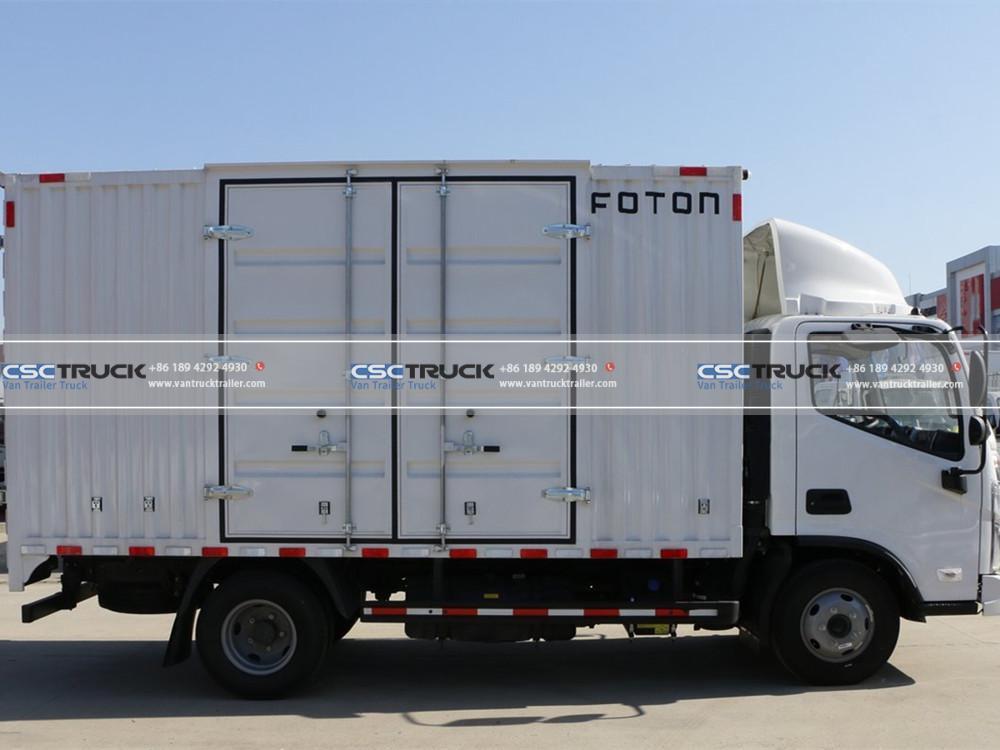
The contemporary dry van trailer—that ubiquitous, rectangular workhorse of global commerce—represents far more than mere metal walls on wheels; it embodies a sophisticated, multi-layered security ecosystem engineered to protect billions in assets traversing increasingly complex and vulnerable supply chains. While its unassuming corrugated exterior projects simplicity, beneath the surface lies an intricate fusion of physical hardening, digital intelligence, operational protocols, and predictive analytics designed to thwart theft, tampering, and unauthorized access. As cargo values soar and threat vectors evolve—from opportunistic pilferage to organized cyber-physical attacks—the security apparatus surrounding these rolling vaults has undergone a radical transformation, demanding scrutiny beyond traditional padlocks and seals.
Beyond the Padlock: The Multi-Dimensional Threat Landscape Facing Dry Vans
Modern dry van security begins with understanding the adversary. Threats manifest across physical and virtual planes:
- Physical Intrusion & Theft: Ranging from “slashing” (cutting trailer sidewalls) and sophisticated lock bypassing to entire trailer heists (“jacking”), often targeting high-value electronics, pharmaceuticals, or designer goods at unsecured stops or through staged accidents. Geographic hotspots near ports, distribution centers, and isolated highways remain prevalent.
- Cargo Tampering & Contamination: Unauthorized access to introduce counterfeit goods, remove genuine items, or deliberately contaminate shipments (food, pharmaceuticals) poses severe brand integrity and public health risks, often requiring complex forensic tracing.
- Cyber-Physical Attacks: Targeting Telematics Systems to disable tracking, spoof location data, or unlock doors remotely. Weaknesses in IoT sensor networks or fleet management software provide entry points.
- Insider Threats & Fraud: Collusion between drivers, warehouse staff, or dispatchers to facilitate theft, falsify records, or manipulate shipment routes. Requires robust chain of custody verification and behavioral monitoring.
This evolving landscape necessitates security solutions far exceeding reactive measures, demanding integrated, proactive defense-in-depth strategies.
Fortifying the Perimeter: Advanced Physical Security & Tamper-Evident Architectures
The first line of defense transforms the trailer shell into a resilient barrier:
- High-Strength Composite Walls & Roofs: Moving beyond standard corrugated steel, modern vans utilize laminated composites with embedded Kevlar or ballistic fibers, significantly increasing resistance to cutting, drilling, and blunt force attacks. Reinforced corner posts and frame rails deter jacking attempts.
- Intelligent Locking Systems: Electronic Boltlocks replace traditional seals and padlocks, integrating with central fleet systems. Features include encrypted authentication (PIN, biometrics), remote immobilization, automatic logging of all access events (time, user, location), and tamper-evident alarms triggering instant notifications upon forced entry or shock/vibration detection. Redundant mechanical locks provide backup during power loss.
- Continuous Monitoring Sensors: Networks of internal motion detectors, light sensors, temperature/humidity monitors, and door position sensors create a “nervous system” within the trailer. Unauthorized door opening, unexpected environmental shifts, or movement inside a supposedly empty trailer generate immediate alerts.
These physical countermeasures create significant time and effort barriers, forcing adversaries towards more detectable methods or abandoning the attempt.
The Digital Sentinel: Telematics, Tracking, and Real-Time Threat Intelligence
Physical hardening is futile without constant vigilance. Digital systems provide pervasive awareness:
- Multi-Factor Geolocation: Combining GPS, GLONASS, cellular triangulation, and Bluetooth Low Energy (BLE) beacons ensures continuous location tracking even in signal-denied areas (e.g., tunnels, dense urban canyons). Redundancy prevents spoofing or jamming. Geo-fencing creates virtual boundaries; deviations trigger instant alarms.
- Integrated Telematics Platforms: Modern Fleet Management Systems (FMS) aggregate data from vehicle ECUs, trailer sensors, and external sources (traffic, weather, threat databases). AI-driven analytics identify anomalous patterns—unexpected stops, unusual route deviations, erratic driving behavior—signaling potential hijacking or driver duress.
- Predictive Risk Assessment: Leveraging historical data, cargo value, route characteristics, and real-time threat feeds (e.g., crime statistics, weather events), systems calculate dynamic risk scores for each shipment. This enables proactive countermeasures like route re-routing, increased monitoring frequency, or requesting security escorts through high-risk zones.
- Secure Data Transmission & Storage: End-to-end encryption (AES-256 standard) and blockchain-based immutable audit logs protect telemetry data from interception or manipulation. Secure over-the-air (OTA) updates patch vulnerabilities without physical access.
This digital layer transforms the dry van from a passive container into an intelligent node within a secure, responsive logistics network.
Operational Vigilance: Protocols, Training, and Chain of Custody Integrity
Technology alone cannot guarantee security; human processes and accountability are paramount:
- Strict Access Control & Identity Verification: Implementing biometric authentication (fingerprint, facial recognition) for drivers and dock personnel at loading/unloading points ensures only authorized individuals interact with cargo. Digital logs replace paper manifests, linking identities to specific actions.
- Seamless Chain of Custody Documentation: Utilizing Digital Seals and Blockchain Platforms creates an unforgeable record of every handoff, inspection, and environmental condition change. Smart contracts can automate verification and release payments only upon confirmed, compliant delivery.
- Driver Security Protocols & Training: Mandatory training covers threat recognition (surveillance, social engineering), secure parking procedures (TAPA-certified lots), hijack response, and cyber hygiene (phishing avoidance, secure device use). Panic buttons integrated into driver apps provide silent alerts to security centers.
- Incident Response Orchestration: Pre-defined, automated response protocols for security breaches minimize reaction time. This includes immediate remote immobilization, live video feed activation (if equipped), coordinated law enforcement notification with precise location/data sharing, and rapid deployment of incident response teams.
These protocols embed security consciousness into the daily operational fabric, closing gaps that technology might miss.
Specialized Security Adaptations: From Standard Cargo to Critical Shipments
Security demands escalate for sensitive or high-value loads, driving specialized configurations:
- High-Value Cargo Truck Modifications: Dry vans transporting luxury goods, sensitive electronics, or pharmaceuticals often feature:
- Dual-Compartmentalization: Internal reinforced bulkheads separating cargo zones.
- Covert Tracking Devices: Hidden GPS units with independent power supplies.
- Live Video Surveillance: Internal cameras with encrypted cloud streaming, activated by sensors or remotely.
- Enhanced Tamper Evidence: Multi-layered forensic seals and micro-perforation sensors on packaging integrated with trailer systems.
- Temperature-Controlled Integrity (Freezer Truck Considerations): Securing reefers adds complexity:
- Climate Monitoring Alarms: Instant alerts for unauthorized temperature/humidity changes, potentially indicating door breach or system tampering.
- Redundant Power Security: Protecting standby power units and fuel tanks from sabotage or theft.
- Sealed Refrigeration Units: Tamper-evident locks and sensors on the refrigeration machinery itself prevent manipulation of setpoints or disabling without detection.
- Data Logging Compliance: Ensuring unbroken, verifiable temperature logs meeting FDA FSMA or EU GDP regulations is a core security requirement.
These adaptations demonstrate how core dry van security principles are tailored to meet specific risk profiles and regulatory demands.
The Horizon: AI, Autonomy, and the Evolving Security Paradigm
The future of dry van security lies in predictive intelligence and autonomous resilience:
- AI-Powered Threat Prediction: Advanced machine learning models will synthesize vast datasets—historical theft patterns, weather anomalies, social media chatter, traffic flows, financial markets—to predict specific threats (location, method, timing) with increasing accuracy, enabling pre-emptive hardening of shipments.
- Autonomous Response Capabilities: Integration with autonomous driving systems will enable self-protective actions: automatically rerouting away from detected threats, driving to pre-programmed “safe havens” upon breach detection, or employing non-lethal countermeasures (e.g., smoke screens, sound cannons) under remote authorization.
- Decentralized Security Networks: Blockchain-enabled peer-to-peer verification between trucks, infrastructure (smart docks, weigh stations), and logistics platforms will create resilient, hack-resistant networks for real-time threat sharing and coordinated response, reducing reliance on centralized systems.
- Biometric & Behavioral Cargo Authentication: Embedding microscopic RFID tags or chemical tracers within products, combined with sensors verifying cargo “fingerprints” (weight distribution, resonant frequency) during transit, will provide near-instantaneous tamper detection and authentication upon delivery.
- Integrated Vantrucktrailer Architectures: The convergence of tractor and trailer into unified Vantrucktrailer platforms allows for seamless power/data integration, enabling far more sophisticated onboard security suites. Centralized AI controllers can manage everything from adaptive lighting and access control to dynamic threat response, leveraging the vehicle’s full sensor array and compute power without the latency and vulnerability of traditional tractor-trailer communication links. This holistic approach is pivotal for high-risk autonomous logistics corridors and secure urban last-mile delivery networks, where split-second security decisions and uncompromised system integrity are non-negotiable.
The trajectory is unmistakable: the modern dry van is evolving from a secured container into an intelligent, self-protecting node within a resilient, anticipatory logistics nervous system, where security is not an add-on but the foundational design principle.