Understanding the Strategic Role of an Asphalt Distributor Truck
Selecting the right asphalt distributor truck is a decision that directly influences project quality, operational efficiency, and long-term profitability in road construction and maintenance businesses. Unlike general-purpose commercial vehicles, this specialized equipment plays a precise and technical role in pavement bonding processes, including prime coating, tack coating, and chip sealing. The distributor truck is responsible for applying heated asphalt binder evenly and at controlled rates, forming the adhesive layer that ensures structural integrity between pavement layers.
For business owners, the purchase of an asphalt distributor truck should not be treated as a routine fleet addition but as a strategic investment that must align with the scale, frequency, and type of projects undertaken. Much like selecting a dump truck for aggregate transport or a mixer truck for concrete delivery, choosing the appropriate distributor configuration requires a careful assessment of operational demands and financial objectives.
An incorrectly specified distributor truck may lead to uneven spray application, frequent downtime, excessive fuel consumption, or underutilized capital. Conversely, a well-matched unit enhances jobsite productivity, ensures compliance with technical specifications, and strengthens a company’s competitive positioning in public and private tenders.
Evaluating Capacity and Tank Configuration
One of the first considerations when choosing an asphalt distributor truck is determining the appropriate tank capacity and structural configuration for your operational environment.
Matching Tank Capacity to Project Scale
Tank capacity typically ranges from 3,000 liters for smaller urban maintenance units to over 15,000 liters for highway-scale projects. The optimal capacity depends on daily spray volume requirements, distance from asphalt supply plants, and desired productivity levels.
For contractors focused on municipal road maintenance, smaller-capacity trucks often provide sufficient output while offering superior maneuverability in urban settings. However, companies engaged in extensive resurfacing or highway construction projects benefit from larger tanks that reduce the frequency of refilling trips, particularly when asphalt plants are located far from the jobsite.
Business owners should calculate average daily binder consumption and consider peak workload scenarios to ensure that selected capacity supports operational efficiency without leading to overinvestment.
Weight Distribution and Chassis Selection
Capacity decisions must also account for axle load regulations and chassis strength. Asphalt binder is dense, and a fully loaded tank can significantly increase gross vehicle weight. Selecting a chassis with adequate axle configuration and suspension strength ensures legal compliance and enhances long-term durability.
Multi-axle setups may be required for higher-capacity units, and proper weight distribution contributes to improved road stability and reduced component wear. Just as with a dump truck carrying heavy aggregates, legal compliance and structural integrity are essential to avoiding fines and premature equipment failure.
Assessing Heating and Insulation Systems
Temperature control is one of the most critical aspects of asphalt distributor performance. Without effective heating and insulation, even the most advanced spray system cannot deliver consistent application results.
Burner Efficiency and Thermal Control
Modern distributor trucks typically use diesel burners or thermal oil heating systems to maintain asphalt binder at optimal spraying temperatures. When evaluating models, business owners should examine burner capacity, heat distribution design, and energy efficiency.
In colder climates, robust heating systems are essential to prevent viscosity fluctuations that could compromise spray uniformity. An underpowered burner may struggle to maintain temperature during prolonged operations, leading to delays and reduced productivity.
Tank Insulation Quality
High-quality insulation minimizes heat loss during transport and operation. Efficient insulation reduces fuel consumption, stabilizes binder temperature, and ensures consistent material properties from the first spray to the last.
Investing in advanced insulation systems may increase upfront cost but often results in lower long-term operating expenses. Temperature stability is especially critical on large projects where precise application rates are contractually specified.
Spray System Precision and Control Technology
The spray system represents the operational core of the asphalt distributor truck. Precision in application rate and spray pattern directly affects pavement durability and client satisfaction.
Spray Bar Design and Nozzle Configuration
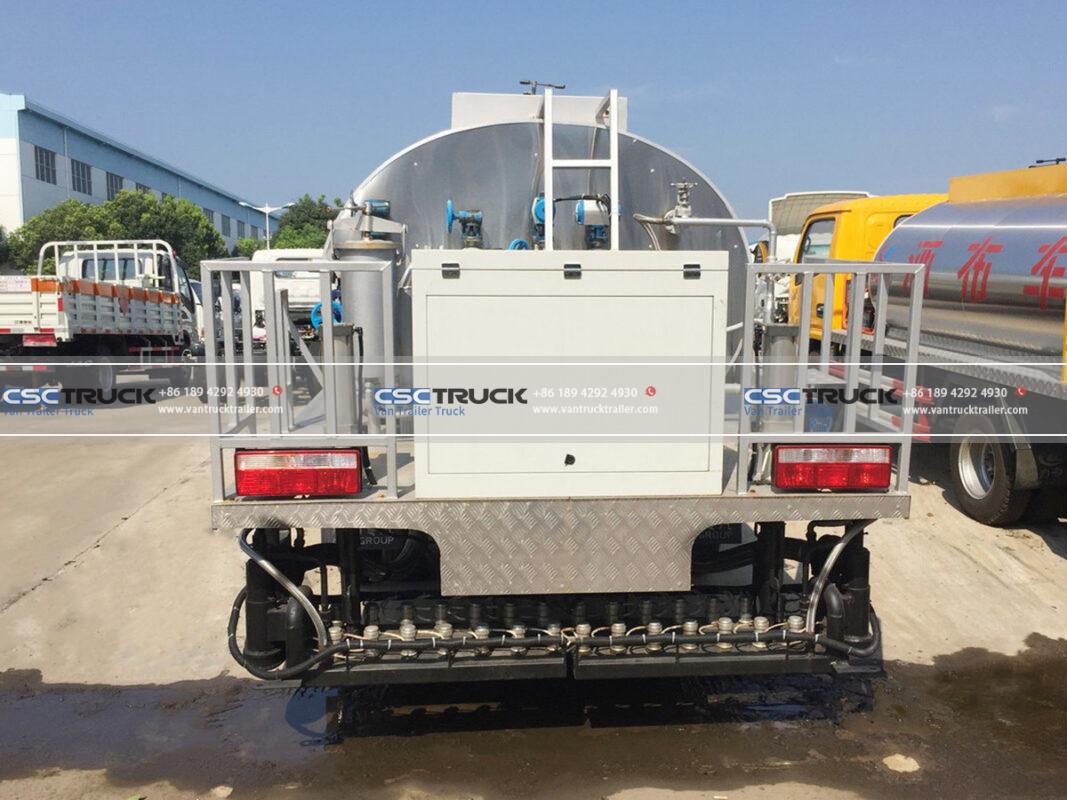
A well-designed spray bar should provide adjustable width settings to accommodate different lane dimensions and project requirements. Nozzle spacing, overlap control, and anti-drip mechanisms contribute to uniform distribution.
High-quality nozzles ensure consistent droplet size and even coverage. Poor spray pattern alignment can create streaking or under-application, leading to premature pavement failure.
Computerized Rate Control Systems
Advanced distributor trucks incorporate computerized control systems that synchronize pump output with vehicle speed, maintaining consistent spray rates even when driving conditions vary. This automation significantly reduces operator error and enhances compliance with technical specifications.
For contractors working on government-funded infrastructure projects, the ability to document application rates and temperature data can be a competitive advantage. Data logging systems provide transparency and support quality assurance audits.
When compared to more straightforward commercial vehicles such as a mixer truck, which primarily focuses on drum rotation and concrete delivery, the asphalt distributor demands higher precision and real-time monitoring to achieve acceptable performance standards.
Operational Integration and Fleet Compatibility
An asphalt distributor truck does not function in isolation; it operates within a coordinated fleet ecosystem. Therefore, compatibility with existing equipment and workflow processes must be carefully considered.
Coordination with Material Delivery Vehicles
During road construction projects, binder application is typically followed by aggregate spreading or asphalt paving. Dump trucks deliver aggregates, while paving machines complete surface finishing. Synchronizing distributor capacity with aggregate supply ensures smooth workflow and prevents delays.
If the distributor truck has insufficient capacity relative to aggregate delivery rates, operations may stall while waiting for refilling. Conversely, excessive distributor capacity without matching downstream capacity can create inefficiencies.
Maintenance and Service Infrastructure
Selecting a distributor truck that aligns with existing maintenance capabilities can simplify servicing and reduce downtime. If your fleet already operates similar chassis platforms—perhaps shared with dump trucks or other heavy-duty units—standardizing components can reduce spare parts inventory and technician training requirements.
Service accessibility, availability of replacement parts, and manufacturer support networks should influence purchasing decisions. Reliable after-sales support is particularly important for specialized hydraulic and heating systems.
Financial Planning and Long-Term Business Strategy
Choosing an asphalt distributor truck ultimately requires a balance between technical performance and financial sustainability. Acquisition cost, financing terms, fuel consumption, maintenance expenses, and expected utilization rates all contribute to overall return on investment.
Business owners should conduct detailed cost projections, including annual operating hours, fuel efficiency estimates, maintenance schedules, and anticipated project revenue. A larger, technologically advanced distributor truck may command a higher upfront price but generate greater revenue through increased productivity and improved project quality.
Future market positioning should also guide equipment selection. Contractors planning to expand into larger infrastructure contracts may benefit from investing in higher-capacity units with advanced control systems. Those maintaining a focus on municipal repair work may prioritize maneuverability and cost efficiency.
Environmental regulations are becoming increasingly stringent, and modern distributor trucks with efficient burners and emission-compliant engines help businesses remain competitive while reducing operational risk.
Ultimately, choosing the right asphalt distributor truck requires aligning equipment specifications with operational reality, regulatory frameworks, and strategic growth objectives. For fleet managers and contractors seeking comprehensive insights into commercial vehicle solutions and infrastructure equipment, vantrucktrailer.com provides valuable resources to support informed decision-making in today’s evolving road construction industry.