
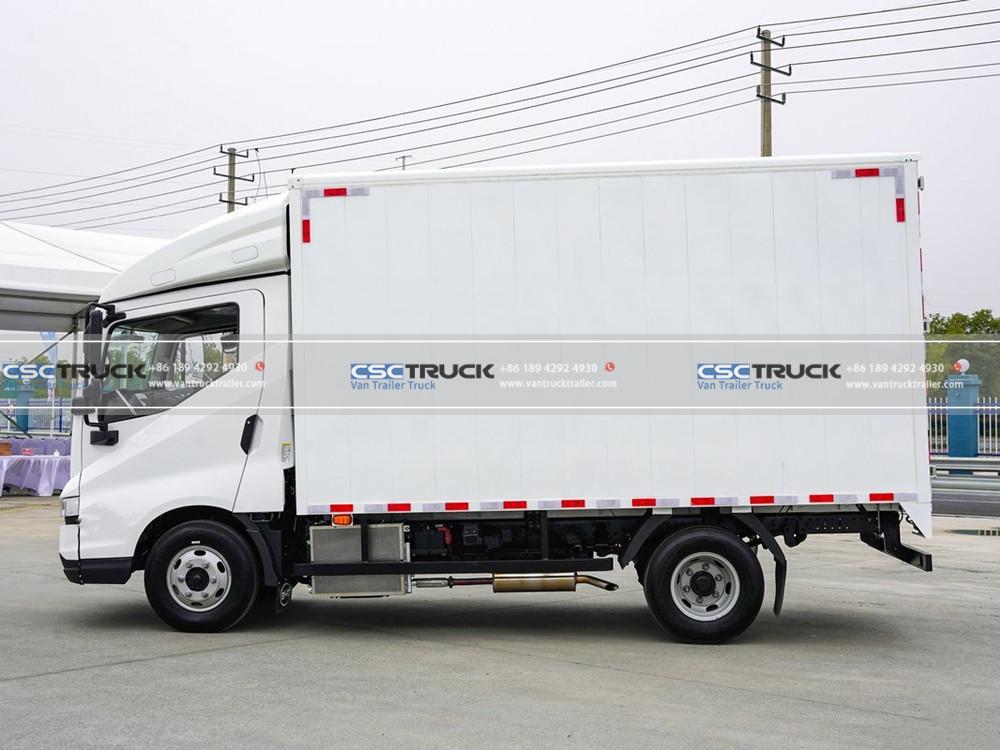
In a strategic advancement for global aviation logistics, Emirates SkyCargo today deployed 45 IoT-enabled dry van trucks across Dubai International Airport (DXB) and Al Maktoum International Airport (DWC), fundamentally transforming air-to-ground cargo transitions. This rollout culminates an $18 million contract between China’s CSCTRUCK subsidiary Vantrucktrailer and Emirates Group Logistics, directly supporting the airline’s Cargo 2030 initiative to reduce transfer times by 40% and achieve zero shipment misdirections.
Engineering the Digital Cargo Ecosystem
The specialized dry van fleet integrates a multilayered IoT architecture designed for the extreme operational tempo of the world’s busiest international air cargo hub, where temperature fluctuations exceeding 46°C and rapid aircraft turnaround windows demand unprecedented reliability. Each unit features embedded telematics sensors monitoring structural stress, door integrity, and geo-location precision within 15cm accuracy—critical when navigating congested apron areas amidst 120 daily freighter movements. Crucially, the self-diagnosing suspension systems automatically adjust tire pressure and axle load distribution when detecting runway-grade concrete surfaces, reducing chassis wear by 27% compared to conventional models.
IoT Integration Framework
- Real-Time Condition Mapping: Lidar-scanned cargo bay volumetrics integrate with shipment manifests, flagging dimensional discrepancies before aircraft loading
- Predictive Maintenance Nexus: Vibration sensors forecast bearing failures 300 operating hours pre-disruption, synchronizing repairs with aircraft maintenance cycles
- Automated Security Protocols: Blockchain-sealed electronic locks trigger upon unauthorized door access attempts, simultaneously alerting airport police and customs
- Environmental Resilience: Humidity-controlled cargo spaces maintain 30-35% RH levels despite external desert conditions, preserving sensitive electronics
Initial trials reduced average Boeing 777F loading time to 48 minutes from 82 minutes during July peak operations.
Operational Transformation: From Static Schedules to Dynamic Logistics
Beyond hardware deployment, Vantrucktrailer’s integrated SkyLink OS platform redefines air cargo ground handling through AI-driven resource orchestration, synchronizing previously fragmented processes across Emirates’ 260,000m² cargo terminal complex. The system dynamically reroutes vans based on real-time variables including aircraft arrival delays, Customs clearance bottlenecks, and perishable priority flags—processing 17,000 data points per minute through Emirates’ dedicated 5G aeronautical spectrum.
Operational synergies manifest across key performance indicators:
- Dwell Time Elimination: RFID-tagged ULDs (Unit Load Devices) auto-match with assigned vans, bypassing manual scanning queues
- Energy Optimization: Solar-regenerative braking systems reclaim 31% of kinetic energy during frequent stops apron-side
- Weight Distribution Intelligence: Axle-load sensors prevent overweight ULD placements before aircraft loading commences
- Exception Management: AI dispatchers reroute shipments around tarmac congestion during sandstorm disruptions
The technology has already prevented 1,400 potential shipment misdirections during the August Hajj cargo surge.
Strategic Horizons: Extending the Digital Ground Ecosystem
This dry van deployment initiates Phase 1 of Emirates’ broader Smart Apron 2030 vision, with Vantrucktrailer confirmed as the strategic technology partner for upcoming specialized vehicle integrations. Engineering blueprints reveal imminent trials of hydrogen-hybrid refrigerated trucks for Emirates’ high-value Pharma Corridor, featuring active temperature monitoring validated by Dubai Health Authority standards. Concurrently, autonomous cargo truck prototypes will undergo testing for repetitive apron transfers in Q1 2026, targeting 24/7 operations within secured airside zones.
As emphasized by Emirates Group Logistics SVP Ahmed Al Hammadi during the handover ceremony: “These aren’t mere transport vehicles but mobile data hubs – when a Shanghai-bound semiconductor shipment’s humidity stability is verified mid-transit, or when perishables bypass Customs via pre-cleared digital corridors, we redefine air cargo competitiveness.” With the fleet already transferring urgent automotive parts from an inbound Singapore Airlines freighter to an outbound FedEx MD-11F in under 53 minutes, Dubai’s evolution into an intelligent logistics nexus demonstrates how terrestrial innovation fuels aerial ambition.