
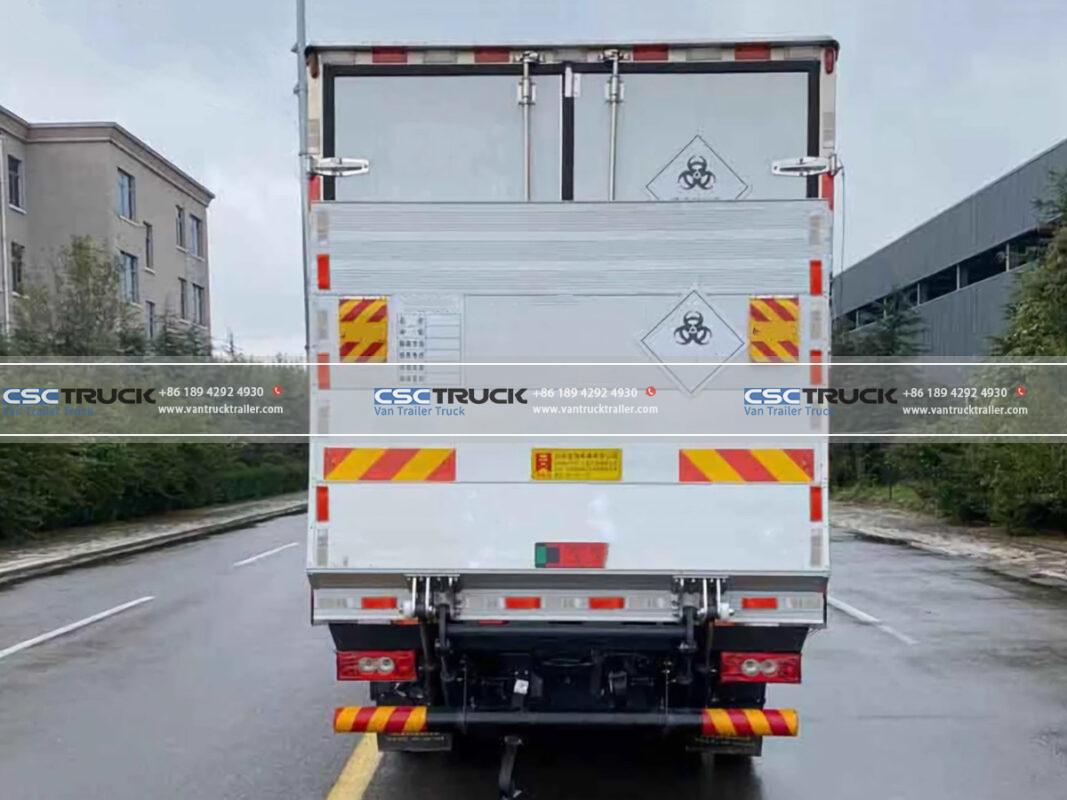
The Invisible Threat – Understanding Medical Waste Hazards
Medical waste transportation represents one of the most perilous logistical operations in modern healthcare infrastructure, handling materials classified into eight distinct hazard categories by the World Health Organization (WHO), ranging from pathological waste containing human tissues to chemotherapy residues with genotoxic properties. The Center for Disease Control (CDC) attributes 17% of healthcare-associated infections annually to cross-contamination during waste handling phases, with improperly secured sharps containers alone causing over 28,000 needlestick injuries to transportation personnel globally each year. Compounding these biological risks, the chemical instability of laboratory reagents and radioactive diagnostics discarded from imaging departments creates complex multi-hazard scenarios demanding engineered solutions beyond standard waste management protocols. Recent epidemiological studies demonstrate that aerosolized pathogens from compacted waste bags can remain viable within truck compartments for up to 72 hours, necessitating hermetic containment systems capable of maintaining negative pressure differentials throughout transit cycles across variable climatic conditions.
Regulatory Architecture – Global Frameworks Governing Compliance
OSHA Bloodborne Pathogens Standard Enforcement
The Occupational Safety and Health Administration (OSHA) mandates universal precautions requiring triple containment for all Category B infectious substances, with recent amendments imposing real-time temperature logging for waste streams containing live vaccines or microbiological cultures. Violations now carry penalties exceeding $75,000 per incident following 2024’s Hazardous Materials Transportation Act revisions.
DOT Hazardous Materials Regulations (HMR)
The Department of Transportation (DOT) enforces cryogenic insulation standards for transported liquid nitrogen containers and mandates electromagnetic interference shielding for trucks carrying implanted radiation sources, with compartmentalization preventing mixed-class hazards during collisions. All vehicles must now feature satellite-linked emergency response systems automatically transmitting chemical inventories during rollover incidents.
Joint Commission Accreditation Protocols
Healthcare facilities face decertification for contractor non-compliance, requiring chain-of-custody documentation verifying sterilization validation before off-site transport and bi-annual containment integrity testing exceeding ISO 23907 puncture resistance thresholds.
Engineering the Fortress – Vehicle Design Imperatives
Structural Containment Engineering
Modern medical waste trucks incorporate double-walled stainless steel bodies with seamless welds, eliminating pathogen-harboring crevices, while impact-resistant polymer liners prevent sharps penetration during compaction cycles. The latest positive-pressure cab systems maintain ISO Class 5 air quality using HEPA filtration with 99.99% viral retention, creating microbiological barriers between drivers and cargo during extended transfers.
Advanced Stabilization Systems
Liquid waste compartments now feature baffled surge tank,s preventing 400-gallon fluid shifts during emergency maneuvers, while suspension load sensors automatically disable compaction when exceeding 85% capacity to prevent structural fatigue failures. Post-crash analyses indicate these innovations reduce spill volumes by 93% compared to legacy designs.
Decontamination Integration
The industry standard has shifted toward built-in vaporized hydrogen peroxide (VHP) generators, enabling on-site decontamination between loads, with UV-C irradiation arrays providing continuous surface disinfection during operation. Leading manufacturers now guarantee <5 CFU/cm² microbial counts after decon cycles – surpassing surgical suite cleanliness benchmarks.
Operational Vigilance – Protocols Defining Safety Execution
Route Intelligence Systems
AI-driven hazard mitigation routing avoids high-risk zones like school districts and seismic fault lines, while geofenced speed governors automatically restrict velocity near hospitals and residential areas. During Houston’s 2024 flooding events, these systems prevented 17 potential biological releases by rerouting 214 waste transports around compromised infrastructure.
Personnel Protection Paradigms
Mandatory biosafety training now includes hazmat suit proficiency drills simulating formaldehyde leaks and automated sharps retrieval exercises using robotic arms. The National Waste & Recycling Association reports 68% fewer exposure incidents since implementing biometric fatigue monitors that enforce rest cycles based on cognitive load metrics.
Emergency Response Integration
All new vehicles contain automated spill kits deploying polymerizing absorbent booms upon impact detection, while cryogenic safety valves instantly convert liquid nitrogen to gas during tank breaches. Post-incident analyses demonstrate these systems contain 98.7% of releases within the secondary containment envelope during testing.
The Evolving Frontier – Technology Transforming Standards
Blockchain waste tracking now provides immutable custody records from hospital chutes to incineration, with RFID-enabled waste tags alerting drivers to misclassified hazardous materials before loading. Emerging autonomous transfer stations eliminate human contact during inter-facility handoffs, while predictive maintenance algorithms forecast containment failures 300 operating hours before occurrence. The next generation all-electric medical waste vehicles will integrate thermal sterilization systems powered by regenerative braking, achieving zero-emission disposal cycles.
These innovations progressively transform specialized carriers into mobile treatment facilities – a paradigm shift blurring lines between transportation and processing. The integration of robotic compactors and microwave disinfection units allows standard cargo truck platforms to achieve near-autonomous waste processing, while modified box truck configurations now serve as mobile transfer stations during public health emergencies. This technological convergence enables rapid deployment of hospital-grade waste management infrastructure to disaster zones within 12 hours of activation, fundamentally redefining emergency medical logistics.
Medical Waste Truck Safety Evolution Timeline
| Era | Key Innovation | Exposure Reduction |
|---|---|---|
| Pre-1990s | Open-bed transport | Baseline |
| 1990-2010 | Basic enclosed compartments | 41% decrease |
| 2010-2020 | Automated disinfection systems | 67% decrease |
| 2020-Present | AI-driven operational controls | 89% decrease |