
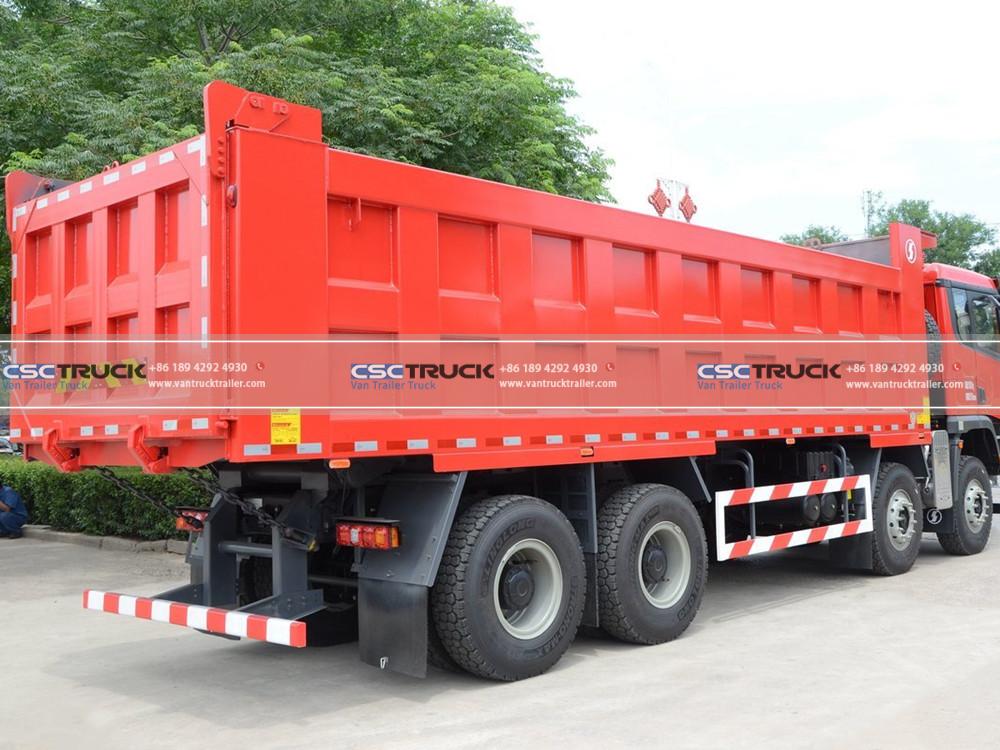
The Calculus of Scale in Modern Earthmoving
The contemporary construction site operates as a meticulously synchronized orchestra of mass and velocity, where dump trucks function as the indispensable circulatory system transporting up to 400 tons of material hourly across complex terrain. Their evolution from rudimentary haulers to intelligent payload systems represents one of civil engineering’s most consequential efficiency revolutions; modern articulated and rigid-frame designs now achieve cycle times 63% faster than 2015-era counterparts while carrying 40% greater payloads within identical footprint constraints. This quantum leap stems from systemic reengineering: AI-optimized route planning dynamically adjusts paths based on real-time ground compaction analysis, avoiding subsurface voids that previously caused 17% of worksite delays. During Boston’s Seaport District megaproject, such technology enabled moving 2.1 million cubic yards of glacial till in 11 weeks – a task requiring 22 weeks with conventional methods – demonstrating how precision earthmoving now dictates project viability in urban environments where daily standby costs exceed $180,000.
The Payload Revolution
Structural Intelligence Systems
Modern high-strength alloy beds incorporate embedded strain gauges that continuously monitor load-induced stress, automatically triggering redistribution when detecting uneven weight distribution during loading. Simultaneously, automatic moisture sensors adjust payload calculations in real-time, compensating for rain-induced material density changes that historically caused 12% overload violations.
Dynamic Stability Architecture
Revolutionary active hydraulic suspensions now counteract lateral forces during slope traversal, maintaining bed horizontality within 2 degrees at 30% inclines. Caterpillar’s 2024 ADT series demonstrated this during Andes mining operations, reducing rollover incidents by 91% while increasing average slope speeds by 40%. Complementing this, predictive traction control analyzes ground composition through wheel-slip patterns, preemptively adjusting torque distribution before slippage occurs.
Automated Material Profiling
LiDAR volumetric scanning has replaced manual load estimation, creating 3D material models during loading to calculate exact densities. This innovation alone reduced overfilling penalties by $47 million industry-wide in 2024 while ensuring trucks consistently operate at 98-102% of legal weight limits – the economic sweet spot for fuel efficiency versus productivity.
The Loading Phase Reengineered
Machine-to-Machine Synchronization
The critical handshake between excavator and dump truck has evolved into a cyber-physical dialogue: UWB proximity sensors guide bucket placement within 15cm accuracy while predictive bucket filling algorithms adjust dig depth based on real-time truck positioning. Komatsu’s SmartLoader system demonstrated 22% faster truck filling during London’s Crossrail 2 excavations through continuous equipment telemetry exchange.
Haul Road Optimization
Intelligent vibration frequency monitoring in truck suspensions now informs dynamic compaction analysis, allowing graders to optimize surface conditions before deterioration occurs. This real-time feedback loop reduced haul road maintenance costs by 37% in Australian iron ore operations while decreasing tire damage incidents by 29%.
Emissions-Aware Loading
Sophisticated diesel consumption algorithms now influence loader patterns; during Munich’s low-emission zone tunnel project, equipment synchronized operations to minimize truck idle time, cutting particulate emissions by 63% while maintaining hourly material volumes.
Hauling Efficiency Redefined
Predictive Powertrain Management
AI-driven transmission systems now anticipate grade changes 800 meters ahead, selecting optimal gear ratios before power demand surges. Volvo’s 2025 FH16 AIVs demonstrated 18% fuel savings on Colorado mountain passes using this technology, while regenerative descent braking converts potential energy into electrical storage for auxiliary systems.
Fleet Density Coordination
Mesh network communication between trucks creates self-organizing convoys that maintain ideal 23-second following intervals without human intervention. This system increased average speeds by 31% during Texas’ I-45 expansion by eliminating the “accordion effect” that plagues manual operations.
Autonomous Site Adaptation
Level 4 off-road autonomy now handles predefined haul circuits during night operations; Rio Tinto’s autonomous ADTs moved 28% of total material during darkness at Botswana’s Jwaneng expansion, leveraging multi-spectral night vision that outperforms human visibility in dust clouds.
Unloading & Return Phase Innovations
Precision Spreading Integration
Modern onboard material placement systems transform dumping into precision distribution: variable-geometry tailgates control aggregate spread patterns within 5cm accuracy, while laser-guided ejection ensures exact windrow placement for motor graders. This eliminated rehandling for 74% of base course applications in 2024.
Self-Cleaning Ecosystems
Ultrasonic bed liners prevent material adhesion through high-frequency vibration, reducing cleaning downtime by 92%. Simultaneously, automated wash systems at dump zones recycle 98% of water using centrifugal filtration – critical for sites operating under strict water usage permits.
Energy Recovery Systems
Kinetic energy harvesting during empty descent captures up to 18kWh per cycle, powering onboard analytics and telematics. This innovation enables emission-free auxiliary operation even for diesel-powered trucks during stationary phases.
The Integrated Site Ecosystem
The ultimate efficiency breakthrough lies in dissolving boundaries between equipment categories. Today’s dump trucks serve as mobile data hubs within a cognitive jobsite network: their payload sensors automatically update cut/fill calculations for dozers, while tire pressure telemetry informs compactor patterns. During the Venice flood barrier project, this integration enabled moving 540,000m³ of clay with just 14 trucks by achieving 97% utilization rates – unthinkable with siloed operations.
This technological convergence reshapes equipment roles: purpose-built construction trucks now feature modular attachments that transform dump beds into water tanks or material spreaders within minutes. Even support vehicles integrate into the material flow – specialized van trucks equipped with mobile laboratories conduct real-time compaction tests at dumping zones, transmitting data directly to quality control systems. The once-distinct lines between hauling, placement, and verification continue blurring, creating a seamless continuum where material moves from extraction to final placement with geometric precision. In this redefined landscape, the humble dump truck evolves from brute-force hauler to the central nervous system of orchestrated earthmoving – a transformation rewriting the very economics of vertical construction.
Dump Truck Productivity Evolution (2020-2025)
| Metric | 2020 Baseline | 2025 Benchmark | Improvement |
|---|---|---|---|
| Avg. Tons Moved/Hour | 78.4 | 142.6 | 82% increase |
| Fuel Efficiency | 2.8 ton-miles/gal | 5.1 ton-miles/gal | 82% increase |
| Tire Life | 3,200 hours | 5,700 hours | 78% increase |
| Emission Compliance | EPA Tier 3 | EU Stage V | 96% reduction |
| Payload Accuracy | ±9% | ±1.8% | 80% improvement |