
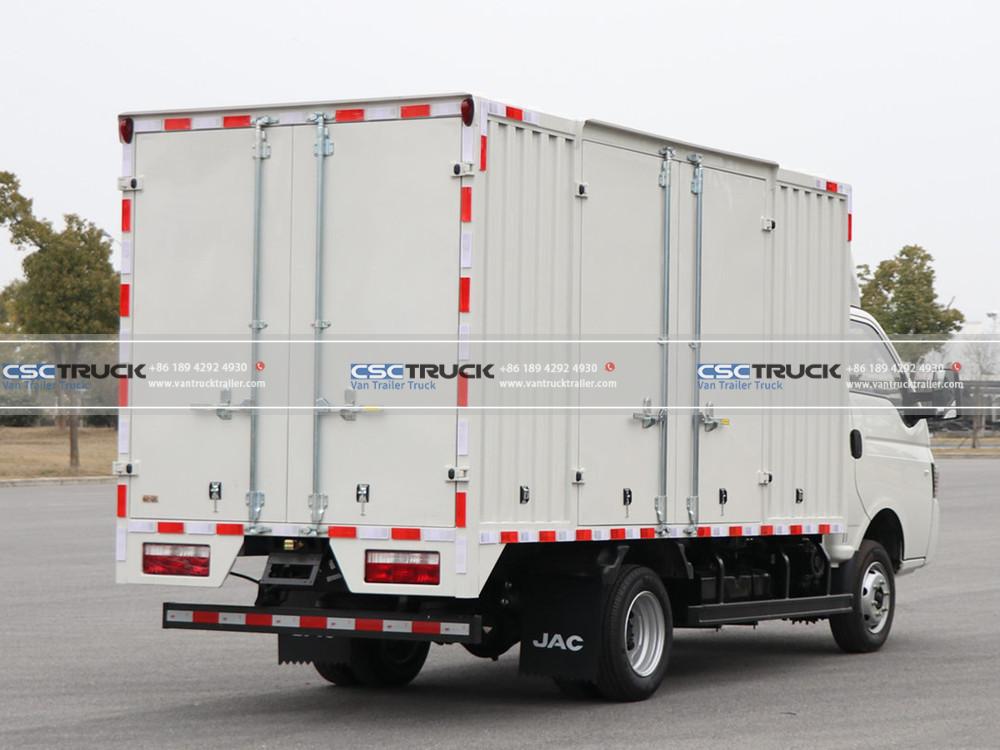
Morocco’s agricultural export sector has significantly enhanced its logistics resilience with the deployment of 50 cutting-edge temperature-sealed dry vans across critical transport corridors. This strategic initiative, executed under a major supply agreement between specialized vehicle manufacturer CSCTRUCK Vantrucktrailer and Atlas Logistics Group, Morocco’s premier freight operator, targets the optimization of perishable goods transport to European markets amid rising climate volatility and stringent EU import regulations.
Part 1: Securing Perishable Exports in a Climate-Vulnerable Region
The integration of these engineered dry vans directly addresses Morocco’s urgent need for climate-resilient transport solutions, where extreme temperature fluctuations across the Atlas Mountain routes and Saharan border zones historically compromised the quality of high-value exports like citrus fruits, early-season vegetables, and argan oil derivatives. Traditional unsealed trailers permitted ambient heat infiltration and humidity spikes during 48+ hour transits to Mediterranean ports, accelerating spoilage in produce sensitive to even minor thermal variations. This deployment strengthens corridor reliability by ensuring stable transit microclimates for temperature-tolerant but humidity-sensitive goods, synchronizing with Morocco’s National Green Generation Strategy 2030 to reduce post-harvest losses by 30% while meeting the European Commission’s newly enforced Conditioned Agricultural Goods Protocol (CAGP) requiring verifiable in-transit environmental logs.
Part 2: Engineering Innovations for Optimal Cargo Integrity
Developed by CSCTRUCK Vantrucktrailer, the vans incorporate proprietary sealing and monitoring technologies tailored to North Africa’s logistical extremes, prioritizing thermal barrier efficacy and operational adaptability without active refrigeration.
H4: Hermetic Sealing & Advanced Insulation
Multi-laminated composite walls with aerogel-infused panels achieve a 0.12 W/m²K thermal conductivity rating – 65% lower than conventional dry vans – while triple-lipped door gaskets and floor-mounted desiccant cartridges maintain internal humidity below 55% even during 45°C exterior conditions. This passive protection extends the viable transit window for products like Medjool dates or saffron by 72 hours.
H4: Smart Environment Monitoring
Embedded IoT condition sensors track real-time cargo-space temperature, humidity, and volatile organic compounds (VOCs), with satellite-transmitted alerts triggering automated ventilation adjustments if thresholds exceed preset export profiles (e.g., +5°C to +15°C for tomatoes). Data syncs to Morocco’s Agritech Traceability Cloud, generating blockchain-secured compliance certificates for EU customs.
H4: Dynamic Load Optimization
Robotic tie-down systems and configurable air-channel pallet bases adapt to mixed commodity loads, preventing compression damage during mountain descents while maximizing cube utilization – critical for cost-sensitive routes like the 1,200km Casablanca-Tangier Med corridor where load density impacts port-access scheduling.
Part 3: Integrated Fleet Modernization Through Strategic Partnership
This $18M procurement forms part of Atlas Logistics Group’s comprehensive fleet modernization program, structured under a three-year technical alliance with CSCTRUCK Vantrucktrailer. The partnership reflects Morocco’s aggressive positioning as Africa’s premier agri-exporter, leveraging CSCTRUCK’s expertise in desert-optimized transport to replace 200+ obsolete trailers vulnerable to thermal leakage. Atlas Logistics concurrently expanded its specialized assets with CSCTRUCK-manufactured platforms, including 80 heavy-duty cargo trucks for bulk grain and fertilizer movements between Marrakech and Laayoune, and 40 multi-temperature refrigerated trucks serving high-value berry and seafood routes to Spain. The temperature-sealed vans now anchor the “moderate-climate” segment of Atlas’s tiered perishables network, enabling seamless cargo handovers between refrigerated trucks (for chill-sensitive items) and sealed dry vans (for ambient-stable goods), thereby optimizing fuel efficiency and reducing cross-contamination risks across Morocco’s €4.7B annual agricultural export ecosystem.