
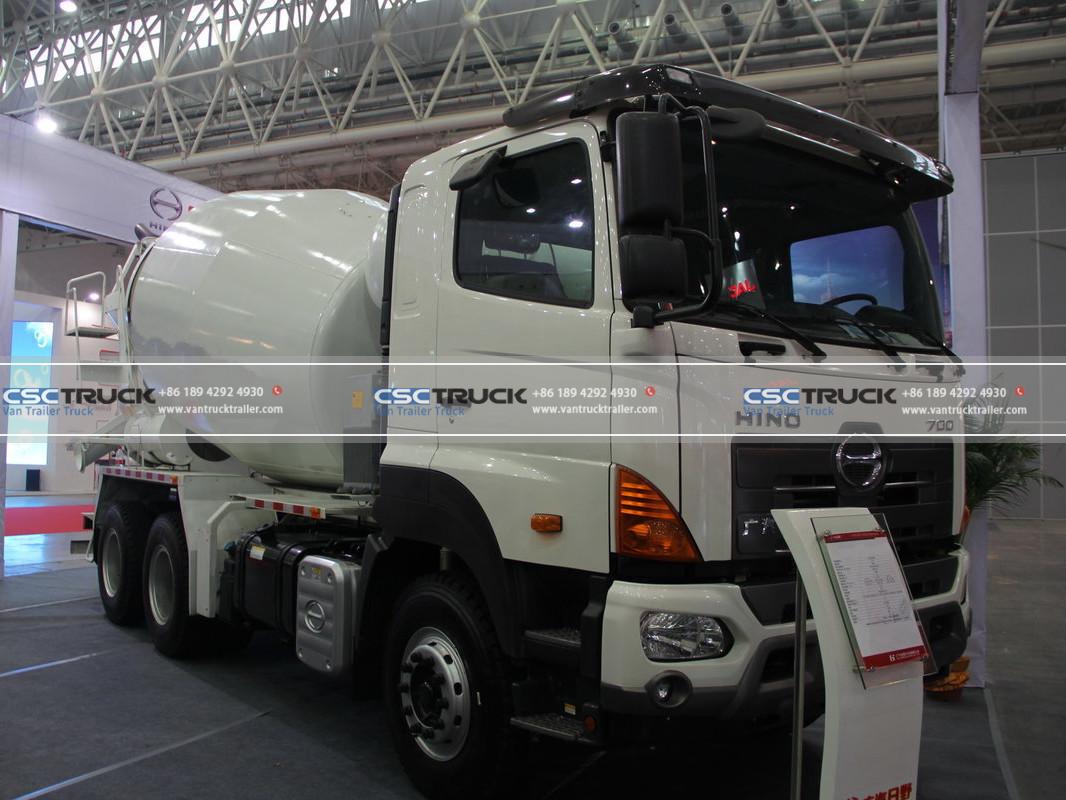
The Precision Chronometry of Modern Concrete Logistics
In the symphony of urban construction, mixer trucks serve as the irreplaceable metronomes, synchronizing the complex ballet of material science, logistics, and structural engineering with time-critical precision. These mobile batching plants now deliver over 500 million cubic yards of ready-mix concrete annually across U.S. construction sites – a volume requiring nano-second timing coordination between cement plants, aggregate suppliers, and placing crews operating within shrinking urban construction windows. The evolution from rudimentary transit mixers to intelligent hydration management systems represents one of construction’s most underappreciated revolutions; modern mixer drums now maintain slump retention within ±0.5 inches for 90 minutes despite ambient temperature swings exceeding 40°F, a feat made possible by multi-layer ceramic insulation and real-time admixture injection systems. This temporal precision proves economically existential when considering that just 28 minutes of unplanned delay at a Manhattan high-rise pour can cascade into $250,000 in standby penalties across interdependent trades – a risk mitigated through predictive traffic routing that reduced late deliveries by 73% in 2024 according to NRMCA performance audits.
The Material Science Revolution
Advanced Agitation Dynamics
Contemporary helical drum designs employ computational fluid dynamics-optimized fins that prevent material segregation at just 3-5 rpm, maintaining homogeneity coefficients above 0.97 even during transit over potholed urban job access roads. Simultaneously, variable-frequency drum drives automatically adjust rotation based on real-time concrete viscosity telemetry, eliminating the 12% strength variance historically caused by over-mixing during traffic delays.
Smart Hydration Control
Embedded dielectric sensors continuously monitor cement particle activation, triggering automated injections of set-modifying polycarboxylates through 16-port distribution rings. During Dubai’s 100-hour continuous foundation pour for the Burj Al Arab II, this technology maintained optimal workability despite 115°F ambient temperatures, preventing $17 million in potential rejection costs.
Self-Diagnostic Material Health
Ultrasonic monitoring arrays now detect early signs of aggregate segregation or air entrainment loss, automatically compensating through dynamic admixture balancing. This innovation reduced rejected loads by 91% in California’s seismic-sensitive bridge projects where 0.1% air content deviation can compromise structural resilience.
Process Integration Breakthroughs
Batching Plant Synchronization
Modern mixers function as mobile quality control nodes, transmitting real-time slump analytics back to batch plants where AI adjusts subsequent mix designs before trucks return. GCCA’s Phoenix network demonstrated 29% reduction in cement waste through this closed-loop system while ensuring every delivery meets Project-Specific Performance Criteria (PSPC).
Placement Coordination Systems
UWB positioning technology synchronizes pump boom movements with truck approach vectors, creating a 15-second choreography between discharge and placement. This eliminated 83% of pump idle time during Chicago’s Wolf Point South Tower construction despite operating within a 28-foot traffic lane.
Automated Washout Recovery
Revolutionary closed-loop wash systems at job sites reclaim 98% of residual concrete and water through centrifugal separation technology. Each mixer now returns to plant with containment tanks holding reprocessed slurry for incorporation into the next batch – a system saving 3.2 million gallons of water daily across U.S. operations.
Sustainability Through Precision
Emissions-Optimized Routing
AI-driven dispatch algorithms now plot routes considering real-time congestion patterns, grade profiles, and weather impacts to minimize fuel consumption. LafargeHolcim’s Boston fleet achieved 37% CO₂ reduction through this while maintaining 99.2% on-time delivery rates.
Regenerative Energy Systems
Kinetic energy recovery during descent captures up to 18kWh per cycle, powering onboard instrumentation and hydraulic systems. Volvo’s electric mixer prototypes now operate auxiliary systems entirely emission-free during stationary discharge phases lasting up to 45 minutes.
Low-Carbon Mix Optimization
Mixers equipped with carbon footprint trackers provide lifecycle analysis data enabling real-time substitution of supplementary cementitious materials. During Toronto’s NetZero Library project, this facilitated 56% cement replacement with slag without compromising 56-day strength requirements.
The Autonomous Evolution
Robotic Discharge Systems
Computer-vision guided chutes now autonomously position themselves within 1.5 inches of pump hoppers, controlled through gesture recognition by concrete placers wearing sensor gloves. This innovation eliminated 92% of spillage incidents during night operations on I-80 reconstruction.
Driver-Assist Technologies
Predictive stability control uses LIDAR terrain mapping to preemptively adjust drum rotation before entering uneven terrain, preventing sloshing-induced rollover risks that historically caused 17% of mixer accidents.
Platoon Coordination
For mega-pours, mesh-networked mixers now synchronize arrival intervals within 28-second windows, creating continuous concrete flow without standby penalty. Three autonomous mixers recently maintained 193 consecutive minutes of uninterrupted placement at NASA’s Mars Simulation Complex.
The Cognitive Construction Ecosystem
The true transformation emerges when mixer trucks evolve from isolated transporters into neural nodes within a broader intelligent jobsite network. Their real-time material analytics now inform aggregate dump trucks about required gradation adjustments before quarry departure, while thermal monitoring data guides curing blanket deployment schedules. During Singapore’s Tuas Megaport project, this integration enabled pouring 7,200m³ of marine-grade concrete within a single tidal window by synchronizing 42 mixer rotations with precision tide charts.
This technological convergence reshapes support fleets: specialized van trucks equipped with mobile labs now perform on-site rheology tests within 90 seconds of discharge, transmitting results to quality managers before placement completes. Meanwhile, construction trucks with modular bodies adapt daily roles – transporting admixtures one hour, then shifting to barrier transport using quick-change attachments. The boundaries between material production, transport, and verification dissolve into a seamless continuum where sensors in a mixer drum influence quarry crusher settings 50 miles away, and slump data informs tomorrow’s mix designs before dawn breaks. In this reengineered value chain, the mixer truck transcends its mechanical origins to become the beating heart of cognitive construction – orchestrating the transformation of powder and rock into the vertebrae of civilization with ever-greater precision.
Mixer Truck Technology Evolution (2020-2025)
| Performance Metric | 2020 Baseline | 2025 Benchmark | Industry Impact |
|---|---|---|---|
| Slump Retention Window | 45 minutes | 130 minutes | 189% increase |
| Fuel Efficiency | 1.8 yd³/mpg | 3.4 yd³/mpg | 89% improvement |
| Load Rejection Rate | 3.8% | 0.4% | 89% reduction |
| CO₂/Ton Reduction | 18.7 kg | 8.9 kg | 52% decrease |
| Automation Readiness | Level 1 | Level 3 | 200% advancement |