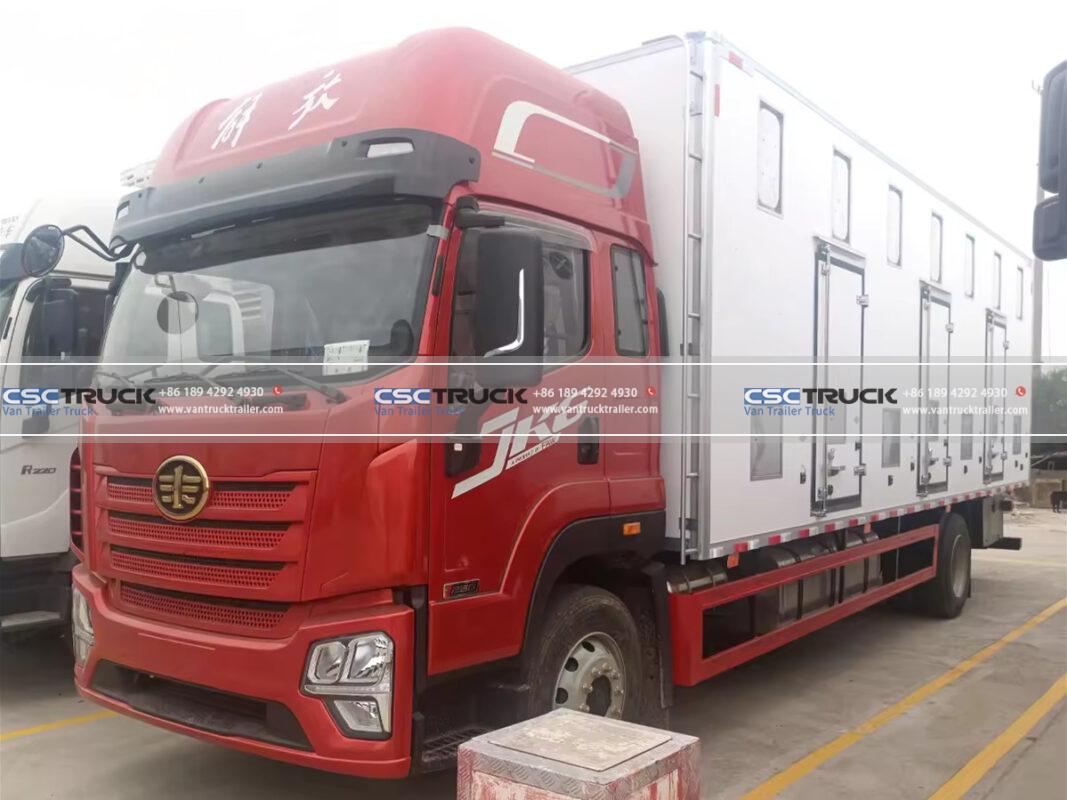
Vietnam’s US$8.2 billion pork industry, the largest in Southeast Asia, has achieved a significant ethical and operational milestone with the introduction of a modern livestock truck fleet, a strategic partnership between CSCTRUCK Vantrucktrailer and Vietnam’s leading pork producer. This initiative directly addresses growing concerns over animal welfare standards in Vietnam’s rapidly intensifying livestock sector, where traditional transport methods have contributed to 15-20% pre-slaughter weight loss and 7% mortality rates during transit. Designed specifically for Vietnam’s tropical climate and dense road networks, these welfare-certified transport solutions combine European engineering with localized adaptations, featuring climate-controlled cabins, AI-assisted health monitoring, and stress-reducing loading systems—positioning Vietnam’s pork producers to meet stringent EU and Japanese import requirements while improving domestic meat quality.
1. Transforming Vietnam’s Pork Supply Chain Challenges
For decades, Vietnam’s pork transportation relied on outdated methods with severe consequences:
- Non-ventilated metal cages causing heat stress in 35°C+ temperatures
- Overcrowded conditions leading to 12% injury rates from fighting
- Improper handling resulting in 18% carcass downgrades at processing plants
The new animal welfare-focused fleet introduces groundbreaking improvements:
- Multi-zone ventilation systems maintaining optimal 18-22°C temperatures
- RFID ear tag scanners tracking individual animal stress levels in real-time
- Non-slip rubber flooring with gentle slope ramps for easy loading
Early trials by CP Vietnam show 40% reduction in transport mortality and 3.5% increase in meat quality grades—critical for Vietnam’s ambitions to expand exports to Japan’s US$1.9 billion pork import market.
2. Engineering Breakthroughs in Humane Livestock Transport
Climate Control Innovations
- Humidity-regulated airflow prevents respiratory distress in tropical conditions
- Solar-reflective aluminum roofs reduce cabin temperatures by 8-12°C
- Emergency misting systems activated during traffic delays
Animal Welfare Features
- Adjustable partition walls customize space per animal size/weight
- Low-frequency vibration damping minimizes motion sickness on Vietnam’s highways
- Automated water dispensers with vitamin-enriched electrolytes
These advancements far surpass conventional cargo truck conversions previously used, which lacked climate control, or dry van trucks repurposed without proper animal welfare considerations. The fleet’s 15% fuel efficiency gain through aerodynamic designs also supports Vietnam’s Net Zero 2050 commitments.
3. Strategic Partnership: Localizing Global Standards
The CSCTRUCK Vantrucktrailer collaboration extends beyond vehicles to build sustainable capacity:
Training & Certification
- 200+ Vietnamese drivers certified in low-stress animal handling techniques
- Mobile training units educating smallholders in 12 provinces
Economic Benefits
- US$28 million annual savings from reduced mortality and improved meat yields
- 600+ new jobs created in maintenance and logistics
Export Market Expansion
With EU-compliant welfare documentation, Vietnamese pork now qualifies for:
- Germany’s stringent Tierwohl program requirements
- Singapore’s premium “Stress-Free” meat certifications
4. Driving Vietnam’s Agricultural Modernization Forward
This investment aligns with Vietnam’s Livestock Development Strategy 2030, enabling:
- Traceable supply chains through blockchain-enabled transport logs
- Higher profit margins for small-scale farmers via cooperative transport pools
- Reduced antibiotic use by minimizing stress-induced diseases
While cargo trucks continue serving feed distribution and dry van trucks remain essential for processed meat logistics, these specialized vehicles establish Vietnam as Southeast Asia’s leader in ethical livestock innovation. Explore CSCTRUCK Vantrucktrailer’s full range of agricultural transport solutions at vantrucktrailer.com.
This advancement not only elevates Vietnam’s pork industry standards but demonstrates how animal welfare investments can drive both profitability and global market access—a model for emerging economies balancing intensification with sustainability.