Understanding Asphalt Distributor Truck Capacity: More Than Just Tank Volume
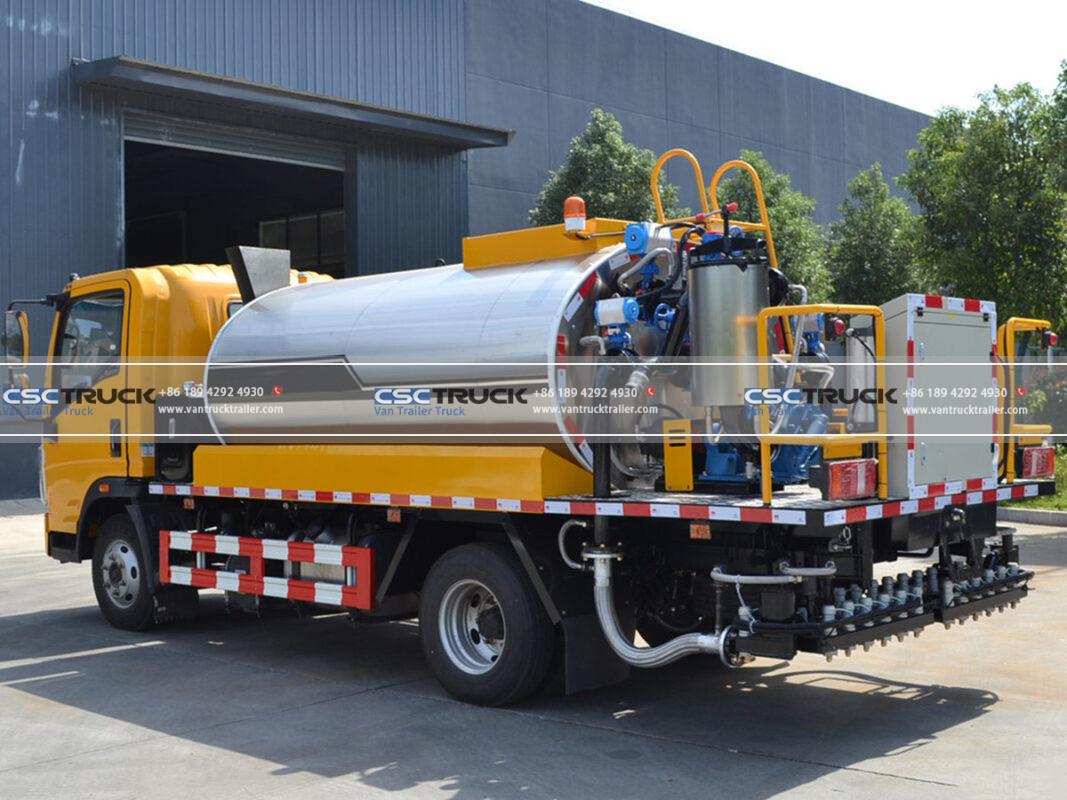
When business owners first evaluate an asphalt distributor truck, the most immediate specification that attracts attention is tank capacity, typically expressed in liters or gallons. While this number is certainly important, understanding what capacity truly means in practical, operational terms requires a deeper analysis that goes well beyond simple storage volume. The effective capacity of an asphalt distributor truck is influenced by thermal management systems, legal road weight limits, spray rate requirements, and the type of projects the vehicle is expected to support.
Unlike a dump truck that primarily measures its usefulness by cubic payload volume, or a mixer truck that focuses on drum capacity for concrete transport, an asphalt distributor truck must maintain strict temperature control and precise spray consistency. The tank’s volume determines how much bitumen the truck can carry at one time, but the usable capacity in daily operations depends on how efficiently the heating system preserves viscosity and how accurately the spray system dispenses the material.
In road construction and maintenance, distributor capacity directly impacts productivity, scheduling efficiency, fuel consumption, and project profitability. Selecting too small a tank may result in frequent refilling trips, reducing daily output. Conversely, choosing an excessively large tank may create unnecessary capital expense, increased fuel consumption, and potential underutilization. For contractors and fleet managers, the optimal capacity must align with operational scale, project types, and regional regulatory constraints.
Standard Capacity Ranges in the Market
Asphalt distributor trucks are typically manufactured in several standardized tank size categories designed to accommodate varying project scales, from municipal road repairs to large-scale highway resurfacing.
Small-Capacity Units (3,000–6,000 Liters)
Smaller distributor trucks, often ranging between 3,000 and 6,000 liters (approximately 800 to 1,600 gallons), are commonly used in urban maintenance operations and local road repair projects. These units are usually mounted on medium-duty chassis, offering improved maneuverability in confined city streets or residential neighborhoods.
For contractors focusing on patchwork, small-scale resurfacing, or municipal contracts, smaller capacity trucks can provide adequate daily output while maintaining lower acquisition and operating costs. Their lighter gross vehicle weight allows easier compliance with urban road restrictions and may reduce fuel consumption.
However, limited tank volume means more frequent refilling, which can become inefficient if the asphalt plant is located far from the jobsite. Business owners must calculate average daily spray requirements to determine whether this capacity tier aligns with operational demands.
Medium-Capacity Units (6,000–10,000 Liters)
Medium-capacity asphalt distributor trucks represent the most common configuration in many markets. With tank sizes typically ranging from 6,000 to 10,000 liters (1,600 to 2,600 gallons), these trucks strike a practical balance between volume and maneuverability.
For contractors handling regional highway maintenance, chip sealing operations, or medium-scale infrastructure projects, this capacity range often provides optimal efficiency. The truck can operate for extended periods before requiring replenishment, while still maintaining acceptable road compliance and operational flexibility.
Medium-capacity units are frequently mounted on heavy-duty chassis with enhanced insulation systems and high-performance burners to ensure consistent temperature management across longer work cycles.
Large-Capacity Units (10,000–15,000+ Liters)
Large-capacity asphalt distributor trucks, often exceeding 10,000 liters and reaching 15,000 liters or more (up to approximately 4,000 gallons), are typically used in large highway construction projects and extensive surface treatment operations.
These high-capacity units allow contractors to cover significant surface areas without interruption, reducing downtime associated with refilling and increasing overall daily productivity. However, they require robust chassis configurations, multiple axles to distribute weight legally, and advanced heating systems to maintain uniform binder temperature.
While large-capacity trucks offer clear advantages in high-volume operations, they also involve higher acquisition costs, increased fuel consumption, and greater maintenance complexity. Their use is most justified when project scale consistently demands sustained high output.
Factors That Influence Effective Working Capacity
Tank volume alone does not determine how much asphalt can be applied during a project. Several operational and regulatory factors influence the effective working capacity of an asphalt distributor truck.
Spray Rate Requirements
Different projects require varying spray application rates, typically measured in liters per square meter or gallons per square yard. A high spray rate for prime coating consumes material much faster than a lighter tack coat application.
For example, a 10,000-liter tank may cover a vastly different area depending on the specified application rate. Contractors must therefore evaluate not only tank size but also the expected consumption per project type when determining suitable capacity.
Road Weight Regulations
Just as a dump truck must comply with axle load restrictions when transporting aggregates, asphalt distributor trucks must adhere to legal gross vehicle weight limits. The density of bitumen is significant, meaning that a fully loaded tank can quickly approach or exceed allowable limits if not properly configured.
Multi-axle configurations and weight distribution systems are often necessary for larger tanks. Failure to comply with road regulations can result in fines, operational delays, and increased wear on vehicle components.
Temperature Management and Insulation
Bitumen must remain within a specific temperature range to maintain sprayable viscosity. The quality of insulation and heating systems directly impacts usable capacity. Poor insulation may result in heat loss, requiring additional burner operation and increased fuel consumption.
In colder climates, larger tanks may demand more powerful heating systems to maintain consistent temperature throughout the material volume. Without adequate thermal control, effective capacity is reduced because portions of the binder may cool below optimal spraying conditions.
Operational Planning: Matching Capacity to Project Type
From a business perspective, selecting the appropriate asphalt distributor capacity should be based on typical project scenarios and operational logistics.
Urban Road Maintenance
Municipal maintenance contracts often involve shorter routes, frequent stops, and smaller surface areas. In these cases, a smaller or medium-capacity distributor truck may be more practical. Maneuverability becomes more important than maximum volume, and refilling logistics are usually manageable due to proximity to supply facilities.
Highway and Rural Infrastructure Projects
For long highway stretches or rural infrastructure developments, large-capacity units reduce downtime and improve efficiency. Refilling trips can be costly and time-consuming when asphalt plants are located far from the jobsite. In such scenarios, higher tank volume directly correlates with increased productivity.
Integration with Other Fleet Vehicles
Asphalt distributor trucks operate within a broader equipment ecosystem. After binder application, aggregate may be delivered by a dump truck, and in certain projects involving rigid pavement elements, a mixer truck may supply concrete for structural features or adjacent components.
Fleet coordination ensures that distributor capacity aligns with the pace of aggregate spreading and compaction. If the distributor applies binder too quickly relative to aggregate delivery, workflow interruptions may occur. Conversely, insufficient distributor capacity may cause downstream delays.
Strategic planning therefore requires evaluating the entire material flow process rather than focusing solely on the distributor truck in isolation.
Financial and Strategic Considerations for Business Owners
When determining what capacity an asphalt distributor truck should have, business owners must conduct a thorough financial and operational analysis.
Acquisition cost increases significantly with tank size, chassis strength, burner capacity, and advanced control systems. Larger units also involve higher insurance premiums, increased fuel consumption, and more complex maintenance requirements. However, these costs may be offset by improved productivity on high-volume projects.
Utilization rate is perhaps the most critical factor. A large-capacity distributor truck that operates at full capacity consistently can generate strong returns on investment. In contrast, an oversized unit with intermittent workload may become financially burdensome.
Future growth plans should also be considered. Contractors planning to expand into highway resurfacing or regional infrastructure markets may benefit from investing in medium-to-large capacity equipment to position themselves competitively for larger contracts.
Environmental regulations and emissions standards are increasingly influential in equipment selection. Modern distributor trucks with advanced burners and efficient insulation can reduce fuel consumption and carbon emissions, supporting sustainability objectives while lowering operating costs.
Ultimately, asphalt distributor truck capacity should be selected based on realistic workload projections, logistical considerations, regulatory compliance, and long-term strategic goals. For contractors and fleet managers seeking deeper industry insights, technical comparisons, and guidance on commercial vehicle configurations, resources available through vantrucktrailer.com can provide valuable support in evaluating the most appropriate capacity solutions for sustainable business growth.