
Understanding the Core of Heavy-Duty Transport
In global logistics and supply chain management, the concept of heavy-duty cargo truck capacity is central to the efficiency, safety, and profitability of transport operations, because the measure of capacity goes far beyond the simple ability of a truck to carry a large amount of goods, encompassing an intricate balance of engineering, regulatory compliance, operational demands, and technological integration. Operators and fleet managers who rely on heavy-duty trucks to move raw materials, manufactured goods, or specialized cargo understand that capacity must be defined not only in terms of gross weight but also through payload distribution, structural design, and adaptability to diverse transportation challenges.
Heavy-duty cargo trucks are the backbone of industries ranging from construction and agriculture to retail distribution and international trade, and in each sector, the definition of capacity shifts slightly depending on what needs to be moved, how far it must travel, and the infrastructure it must pass through. Understanding what defines true capacity means acknowledging that it is a multidimensional concept shaped by engineering specifications, legal frameworks, and operational realities.
Engineering Foundations of Capacity
Payload, Gross Vehicle Weight, and Axle Load
At its most technical level, heavy-duty truck capacity begins with the relationship between payload capacity, gross vehicle weight rating (GVWR), and axle load distribution, which together determine how much weight a truck can safely and legally carry. Payload capacity refers to the maximum weight of cargo that can be added without exceeding GVWR, while axle load limits ensure that weight is distributed in a way that prevents infrastructure damage and maintains vehicle stability.
Engineering innovations in chassis strength, suspension systems, and braking technologies further influence how a truck handles heavy loads, with manufacturers designing reinforced frames, advanced shock absorbers, and electronically controlled braking systems to maintain safety and reliability under maximum weight conditions. It is not enough for a truck to be powerful; it must also be structurally capable of withstanding continuous stress over thousands of kilometers without compromising safety or efficiency.
Structural and Design Considerations
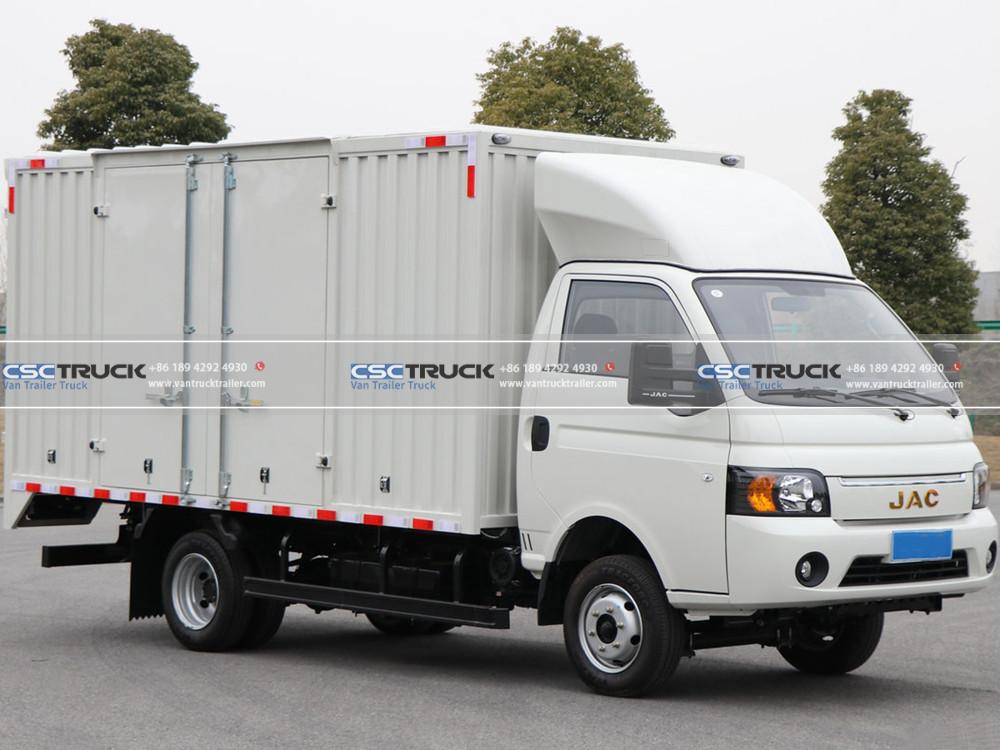
The size and design of the cargo body also contribute significantly to defining capacity. Trucks with longer wheelbases, reinforced flooring, or specialized cargo bodies are engineered to optimize both space and weight handling. Whether it is a flatbed built for construction materials or a refrigerated truck designed to carry perishable goods while maintaining strict temperature controls, the body structure is just as critical as the engine output in determining effective capacity.
Legal, Regulatory, and Safety Factors
Capacity is not purely an engineering question; it is also governed by laws and regulations that vary across regions and countries. Governments impose weight limits on roads, bridges, and highways to prevent infrastructure damage and ensure public safety, meaning that even if a truck is mechanically capable of carrying more, it may legally be restricted to a lower limit.
Operators must therefore balance the engineering specifications of their trucks with compliance requirements, including axle weight restrictions, total gross weight allowances, and cargo-specific safety standards. For example, hazardous materials require not only load stability but also containment systems and safety equipment, while livestock transport demands ventilation systems and compartmentalized spaces. Adhering to these rules is not optional; it defines the operational capacity of the truck in real-world scenarios.
Safety considerations extend to driver training and operating conditions, as overloading not only increases the risk of accidents but also accelerates wear on braking systems, tires, and suspension components. True heavy-duty capacity, therefore, incorporates a margin of safety that ensures the truck performs reliably under varying terrain, climate, and traffic conditions.
Operational Realities and Industry Applications
Logistics and Distribution Networks
In logistics and retail distribution, capacity is often measured in terms of how efficiently trucks can handle mixed loads, optimize space utilization, and reduce empty return trips. Heavy-duty trucks designed for long-haul operations must balance volume with weight capacity, ensuring that cargo is packed in a way that maximizes revenue per trip while staying within legal and engineering limits. Fleet managers focus on load planning and route optimization as much as on mechanical specifications, since capacity also means the ability to deliver goods consistently and cost-effectively.
Agriculture, Livestock, and Perishables
In agriculture, trucks must be capable of carrying bulk produce or livestock, often in remote areas with limited infrastructure. A livestock truck may have a lower gross weight than a bulk grain hauler but is designed with specialized compartments, ventilation systems, and flooring to safely transport animals without stress or injury, which effectively defines its unique form of capacity. Similarly, refrigerated trucks that move perishable goods are constrained not only by payload weight but also by the insulation, refrigeration systems, and airflow designs that keep products fresh over long distances. These specialized needs show that capacity is never one-dimensional but deeply tied to the nature of the cargo.
Technology as a Capacity Multiplier
Modern technologies are redefining how heavy-duty cargo truck capacity is measured and utilized, with digital innovations providing tools for safer, more efficient, and more profitable operations. Telematics systems allow operators to track weight distribution in real-time, ensuring that loads remain balanced and within legal limits. Onboard sensors monitor braking efficiency, tire pressure, and suspension performance, enabling predictive maintenance that prevents failures under heavy loads.
In addition, route optimization software calculates the most fuel-efficient paths, reducing operational costs and extending the effective capacity of fleets by allowing them to carry more loads within the same time frame. For specialized trucks such as refrigerated vehicles, smart temperature monitoring ensures cargo integrity while reducing energy consumption, thereby extending the capacity of the refrigeration system itself. Together, these technologies transform capacity from a fixed mechanical figure into a dynamic, adaptable metric that can be optimized continuously.
Strategic and Future Perspectives
The future of heavy-duty cargo capacity is being shaped by electrification, modularity, and sustainability initiatives that are driving the transport industry toward more flexible and environmentally responsible operations. Electric heavy-duty trucks, for example, redefine capacity by balancing payload with battery weight, forcing manufacturers to innovate in lightweight materials and aerodynamic design to maintain competitive ranges.
Meanwhile, modular truck concepts are making it possible for a single chassis to serve multiple functions, switching between flatbeds, van truck bodies, or refrigerated units as needed, effectively multiplying the capacity of a fleet without multiplying the number of vehicles. This adaptability is particularly appealing for companies facing unpredictable demand or operating in industries with seasonal variations.
At the strategic level, capacity is no longer simply about weight and volume but also about resilience, adaptability, and long-term value. Companies investing in next-generation heavy-duty cargo trucks are looking not just at how much they can carry today but at how effectively these vehicles can adapt to future challenges, from regulatory shifts to the rise of autonomous transport systems.
Manufacturers like CSCTRUCK Vantrucktrailer are setting the pace by developing vehicles that blend engineering strength with modular versatility and digital intelligence, ensuring that capacity is defined not only in terms of maximum payload but in overall performance, adaptability, and reliability. For operators in logistics, agriculture, construction, or perishable goods transport, the true definition of heavy-duty cargo truck capacity lies in how well their fleets can balance strength with flexibility, compliance with innovation, and present demands with future opportunities.