In the relentless world of logistics, mining, and large-scale construction, the heavy-duty cargo truck stands not merely as a vehicle but as the critical artery of commerce and development. Its reliability transcends mere convenience; it dictates project timelines, operational budgets, supply chain integrity, and ultimately, the bottom line. A breakdown isn’t an inconvenience; it’s a cascading failure. Therefore, understanding the essential features that define true reliability in these mechanical titans is paramount for fleet managers, operators, and businesses whose success hinges on uninterrupted haulage. True reliability is a symphony of robust engineering, intelligent design, and resilient components, forged to endure the most punishing conditions day in and day out.
Foundational Fortitude: The Bedrock of Endurance
The very skeleton of a reliable heavy-duty cargo truck must be engineered for a lifetime of punishment. This foundation is non-negotiable.
- High-Strength Steel Chassis & Frame: Utilizing advanced high-tensile steel alloys or specialized heat-treated frames is essential. These provide the necessary structural rigidity to resist permanent twisting, bending, or cracking under maximum gross vehicle weight (GVW) and severe torsional stresses encountered off-road or on poorly maintained highways. Think of it as the truck’s backbone; if it fails, everything collapses.
- Multi-Axle Configurations & Reinforced Suspension: Heavy loads demand sophisticated weight distribution. Tandem or tridem drive axles, coupled with robust leaf spring or air suspension systems designed for high load-carrying capacity and stability, are crucial. Heavy-duty shock absorbers and stabilizer bars mitigate the damaging effects of vibration and sway, protecting both the cargo and the truck’s components over thousands of miles. The suspension isn’t just about ride quality; it’s about integrity preservation.
- Corrosion Resistance & Protective Treatments: Exposure to road salt, chemicals, moisture, and abrasive materials is inevitable. Industrial-grade corrosion protection through cathodic dip priming, zinc-rich coatings, and durable underbody protection (like rubberized or polyurethane sprays) significantly extends frame and component life, preventing premature structural failure that plagues lesser trucks.
The Heartbeat of Dependability: Powertrain Performance
The engine, transmission, and drivetrain form the core circulatory system. Their robustness and synergy define the truck’s ability to perform consistently under duress.
- High-Torque Diesel Engines: Modern turbocharged and intercooled diesel engines remain the gold standard, delivering the immense low-end torque required to move massive loads efficiently, especially from a standstill or on steep inclines. Fuel efficiency achieved through precise electronic control, high-pressure common-rail injection, and effective after-treatment systems (like SCR – Selective Catalytic Reduction) isn’t just about cost savings; it extends range and reduces refueling downtime, enhancing operational continuity.
- Robust Transmissions & Drivelines: Whether a sophisticated automated manual transmission (AMT) offering seamless gear changes and reduced driver fatigue, or a traditional manual gearbox built for brute-force engagement, the transmission must handle the engine’s torque output without faltering. Heavy-duty clutches, reinforced drive shafts (often utilizing universal joints (U-joints) rated for extreme angles), and final drives with proven gear durability are critical. Power needs to reach the ground reliably, transmission after transmission.
- Thermal Management & Cooling: Sustained heavy loads generate immense heat. Oversized radiators, high-capacity cooling fans (often viscous or electronically controlled), and efficient charge air coolers are vital thermal management systems to prevent catastrophic engine or transmission overheating, especially in demanding environments like desert heat or prolonged mountain climbs. Reliability demands keeping temperatures in check.
Operational Resilience: Systems Built for Uptime
Beyond the powertrain and frame, a constellation of supporting systems must be equally dependable to ensure the truck stays operational.
- Electrical System Integrity: Modern trucks are laden with electronics. A high-output alternator, heavy-duty deep-cycle batteries, and weatherproofed, abrasion-resistant wiring harnesses are essential to power everything from critical engine controls to safety systems and auxiliary equipment without failure. Voltage regulation and clean power delivery prevent costly electronic module damage.
- Hydraulic & Pneumatic Reliability: Essential for braking, suspensions (if air), and auxiliary equipment (like dump bodies or cranes), high-flow hydraulic pumps, leak-resistant hoses and fittings (often using braided stainless steel reinforcement), efficient air compressors, moisture-resistant air dryers, and durable valves ensure these critical systems function flawlessly under constant pressure cycles.
- Ease of Maintenance & Serviceability: Reliability is also measured by how quickly and easily the truck can be serviced. Strategic component placement for easy access, standardized fittings, extended service intervals (for fluids, filters, greasing points), and comprehensive diagnostic ports (like J1939 CAN bus) are essential features. Minimizing workshop time is maximizing uptime.
Guardians on the Road: Advanced Safety & Control Systems
A reliable truck is also a safe truck. Modern safety technologies not only protect lives and cargo but also prevent accidents that cause significant downtime and damage.
- Foundation Braking Systems: Large-diameter, vented disc brakes or expanding cam drum brakes with anti-lock braking systems (ABS) provide the primary stopping power. Automatic slack adjusters maintain optimal brake shoe-to-drum clearance, crucial for consistent performance.
- Electronic Stability & Collision Mitigation: Electronic Stability Control (ESC) or Roll Stability Control (RSC) actively intervene to prevent rollovers and loss-of-control situations during evasive maneuvers or on slippery surfaces. Collision Mitigation Systems (CMS) using radar and/or cameras provide forward collision warnings and can automatically apply brakes to lessen impact severity or avoid collisions altogether. Adaptive Cruise Control (ACC) reduces driver fatigue and maintains safe following distances.
- Visibility & Driver Assistance: Robust LED lighting (headlights, taillights, marker lights) offers superior illumination and longevity. Wide-angle mirrors, close-proximity cameras, and blind-spot monitoring systems significantly enhance situational awareness for the driver, particularly crucial for large vehicles navigating complex urban environments or tight loading yards.
Tailored Toughness: Specialized Configurations for Specific Missions
The definition of reliability can be refined based on the truck’s specific vocation within the heavy-duty sphere.
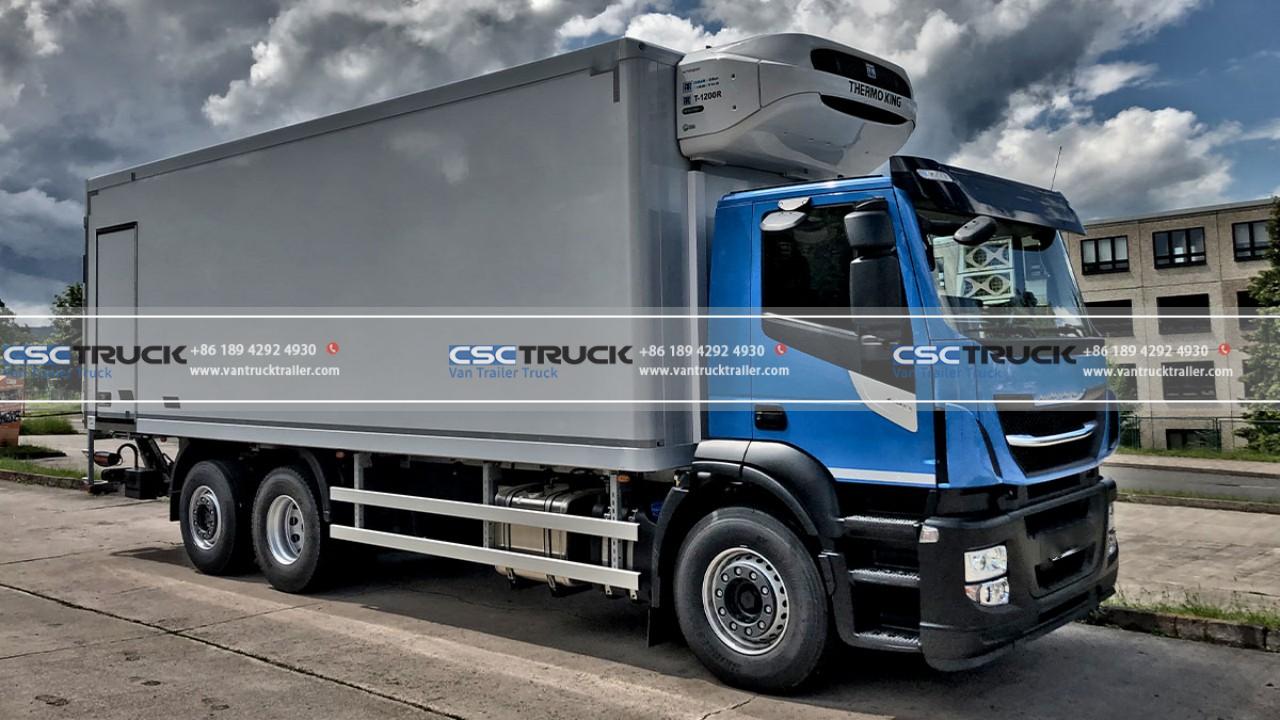
- Refrigerated Truck Imperatives: For temperature-sensitive cargo, reliability extends to the refrigeration unit itself. This demands a powerful, independently powered (often diesel-driven) refrigeration unit with advanced temperature control precision and multi-zone capability. Excellent body insulation (using high R-value polyurethane foam), robust, airtight door seals, and durable interior liners resistant to moisture and cleaning chemicals are equally critical. The truck isn’t just hauling; it’s preserving, and the cold chain must never break.
- Van Truck / Box Truck Essentials: Protecting high-value or sensitive cargo from theft and the elements requires a secure, durable cargo box. High-strength composite or aluminum panels, robust locking mechanisms (often with central locking systems), integrated load restraint points, and a weatherproof design are paramount. Reliability here ensures cargo arrives intact and secure. Smooth-running roll-up doors or swing doors with reliable mechanisms are vital components of the workflow.
The Human Factor: Driver-Centric Design for Sustained Performance
A truck is only as reliable as the person operating it. Designs prioritizing the driver contribute significantly to sustained, safe operation.
- Ergonomic Cabin Architecture: Adjustable air-suspension seats, logical control placement, ample storage, effective HVAC systems, and excellent visibility reduce fatigue and physical strain during long hauls, allowing the driver to remain alert and operate the vehicle optimally.
- Noise, Vibration, and Harshness (NVH) Control: Enhanced cab insulation, vibration-damping mounts for the cab and major components, and optimized driveline harmonics create a significantly quieter and less fatiguing environment. Lower stress levels translate to better concentration and decision-making.
- Intuitive Information & Telematics: A clear, customizable instrument cluster and user-friendly infotainment/telematics interface keep the driver informed about vehicle status, navigation, and critical alerts without undue distraction. Integrated telematics also enables remote diagnostics and proactive maintenance scheduling, further boosting uptime.
Future-Proofing Reliability: Engineering for the Long Haul
Reliability isn’t static; it evolves with technology and operational demands. Leading manufacturers and specialists like Vantrucktrailer continuously integrate advancements to push the boundaries of heavy-duty dependability. This includes leveraging predictive maintenance algorithms derived from vast operational data streams fed by onboard sensors, enabling potential failures to be addressed before they cause stoppages. Enhanced connectivity facilitates remote diagnostics and over-the-air software updates, ensuring fleets operate with optimal performance and compliance. Material science innovations yield components with superior wear resistance and longevity. The focus is shifting towards Total Cost of Ownership (TCO), where upfront price is balanced against fuel efficiency, maintenance costs, resale value, and crucially, unmatched uptime. Choosing a truly reliable heavy-duty cargo truck, whether a rugged tipper, a long-haul tractor, a specialized refrigerated truck, or a secure van truck, means investing in a meticulously engineered partner engineered not just to start the journey, but to conquer every mile, every load, and every challenge, day after demanding day, year after profitable year. It’s the bedrock upon which successful, resilient logistics operations are built.