
Beyond Cargo: The Ethical Imperative
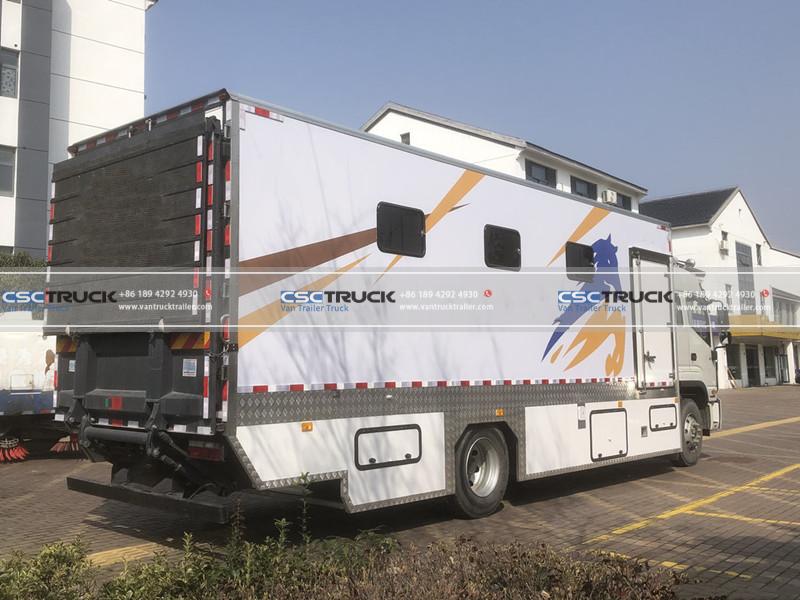
As dawn breaks over a Wyoming cattle ranch, 120 head of Angus steers prepare for a 400-mile journey to a finishing facility. Unlike inert freight carried by standard cargo trucks, these living, breathing creatures demand transportation solutions prioritizing biological needs over mere payload efficiency. Modern livestock trucks represent a complex fusion of bioengineering, regulatory compliance, and animal behavior science—where every design choice directly impacts welfare outcomes, meat quality, and operational viability.
1. Animal Welfare Foundations: Reducing Stress & Injury
Transport remains one of the highest-stress events in livestock lifecycles. Mitigating this requires purpose-built solutions.
Biomechanical Safety Systems
- Non-Slip Flooring: Textured rubber mats or epoxy-coated steel with 30° traction angles prevent falls during acceleration/braking, reducing leg fractures by 60% compared to smooth surfaces.
- Dynamic Partitioning: Hydraulic adjustable gates create customizable pens that limit livestock movement to 12-18 inches during transit while allowing rapid reconfiguration for mixed-size loads.
Behavioral Calming Features
- Low-Stress Loading: Integrated ramp systems maintain ≤10° inclines with side curtains blocking peripheral distractions, aligning with Temple Grandin’s curved chute principles to minimize balking.
- Light Optimization: Blue-spectrum LED lighting reduces agitation in swine by 40% while maintaining 50 lux minimum visibility for veterinary inspections during transit.
2. Environmental Control: The Microclimate Imperative
Livestock generate 500-800 BTUs of heat per hour per animal—transforming trailers into moving bioreactors requiring precision management.
Ventilation Engineering
- Tiered Airflow Systems: Roof-mounted positive-pressure intakes force fresh air downward while sidewall exhaust vents create chimney effects, achieving 60-80 complete air changes per hour—critical for ammonia dispersion.
- Automated Climate Response: RH/temperature sensors trigger variable-speed fans and misting nozzles, maintaining species-specific conditions:
- Dairy cattle: 4-18°C at 60% RH
- Poultry: 18-22°C at 50% RH
Emergency Mitigation
- Heat Stress Protocols: Thermal imaging cameras alert drivers when 20% of animals exceed species-specific core thresholds (e.g., 39°C for swine), activating roof-mounted sprinklers and ramping ventilation to 120 CFM/head.
3. Structural Integrity & Sanitation: Durability Meets Biosafety
Robust construction prevents catastrophic failures while containing biological hazards.
Pathogen Control Systems
- Seamless Surfaces: Monolithic polyurea-coated interiors eliminate crevices where pathogens linger, enabling high-pressure steam cleaning at 180°F between loads.
- Manure Management: V-shaped stainless steel gutters with automated flushing ports route waste to 500-gallon containment tanks, complying with FDA’s 21 CFR Part 600 sanitation standards.
Crashworthiness Enhancements
- Rollover Protection: Reinforced roof pillars withstand 2.5x GVWR impact forces—a non-negotiable feature given livestock trailers’ high center of gravity.
- Emergency Egress: Remotely activated side panels provide secondary escape routes if primary doors jam post-accident.
4. Regulatory Compliance: Navigating Global Welfare Frameworks
Transport operations must satisfy overlapping jurisdictional mandates with zero margin for error.
Key Regulation Benchmarks
| Region | Rest Periods | Density Limits | Temperature Triggers |
|---|---|---|---|
| EU Council Reg 1/2005 | 8hr travel + 1hr rest | 500kg/m² for cattle | Mandatory stop >30°C |
| US 28-Hour Law | Feed/water every 28hr | Varies by state | None |
| Australia ASEL | 12hr max summer travel | 330-440kg/m² for sheep | Ventilation >25°C |
Documentation Integration
- Automated Logging: RFID ear tags sync with onboard systems to generate digital Animal Transport Certificates—tracking individual exposure times to motion, temperature extremes, and vibration.
5. Operational Efficiency: Balancing Welfare & Economics
Optimizing payload viability without compromising ethics requires technological mediation.
Payload Optimization Tools
- Dynamic Weight Distribution: Load-sensitive air suspensions automatically adjust pressure to maintain 10-15% steer axle loading even as livestock shift during transit.
- Fuel Efficiency Innovations: Aerodynamic skirts and trailer tails reduce drag by 18%, offsetting the 30% fuel penalty from ventilation systems’ power demands.
Driver-Assist Systems
- Stability Control: Gyroscopic sensors detect rollover risks on curves, applying trailer brakes independently when lateral G-forces exceed 0.35g.
- Biometric Monitoring: In-cab displays show real-time stress indicators (vocalization frequency, movement anomalies) detected by ceiling-mounted sensors.
The Specialization Spectrum
Where dump trucks excel in volumetric hauling and standard cargo trucks prioritize cubic efficiency, livestock transporters operate at the intersection of mechanical engineering and veterinary science. Unlike the configurable generality of a Vantrucktrailer, these vehicles embody purpose-built sophistication—transforming what could be merely functional transport into a mobile extension of ethical husbandry. Every textured floor panel, every calibrated airflow duct, and every sensor monitoring bovine respiratory rates serves a singular mission: honoring the living cargo through engineered compassion from origin to destination.