What Is a Livestock Truck Designed For?
Transporting live animals is one of the most demanding and specialized segments within the commercial vehicle industry. Unlike moving pallets of packaged goods or construction materials, livestock transportation involves managing living, breathing cargo whose welfare directly affects both ethical responsibility and financial outcomes. A livestock truck is not simply a modified cargo platform; it is a purpose-built vehicle engineered to ensure animal safety, regulatory compliance, operational efficiency, and biosecurity throughout the transportation process.
For agricultural producers, meat processors, livestock traders, and logistics companies serving rural economies, selecting the right livestock transport solution can significantly influence profitability, mortality rates, weight retention, and brand reputation. Understanding what a livestock truck is truly designed for requires examining its structural features, ventilation systems, loading configurations, regulatory framework, and real-world operating scenarios.
Purpose and Core Function of a Livestock Truck
At its most fundamental level, a livestock truck is designed to transport live animals—such as cattle, sheep, pigs, goats, and poultry—from farms to markets, feedlots, slaughterhouses, breeding facilities, or export terminals. However, the vehicle’s purpose extends far beyond simple relocation.
The primary design objective is to minimize animal stress while maintaining safe and efficient transport conditions over varying distances and climates. Stress reduction is not merely an ethical consideration; it has direct economic implications. Animals subjected to excessive heat, overcrowding, poor ventilation, or rough handling often experience weight loss, dehydration, bruising, or even mortality, all of which reduce the commercial value of the shipment.
Unlike a standard cargo truck, which is typically configured for palletized or boxed freight, a livestock truck must account for movement within the cargo area. Animals shift their weight, respond to acceleration and braking, and require stable footing. Therefore, the vehicle must provide internal structures that prevent slipping, overcrowding, or dangerous compression.
From a business perspective, the livestock truck serves as a mobile containment and welfare management system, designed to balance productivity with responsibility.
Structural Design and Compartment Configuration
The physical construction of a livestock truck differs substantially from other commercial vehicles, as its interior and exterior components are engineered around animal safety rather than freight containment alone.
Multi-Level Deck Systems
Many livestock trucks feature multi-deck configurations that allow operators to maximize capacity without compromising space per animal. Adjustable deck heights enable customization based on the species being transported. For example, pigs and sheep may be transported on stacked decks, while cattle often require single-level compartments due to their size and height.
Proper headroom is critical, as inadequate clearance can cause injury and stress. Adjustable systems provide flexibility for operators who handle mixed livestock categories throughout the year.
Non-Slip Flooring and Drainage
Livestock transport involves moisture, waste, and cleaning procedures that demand durable and hygienic flooring. Non-slip surfaces reduce the risk of animals falling during transit, particularly when the vehicle is navigating uneven rural roads or sudden braking in traffic.
Integrated drainage systems are equally important. They allow liquids to flow away from standing areas, maintaining cleaner and drier conditions that support both animal welfare and biosecurity compliance.
Side Panels and Ventilation Openings
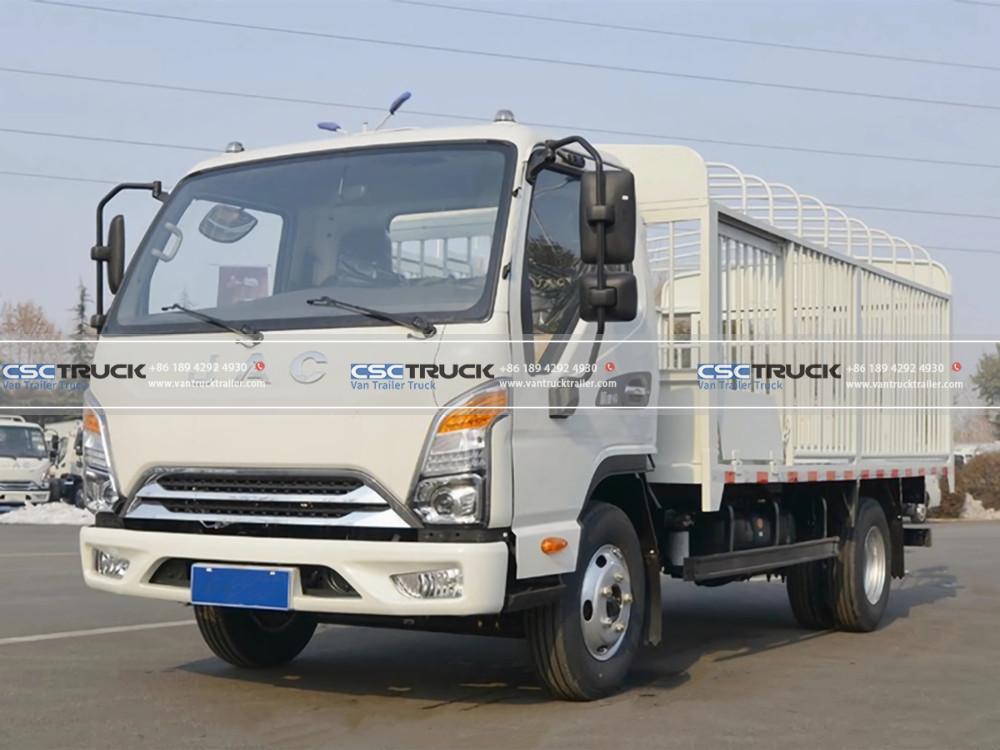
Unlike enclosed vehicles, such as refrigerated trucks, which rely on controlled cooling systems to preserve perishable goods, livestock trucks prioritize airflow and natural ventilation. Side slats or perforated panels enable continuous air exchange, helping regulate temperature and humidity levels during transit.
In extreme climates, additional mechanical ventilation systems may be integrated to maintain stable conditions and prevent heat stress.
Animal Welfare and Regulatory Compliance
Livestock transportation is heavily regulated in many regions, with strict standards governing space allocation, journey duration, rest intervals, and environmental conditions. A well-designed livestock truck must comply with these legal requirements while maintaining operational efficiency.
Space and Stocking Density
Overcrowding increases stress, injury risk, and mortality rates. Regulations typically define minimum space allowances per animal based on weight and species. Responsible operators recognize that maintaining proper stocking density not only satisfies legal requirements but also protects product quality and long-term business credibility.
Journey Time and Rest Management
For long-distance transport, vehicles may need to incorporate features that facilitate rest stops, watering systems, or access for animal inspection. Strategic route planning and compliance documentation are essential components of responsible livestock logistics.
Biosecurity Considerations
Biosecurity is a critical aspect of livestock transport. Disease transmission between farms or regions can have devastating economic consequences. Livestock trucks are therefore designed for thorough cleaning and disinfection between trips. Smooth interior surfaces, accessible wash-down points, and corrosion-resistant materials help ensure that sanitation procedures are effective and efficient.
Business owners must factor cleaning time and compliance checks into operational planning, as neglecting biosecurity protocols can result in significant fines or business suspension.
Operational Scenarios and Route Planning
The design of a livestock truck reflects the diverse operating environments in which it must perform. From rural dirt roads to major highways and border crossings, the vehicle must combine durability with stability.
Rural and Off-Road Conditions
Livestock farms are often located in remote areas where road conditions may be inconsistent. A robust chassis, reinforced suspension, and high ground clearance are critical for maintaining safe transport conditions over uneven terrain.
Compared to a standard cargo truck primarily designed for paved logistics corridors, a livestock truck must be capable of absorbing road shocks without causing excessive movement inside the animal compartments.
Climate Adaptability
Transporting livestock across regions with fluctuating temperatures requires thoughtful climate management. In hot climates, additional shading panels and forced-air ventilation systems are often necessary to prevent overheating. In colder environments, wind protection and partial enclosure designs help shield animals from extreme weather.
Proper planning ensures that animals arrive in optimal condition, preserving both welfare standards and economic value.
Economic Considerations for Fleet Owners
Investing in a livestock truck requires careful financial analysis, as the vehicle’s performance directly influences operational margins.
Maximizing Return on Investment
Capacity optimization is essential. Operators must balance loading efficiency with welfare compliance to ensure that each trip generates sufficient revenue without compromising animal health. Adjustable decks and modular compartments enhance flexibility, allowing fleets to serve multiple agricultural clients with different species requirements.
Fuel efficiency also plays a significant role in profitability. Livestock trucks, particularly when fully loaded, can carry substantial weight. Selecting an appropriately powered engine and transmission configuration ensures reliable performance while controlling fuel costs.
Maintenance and Longevity
Livestock transport exposes vehicles to moisture, organic waste, and frequent cleaning chemicals, which can accelerate corrosion if materials are not properly selected. High-quality galvanized steel, aluminum components, and protective coatings extend vehicle lifespan and reduce maintenance costs.
Regular inspection schedules should include ventilation systems, flooring integrity, hydraulic ramps, and locking mechanisms. Preventive maintenance reduces downtime and protects business continuity during peak agricultural seasons.
Strategic Role in Modern Agricultural Supply Chains
Livestock trucks are not merely transportation tools; they are essential links within the broader agricultural supply chain. Their role extends from farm-level operations to processing facilities and export terminals.
As global food demand continues to grow, efficient livestock logistics becomes increasingly important. Producers must move animals safely and efficiently to meet processing schedules, maintain meat quality, and adhere to international trade standards.
Modern livestock trucks may incorporate advanced tracking systems, GPS route monitoring, and environmental sensors that record temperature and humidity during transit. These technologies provide traceability and documentation, which are increasingly required by buyers and regulatory agencies.
For business owners evaluating their fleet strategy, it is important to consider long-term scalability and market trends. Expanding into export markets or partnering with large processors may require vehicles that meet higher compliance standards and offer improved monitoring capabilities.
Ultimately, a livestock truck is designed to provide safe, humane, and economically efficient transportation for live animals under a wide range of operating conditions. Its specialized structure, ventilation systems, welfare-focused layout, and durability distinguish it from standard freight vehicles, including both the general-purpose cargo truck and the temperature-controlled Refrigerator truck used for processed goods. By investing in purpose-built livestock transport solutions and aligning vehicle specifications with operational goals, agricultural logistics providers can strengthen their competitiveness and ensure sustainable growth in a demanding industry. For those seeking detailed specifications and commercial transport solutions tailored to livestock operations, vantrucktrailer.com offers valuable insights into selecting the right vehicle platform for evolving agricultural supply chains.