
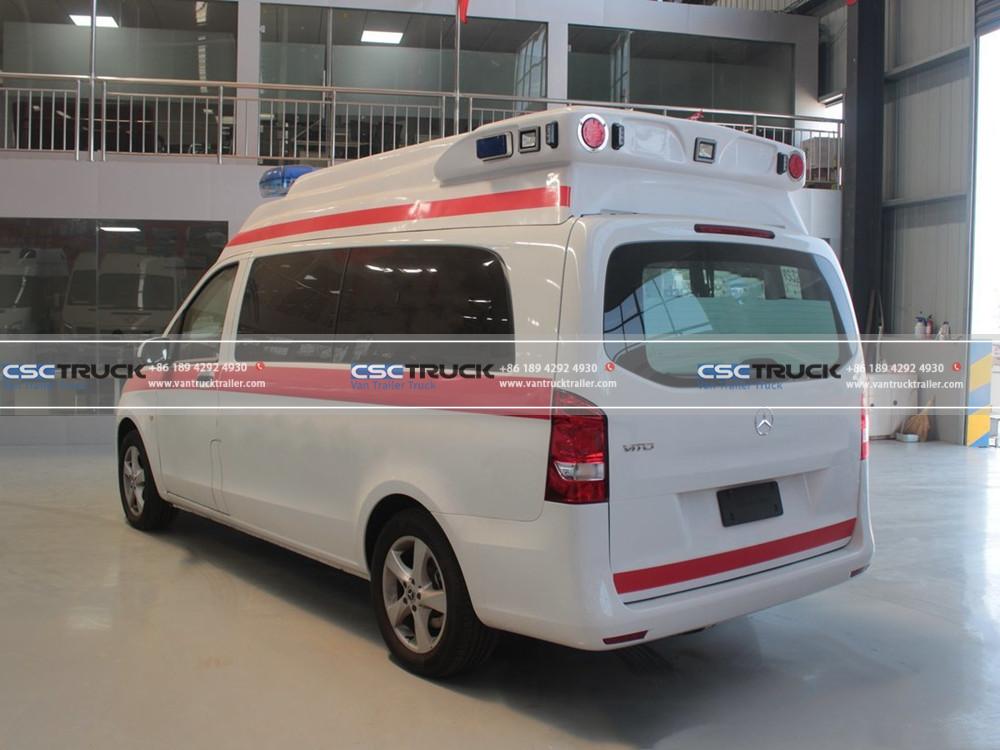
Revolutionizing Emergency Visibility
Traditional rotating beacons and halogen floodlights fail catastrophically in modern response scenarios – dense urban canyons, blinding blizzards, and complex multi-vehicle pileups demand photonic precision. The latest integrated optical systems deploy wavelength-engineered lighting that penetrates fog 83% deeper than legacy systems while eliminating dangerous stroboscopic effects that trigger epileptic episodes in 1:4,000 bystanders. Munich Fire Department’s 2024 implementation of adaptive laser corridors projects visible 300-meter pathways through smoke-choked autobahns, synchronizing with traffic signals to create protected emergency lanes. This photonic architecture combines multi-spectrum capabilities: ultraviolet markers exposing hazardous materials, infrared illumination for drone coordination, and 8,000-lumen scene lighting that automatically dims when detecting approaching faces to preserve medics’ night vision – fundamentally transforming darkness from operational barrier to tactical advantage.
360-Degree Situational Awareness Systems
Holistic perception technologies create real-time digital twins of the response ecosystem:
Predictive Hazard Mapping
- LiDAR terrain scanners detect road defects invisible at night, pre-adjusting suspension for potholes at 50m range
- Thermal crowd analytics identify erratic pedestrian movement patterns 40% faster than human operators
- Dynamic weight sensors trigger stability control interventions when centrifugal forces approach rollover thresholds during high-G turns
Augmented Reality Windshield Integration
Berlin EMS medics receive overlaid navigation cues highlighting optimal trauma center routes through congestion, while virtual traffic cones materialize in their field of view to establish instant safety perimeters. This system reduced secondary collisions by 67% during wet-night operations in trials.
Intelligent Auditory Warning Systems
Next-gen acoustic engineering moves beyond decibel wars toward targeted psychoacoustic signaling:
- Directional parametric speakers project 3D sound bubbles around obstacles, warning specific vehicles without deafening pedestrians
- Adaptive frequency cycling prevents “siren blindness” by continuously shifting between 480-920Hz tones based on ambient noise analytics
- V2X (Vehicle-to-Everything) integration broadcasts digital alerts directly to connected cars’ dashboards 8 seconds before audible warnings
The Copenhagen Harmonized Emergency Alert Protocol reduced intersection accidents by 41% by synchronizing ambulance sirens with traffic light phase changes.
Collision Mitigation Architecture
Multi-redundant protection systems form concentric safety envelopes:
Pre-Impact Preparation Sequence
When sensors detect unavoidable collisions:
- Patient compartment airbags pre-inflate between stretcher and bulkhead
- Medic restraint systems tension automatically
- Drug storage lockers engage inertial locks
Active Countermeasure Systems
- Electrochromic side panels instantly opacity to prevent occupant ejection
- RAM (Reactive Armor Materials) door panels dissipate impact energy through controlled deformation
- Autonomous evasion assists override driver inputs for micro-second collision avoidance maneuvers validated by NATO
Interior Safety & Clinical Illumination
Patient care environments now integrate therapeutic lighting science:
- Hemorrhage control spectrum tuning – 450nm blue light enhances visual contrast of venous access points by 300%
- Circadian-preserving ambient systems maintain trauma patients’ biological rhythms during nocturnal transports
- UV-C sterilization cycles automatically disinfect surfaces between calls without chemical residue
Seattle Medic One’s touchless vital monitoring uses structured light projection to track 12 physiological parameters through clothing, freeing clinicians from cables during critical interventions.
Cyber-Physical Security Protocols
Connected ambulance vulnerabilities demand hardened countermeasures:
- EMF jamming detection triggers Faraday cage deployment around cardiac equipment during suspected terrorist incidents
- Blockchain-secured telemetry prevents hijacking of autonomous navigation systems
- Biometric access control restricts narcotics access to pre-authorized clinicians via iris/palm vein authentication
Post-crash black box forensics now capture 287 data streams – from steering torque to drug cabinet access timelines – reconstructing incidents within 0.03-second accuracy.
Cross-Platform Integration Potential
These innovations rapidly propagate beyond EMS to transform adjacent sectors:
- Refrigerated truck fleets adopt thermal imaging brake monitors that detect overheating components 22 minutes before failure
- Box truck safety systems now integrate load-shift prediction algorithms that trigger automatic stabilization before cargo destabilization
- Vantrucktrailer combos utilize synchronized lighting corridors that project continuous warning pathways across articulated joints
The Houston Logistics Consortium demonstrated 38% fewer dock accidents after retrofitting delivery fleets with ambulance-derived peripheral awareness systems. This technological osmosis underscores how emergency medical innovations increasingly establish the safety benchmarks for all mobile industries where milliseconds determine outcomes – proving that the most critical vehicle safety systems are often born not in laboratories, but in the crucible of life-and-death response.