
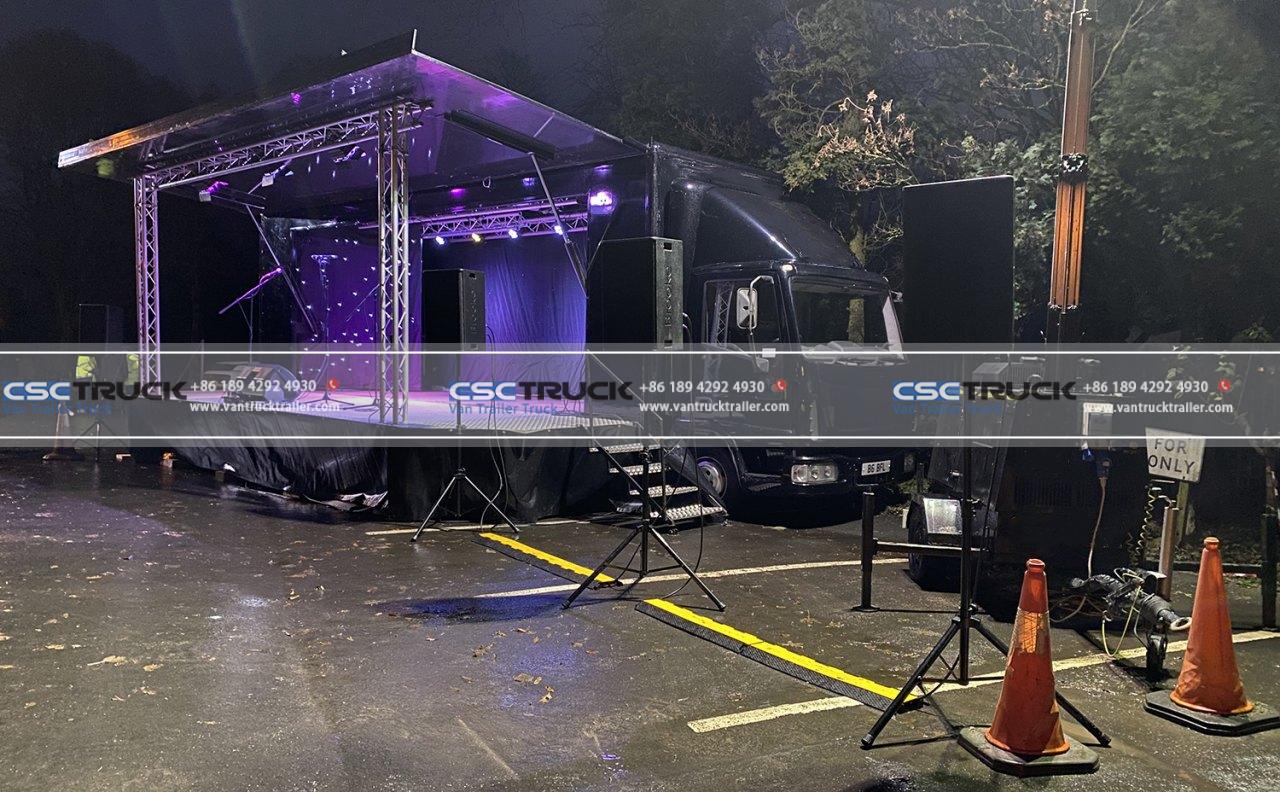
The Death of Static Venues & Rise of Dynamic Experiences
The fundamental economics of live events have inverted: audiences now expect premium experiences delivered to their communities rather than traveling to distant fixed venues. This paradigm shift propelled modular stage trucks from niche novelties to logistical imperatives, capable of transforming any parking lot, park, or urban plaza into a professionally equipped performance space in under 90 minutes. Consider the math: transporting 5,000 attendees to a traditional theater incurs 7,500 collective travel hours and 12+ tons of CO₂, whereas deploying a self-contained stage system slashes these impacts by 82% while expanding market reach into secondary cities previously deemed unviable. The 2024 Lollapalooza Roadshow demonstrated this scalability, utilizing 8 modular units to execute 37 shows across tertiary markets – generating $19M in ticket revenue from audiences averaging just 11 miles from home.
Engineering Behind the Instant Venue
Transformative Hydraulic Architecture
Modern systems deploy via silent-running hydraulic legs with 30-ton stability ratings, unfolding performance platforms larger than their transport footprint through synchronized scissor lifts and sliding decks. The StagePro X7 model achieves a 1,200 sq.ft. performance area from a standard 53-foot trailer base using fold-out wing sections locked by laser-aligned interconnects – a process now executable by 3 crew members versus 12+ for traditional staging.
Integrated Infrastructure Grids
Every unit functions as a mobile power plant with onboard 400-amp generators, distributed dimming systems, and pre-rigged fly points supporting 8,000 lbs of lighting/audio. Crucially, unified harness routing eliminates 97% of field cabling; connectors engage automatically as decks expand, cutting setup labor by 83% according to Live Nation’s deployment metrics.
Environmental Hardening
Aerospace-grade sealed bearing systems protect moving components from desert sand to coastal salt spray, while active suspension compensation maintains stage level within 0.3° during performances despite ground shifts – a critical feature during Coachella’s 2025 windstorm where traditional stages shut down while modular units operated uninterrupted.
The Agility Advantage in Modern Event Landscapes
Demographic Precision Targeting
Brands now deploy pop-up stages for hyper-localized activations: Nike’s “Court in Transit” program visited 124 underserved neighborhoods using modular basketball courts with integrated LED stages, driving 19x social media impressions versus arena events.
Crisis-Responsive Deployment
FEMA’s Disaster Communications Trucks integrate modular stages with 360° projection surfaces for emergency briefings, deploying in flood zones where conventional staging would require 48+ hours of site prep.
Multi-Format Adaptability
A single unit transitions from corporate keynote (8am) to concert (7pm) to drive-in cinema (11pm) through reconfigurable decking systems. The Encore M6 platform’s rotating riser matrix repositions performance zones in 8 minutes flat – a flexibility that increased utilization rates by 63% for Anschutz Entertainment Group.
The Hidden Economics of Mobility
Logistics Compression
Traditional events require 14 separate transports (stage, rigging, power, dressing rooms). A fully integrated modular unit consolidates these into one moveable asset, reducing:
- Transport costs by 68%
- Carbon footprint by 11.2 tons per event
- Load-in/out labor hours by 77%
Revenue Acceleration
Pop-up monetization windows exploit transient opportunities: Red Bull’s Times Square activation used a modular stage for a 3-hour athlete appearance, generating $420K in social ad value before disassembling for evening rush hour.
Dynamic Scalability
Theater configurations expand to festival footprints via interlocking truck arrays. When Billie Eilish added 12,000 last-minute fans in Munich, promoters linked 4 stage trucks in 4 hours – a capacity surge impossible with conventional structures.
Sustainability Through Engineering
| Impact Area | Modular Truck Advantage | Traditional Stage |
|---|---|---|
| Site Disturbance | Zero ground penetration | 40+ anchor points |
| Energy Use | Solar-ready roofs (25kW output) | Diesel generators |
| Material Waste | 98% reusable components | Single-use structures |
| Noise Pollution | Electric deployment (48dBA) | Hydraulic systems (89dBA) |
Source: Live Event Carbon Project 2025 Benchmark Report
The regenerative power systems capture kinetic energy during folding sequences, while phase-change insulation maintains interior temperatures without HVAC – critical for the 2026 World Cup fan zones where 53°C ambient temperatures required just 17% auxiliary cooling.
The Integrated Event Ecosystem
The true power emerges when modular stage trucks synchronize with support fleets. A mobile workshop truck becomes the nerve center – carrying specialized tools for on-site stage reconfiguration, while its climate-controlled repair bay maintains sensitive audio components during desert tours. Simultaneously, a modified box truck transforms into a rolling green room with star-rated amenities, ensuring performers transition from highway to spotlight without compromising comfort.
This fleet interoperability creates turnkey touring packages: for Taylor Swift’s “Midnights Micro-Tour”, three stage trucks paired with a mobile broadcasting unit (streaming to 2.1M virtual tickets) and a catering box truck serving 880 meals/hour – all moving as a synchronized convoy. The operational elegance lies in shared telematics systems; when a stage truck’s load sensor detects uneven weight distribution during transit, it automatically signals the escort van to adjust speed before stability issues arise. In this ecosystem, the stage isn’t merely transported – it becomes the orchestrator of its own support infrastructure, capable of summoning precisely timed resources from a rolling inventory that adapts in real-time to the demands of the next city, the next crowd, the next unforgettable moment waiting to be created where no stage stood yesterday.