
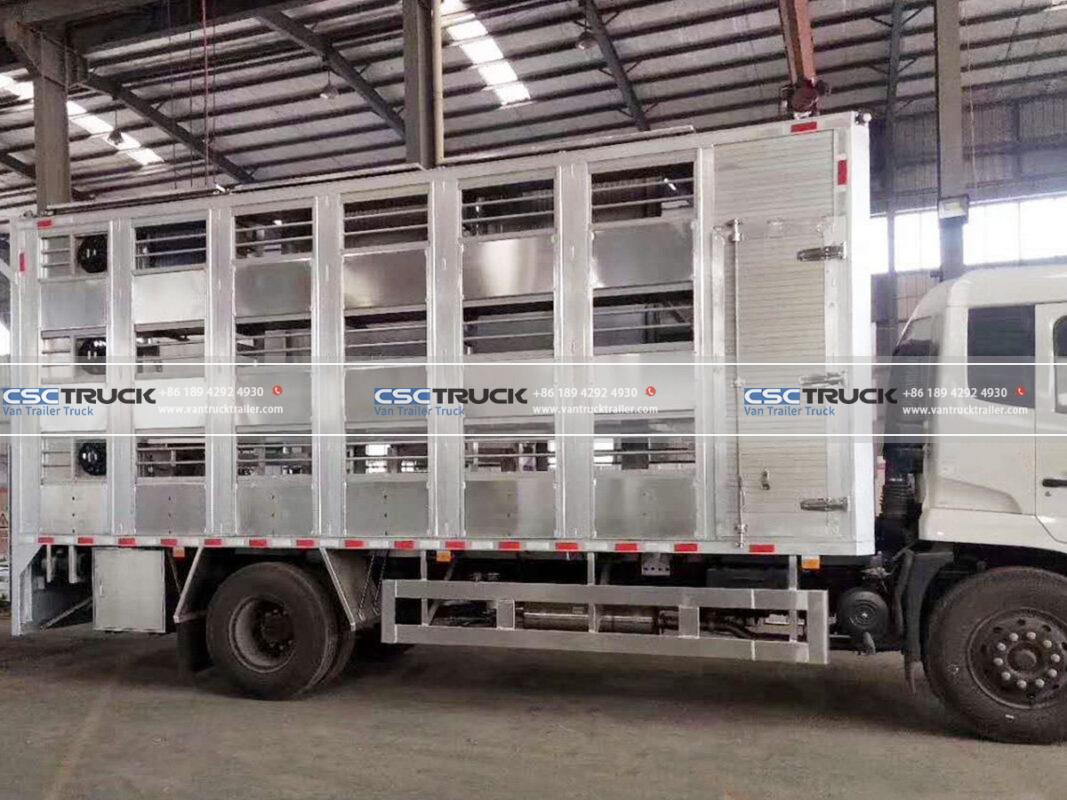
Livestock transportation represents one of the most critical yet vulnerable phases in animal agriculture, where animal welfare, productivity, and ethical responsibility converge under the often-unforgiving conditions of the open road. The controlled environment within a moving vehicle—subject to external temperature extremes, humidity fluctuations, exhaust fumes, and the inherent metabolic output of densely housed animals—demands engineering solutions far beyond simple airflow. Effective ventilation systems are not merely an accessory; they are the fundamental life-support system for transported livestock, directly determining physiological stability, stress levels, disease susceptibility, and ultimately, survival rates. As global awareness of animal welfare standards intensifies and regulatory frameworks tighten, the science and technology underpinning trailer ventilation have evolved into a sophisticated discipline, blending fluid dynamics, behavioral biology, and real-time monitoring to create microclimates capable of sustaining health across diverse species and journeys. This relentless pursuit of optimal air management reflects a profound understanding: that the quality of every breath taken en route is inextricably linked to the quality of the animal, and the conscience of the industry.
Why Ventilation Transcends Comfort: The Stakes for Animal Welfare and Productivity
The consequences of inadequate ventilation during livestock transport are severe and multifaceted, impacting biological, ethical, and economic dimensions:
- Thermal Stress Extremes: Livestock lack efficient mechanisms for shedding excess body heat, particularly in confined spaces. Heat stress rapidly escalates when ambient temperature and humidity rise, leading to hyperthermia, increased respiration rates (panting), dehydration, metabolic acidosis, organ damage, and catastrophic mortality events. Conversely, insufficient insulation or excessive drafts during cold transport can induce hypothermia, particularly in young, wet, or shorn animals, draining vital energy reserves and suppressing immune function.
- Air Quality Degradation: Without constant, effective air exchange, the trailer atmosphere becomes saturated with moisture from respiration and urine, harmful gases like ammonia (from manure), carbon dioxide (from exhalation), and carbon monoxide (from exhaust ingress), and airborne particulates (dust, dander, pathogens). Prolonged exposure to poor air quality causes respiratory distress (e.g., porcine respiratory disease complex), eye irritation, suppressed immunity, and increased susceptibility to opportunistic infections upon arrival.
- Behavioral Stress and Injury: Animals struggling to breathe or thermo-regulate exhibit heightened anxiety, restlessness, and aggression. This exacerbates physical injuries through increased mounting, pushing, or fighting, particularly in overcrowded conditions. The inability to find thermal comfort is a profound stressor in itself.
Robust ventilation systems directly mitigate these threats, preserving animal welfare, minimizing mortality and morbidity, reducing carcass condemnations (e.g., from bruising or PSE pork), and ensuring animals arrive in a state conducive to recovery, weight gain, or humane processing.
Fundamentals of Livestock Trailer Ventilation Design: Core Principles
Effective systems are engineered around core scientific principles tailored to the unique challenges of mobile animal housing:
- Air Exchange Rate (AER): This critical metric defines the volume of air completely replaced within the trailer per hour. Required AER varies significantly by species, size, density, and ambient conditions (e.g., cattle may need 60-90+ changes/hour in heat, pigs 40-80). Systems must be sized and controlled to dynamically achieve target AERs across diverse operating scenarios.
- Airflow Patterns & Uniformity: Simply moving air is insufficient; its distribution is paramount. Effective design ensures fresh air penetrates all zones—especially lower decks and central areas prone to stagnation—without creating harmful drafts directly onto animals. Natural convection (warm air rising) is leveraged, often enhanced by strategic inlet/outlet placement and baffles.
- Minimizing Dead Zones: Areas with little to no airflow become pockets of extreme heat, humidity, and gas buildup. Trailer geometry, internal partitions, and loading density must be optimized in conjunction with ventilation placement to eliminate these hazardous zones.
- Energy Efficiency & Integration: Systems must achieve performance goals without excessive power draw from the vehicle’s electrical system. Integration with structural elements (roof, walls, floors) is crucial for aerodynamic efficiency and weatherproofing.
Passive Ventilation Systems: Harnessing Nature’s Forces
Passive systems utilize the vehicle’s motion and natural physical laws to drive airflow, offering reliability and lower operational complexity:
- Curtain-Sided Trailers: Adjustable, heavy-duty PVC or fabric curtains running along the trailer sides are the most common and versatile passive solution. Operators can finely tune opening heights based on weather, species, and journey phase. The “ram air” effect generated by forward motion forces air through these side inlets. Warm, moist air exits via roof vents (thermal buoyancy). Properly designed baffles prevent rain/snow ingress and direct airflow upwards.
- Roof Ventilators (Cupolas): Strategically placed along the trailer roof, these vents exploit the chimney effect. Heated, rising internal air escapes continuously, drawing cooler air from lower inlets. Design variations (e.g., turbine vents) can enhance draw even at lower speeds.
- Perforated Flooring & Under-Flow: Slatted floors allow warm, contaminated air near the animals to sink and be pulled out beneath the trailer, promoting air exchange close to the load. This complements side-to-top airflow patterns.
- Optimized Inlet/Outlet Ratios: Engineering dictates that outlet capacity (roof vents) must exceed inlet capacity (side openings) to prevent airspeed stagnation and ensure complete flushing of the internal atmosphere.
While energy-efficient and mechanically simple, passive systems become ineffective during stops, in low/no wind conditions, or when ambient temperatures exceed animal comfort zones, necessitating supplementary active solutions.
Active Ventilation Systems: Guaranteeing Airflow When Nature Falls Short
When passive airflow is insufficient—during loading/unloading, traffic delays, extreme heat/cold, or stationary rest periods—mechanical ventilation becomes indispensable:
- Electrically Powered Roof Exhaust Fans: High-capacity, weather-resistant axial fans mounted on the trailer roof are the workhorse of active systems. They create powerful negative pressure inside the trailer, actively sucking out hot, humid, contaminated air and pulling fresh air through side or front inlets. Thermostats and humidity sensors allow for automatic activation based on preset conditions.
- Positive Pressure Systems: Less common but valuable in specific scenarios, these use fans to force filtered, temperature-moderated air into the trailer, pushing stale air out through designated vents. This helps control inlet location and quality, reducing exhaust fume ingress.
- Tunnel Ventilation (High-Speed Systems): Primarily used in dedicated hog trailers, banks of large exhaust fans at one end create a high-velocity “wind tunnel” effect down the length of the trailer, providing intense cooling during extreme heat. Requires well-sealed structures and coordinated large inlets.
- Supplemental Cooling & Heating: Advanced systems integrate evaporative cooling pads (using the vehicle’s water supply) near air inlets in arid climates, or diesel-fired heaters with dedicated air distribution ducts for winter transport of vulnerable species like neonatal calves.
These systems demand robust electrical connections (often requiring auxiliary power units – APUs), regular maintenance, and driver understanding for effective operation.
Monitoring and Control: The Rise of Intelligent Ventilation
Modern systems transcend simple thermostats, incorporating sophisticated sensing and control for precision environmental management:
- Multi-Point Sensor Networks: Strategically placed sensors continuously monitor not just temperature, but also relative humidity, ammonia (NH3), carbon dioxide (CO2), and sometimes airspeed inside the trailer, providing a comprehensive picture of environmental quality.
- Telematics and Real-Time Alerts: Data streams wirelessly to in-cab displays and often via cellular telematics to fleet management platforms and even owners. Drivers receive immediate visual/audible alarms if parameters exceed safe thresholds (e.g., temperature spike, fan failure), prompting corrective action.
- Automated Control Logic: Advanced controllers process sensor data to dynamically adjust ventilation components: modulating fan speeds, opening/closing automated vents or curtains, activating supplemental cooling/heating, and balancing passive/active modes for optimal efficiency and welfare.
- Data Logging for Accountability: Continuous recording of environmental parameters and system performance provides invaluable data for post-trip analysis, driver coaching, maintenance scheduling, and demonstrating compliance with animal welfare regulations during audits.
This shift towards “smart ventilation” transforms the driver from an operator to a monitor, empowered by technology to make proactive decisions safeguarding the cargo.
Species-Specific Ventilation Imperatives: Tailoring the Approach
One size does not fit all in livestock ventilation. Critical considerations vary dramatically:
- Cattle (Beef/Dairy): Generate significant metabolic heat and moisture. Require high AER, especially for large-framed feedlot cattle in summer. Heat stress is a primary concern. Need strong airflow without excessive direct drafts on calves. Manure volume necessitates robust under-floor air exchange.
- Pigs: Extremely susceptible to heat stress due to limited sweat glands and high metabolic rates. Prone to PSE (Pale, Soft, Exudative) meat if stressed. Require very high AER in warm conditions (often demanding tunnel ventilation). Sensitive to cold drafts, particularly piglets and weaners. Ammonia control is critical for respiratory health.
- Poultry (Broilers/Layers/Turkeys): Produce immense heat and moisture per unit space. Broilers are exceptionally vulnerable to heat mortality. Require very high, uniform airflow rates and often supplemental evaporative cooling. Dust control is paramount for respiratory health. Modular systems must ensure consistent conditions in every crate.
- Sheep & Goats: More tolerant of cold than pigs/poultry but susceptible to heat stress, especially when woolly. Require good general air exchange, protection from driving rain/snow when curtain-sided, and avoidance of excessive moisture buildup.
Integrating Ventilation into Fleet Selection: Matching System to Vehicle Type
The choice of transport platform dictates the complexity and type of ventilation achievable:
- Small Operations & Local Hauls (Cargo Truck Adaptations): Smaller livestock loads (e.g., a few horses, sheep, goats) transported via cargo trucks or pickups with stock trailers often rely primarily on passive ventilation. Key features include well-positioned roof vents, adjustable side vents or windows (with protective grills), and potentially small 12V auxiliary fans for stationary periods. Simplicity and durability are priorities.
- Mid-Sized Fleets & Regional Distribution (Dry Van Truck Configurations): Dedicated livestock bodies built on dry van truck chassis offer greater scope for integrated systems. These often feature full curtain-sides for adjustable passive flow, combined with banks of roof-mounted exhaust fans controlled by basic thermostats or timers. Insulation is more common, improving temperature stability. Suitable for larger groups of cattle, pigs, or multiple horses on journeys of several hours.
- Large-Scale Commercial Transport (Semi-Trailers & Advanced Vantrucktrailers): Multi-level semi-trailers represent the pinnacle of livestock ventilation technology. They incorporate extensive curtain systems, high-capacity multi-speed or variable-speed roof fans (often 10+ per deck), sophisticated multi-zone sensors, automated control systems, and sometimes supplemental cooling. Vantrucktrailer configurations—essentially large, rigid-bodied trucks maximizing cube and payload within a single unit—are increasingly popular for their maneuverability in collection routes. These units seamlessly integrate commercial-grade ventilation systems comparable to semi-trailers (powered fans, telematics, automated controls) into a single chassis, offering an optimal balance of welfare-focused environmental management and operational flexibility for high-frequency, multi-stop operations within complex agricultural landscapes.
The relentless innovation in ventilation systems underscores a fundamental truth: transporting sentient animals demands environments engineered for biological stability, not merely containment. From harnessing the physics of airflow to deploying AI-driven climate control, the industry’s pursuit of optimal breathability reflects a deepening commitment to animal welfare as the non-negotiable core of responsible livestock logistics. As sensor networks grow denser, controls become more predictive, and energy efficiency improves, the trailer of tomorrow promises an ever-more stable and healthful journey, ensuring the vital current of fresh air remains an unwavering constant on the road.