For generations, livestock hauling relied heavily on steel trailers. While robust, steel’s susceptibility to relentless environmental assault and structural fatigue presented persistent challenges. Enter aluminum – a material revolutionizing the industry not merely as an alternative, but as the unequivocal standard for ranchers, transporters, and serious stockmen prioritizing longevity and uncompromised animal safety. Beyond the initial allure of reduced weight, aluminum trailers offer a profound, engineered resilience that withstands the brutal realities of daily farm-to-market journeys, corrosive bedding, extreme weather, and unforgiving terrain. This inherent durability translates into decades of dependable service, significantly lowering lifetime costs and maximizing operational efficiency.
The Corrosion Conundrum: Aluminum’s Inert Shield
Livestock trailers face a uniquely hostile environment. Constant exposure to urea, manure, moisture, road salts, and fluctuating weather creates a perfect storm for galvanic corrosion and rust – the primary nemesis of steel trailers. Aluminum, however, forms an immediate, microscopically thin layer of aluminum oxide upon contact with oxygen. This layer is chemically inert, exceptionally hard, and tightly bonded to the underlying metal. Crucially, it self-repairs if scratched or damaged.
This passivation layer acts as an impervious barrier, rendering high-grade aluminum alloys (like marine-grade 5052 or structural 6061-T6) virtually immune to the corrosive cocktail inherent in hauling animals. Unlike steel, which progressively weakens, pits, and flakes, aluminum maintains its structural integrity and appearance over decades. Even when subjected to coastal air laden with salt or the harsh chemicals used in rigorous cleaning protocols, aluminum trailers resist degradation far more effectively. This fundamental property underpins their legendary lifespan.
Structural Fortitude: Beyond Surface Deep
Durability isn’t just about resisting surface decay; it’s about maintaining structural integrity under immense stress. Livestock trailers endure punishing loads: dynamic shifting weight from moving animals, relentless vibrations from rough roads, and significant torsional flexing across uneven ground.
- High Strength-to-Weight Ratio: Aluminum alloys offer exceptional strength relative to their weight. This allows manufacturers to engineer robust frames and walls without the excessive bulk of heavier steel equivalents. The result is a trailer that is both lighter and inherently resistant to deformation under load.
- Superior Fatigue Resistance: Aluminum possesses excellent fatigue resistance, meaning it can endure repeated cycles of stress (like bouncing down washboard roads) without developing micro-cracks that eventually lead to catastrophic failure. Steel, while strong initially, is more susceptible to metal fatigue over time, particularly at weld points and stress concentrators.
- Torsional Rigidity: Advanced engineering techniques, such as extruded aluminum frames with integrated cross-members and strategic gusseting, create trailers with exceptional torsional rigidity. This minimizes flexing and twisting during transport, protecting both the trailer structure and reducing stress on the animals inside. A rigid frame prevents doors from jamming and walls from buckling.
The Weight Equation: Performance and Longevity Synergy
The reduced weight of aluminum trailers is often touted for fuel savings and increased payload capacity – significant economic advantages. However, this weight reduction profoundly impacts long-term durability in less obvious ways:
- Reduced Mechanical Stress: A lighter trailer places significantly less stress on its own components – axles, springs, tires, brakes, and suspension – and also on the towing vehicle. This translates into extended component life, fewer breakdowns, and lower maintenance costs over the trailer’s lifespan. Heavy steel trailers accelerate wear on these critical systems.
- Enhanced Handling and Stability: The lower center of gravity common in well-designed aluminum trailers, combined with the reduced mass, improves towing stability and safety. This is crucial when navigating curves, crosswinds, or emergency maneuvers. A stable trailer experiences less violent dynamic forces, reducing the physical punishment absorbed by its structure and connections.
- Preserving Towing Vehicle Integrity: Consistently hauling a lighter trailer reduces strain on the tow vehicle’s engine, transmission, drivetrain, and frame, contributing to its longevity and reliability – an indirect but valuable aspect of overall operational durability.
Maintenance Mitigation: Built to Endure Neglect (Better)
Let’s be realistic: livestock trailers endure hard use and aren’t always pampered. Aluminum inherently demands less maintenance than steel to preserve its integrity and appearance.
- Minimal Rust Prevention: The elimination of pervasive rust concerns removes the need for constant vigilance, scraping, priming, and repainting that steel trailers require to combat corrosion. While washing is still essential for hygiene and appearance, the structural threat is vastly diminished.
- Resilient Surfaces: Modern aluminum trailers often feature durable, UV-resistant powder-coat finishes or proprietary protective coatings on floors and lower walls, further enhancing scratch and chemical resistance. These finishes bond exceptionally well to properly prepared aluminum.
- Longevity of Components: The inherent corrosion resistance extends to aluminum components like rims, frame members, and even integrated cargo management tie-down points (often extruded channels), ensuring decades of reliable function without the seizing or weakening common with corroded steel fittings.
Safety Embodied: Durability Protects Precious Cargo
The ultimate test of a livestock trailer’s durability is its ability to safeguard its living cargo trip after trip, year after year. Aluminum excels here:
- Consistent Structural Performance: Resistance to corrosion and fatigue means critical structural elements – walls, gates, hinges, latches – maintain their designed strength and function indefinitely. A weakened latch or a corroded hinge pin on a steel trailer poses a significant escape or accident risk.
- Predictable Integrity: Ranchers can have confidence that the trailer they purchased ten years ago retains nearly the same structural soundness as the day it was bought, assuming proper basic care. This predictability is crucial for animal safety.
- Floor Integrity: Aluminum diamond plate or extruded barn floor systems resist rot, corrosion, and wear far better than wood (even treated) or corroded steel mesh. A solid, non-sagging floor is paramount for animal footing and comfort during transport. Aluminum floors won’t trap moisture and bacteria like wood, promoting better hygiene.
Beyond the Pasture: Versatility Forged in Metal
The durability and corrosion resistance that make aluminum ideal for livestock hauling translate seamlessly into broader operational versatility. These trailers aren’t confined to moving cattle or horses:
- Multi-Season, Multi-Purpose Use: Haul feed, hay, or equipment without fear of spillage damage. Transport to muddy fields in spring, dusty sales barns in summer, or snow-covered vet clinics in winter – aluminum shrugs it off.
- Rigorous Cleaning Ready: Easily withstand high-pressure washing, steam cleaning, or approved disinfectants necessary for biosecurity protocols without accelerating decay. Crucial for preventing disease spread.
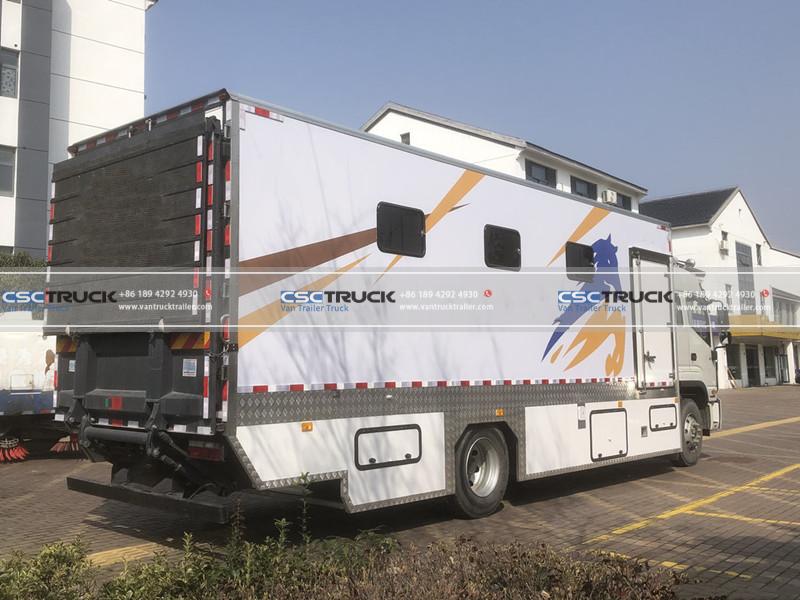
- Adaptable Cargo Potential: The inherent strength and cleanability make aluminum livestock trailers surprisingly adept at occasional cargo truck duties. Securely transport fencing materials, farm machinery parts, or show equipment. Some owners even utilize them effectively as secure, large-capacity van truck alternatives for specialized equipment or supplies when not hauling animals, maximizing asset utilization. The robust construction handles shifting loads far better than lighter utility trailers.
The choice for enduring performance is unequivocal. Aluminum livestock trailers represent a strategic investment in resilience, safety, and long-term value. Their engineered resistance to decay, structural fatigue, and the punishing demands of animal transport ensures they remain a steadfast, reliable partner on the road for decades, outlasting and outperforming their steel counterparts while safeguarding your most valuable assets.