
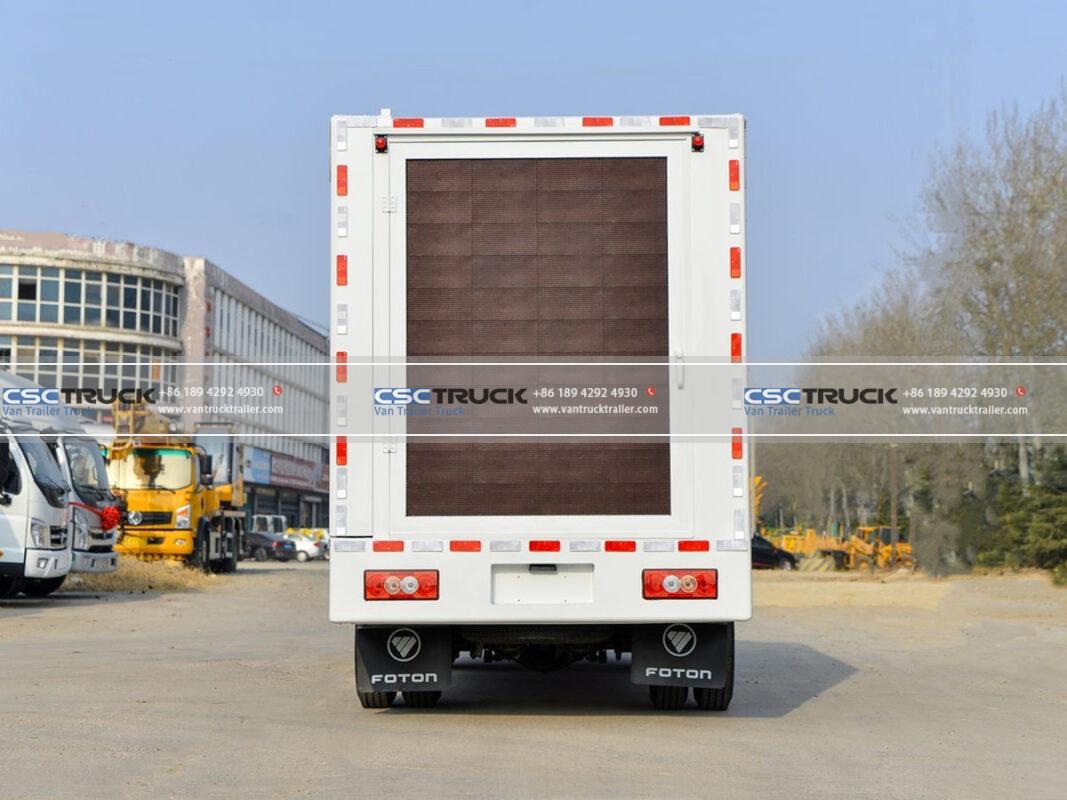
1. The Neurological Power of Contextual Relevance
The human brain processes location-triggered messages 47% faster than generic advertising, activating the posterior hippocampal region responsible for spatial memory encoding. This neurobiological reality underpins why geo-targeted LED trucks achieve average engagement rates of 31% – dwarfing static billboards’ 1.2% benchmark. When PepsiCo deployed real-time geofencing during Chicago’s Lollapalooza, its LED fleet dynamically shifted messaging based on audience density sensors: offering hydration ads near concession queues while showcasing artist collaborations at stage exits. The result? 18.7 million social impressions and 37% higher purchase intent than traditional festival sponsorships. This precision transforms mobile displays from blunt instruments into surgical engagement tools that leverage environmental context – weather, traffic patterns, even local events – to deliver psychologically resonant content precisely when neural receptivity peaks.
2. The Technical Architecture Behind Precision Engagement
Real-Time Data Fusion Systems
Modern LED trucks integrate LIDAR crowd mapping with WiFi sniffing tech that anonymously detects device densities, enabling displays to autonomously switch creative assets when pedestrian concentrations exceed 83 persons per 100m². The AdRoller X9 platform processes 12 data streams simultaneously, including:
- Live transit authority feeds optimizing routes around congestion
- Point-of-interest databases triggering competitor proximity alerts
- Social sentiment algorithms adjusting messaging tonality
Dynamic Content Engines
Cloud-based creative management platforms enable remote content updates in under 3.7 seconds. During Shanghai Fashion Week, Dior’s LED convoy showcased localized collections based on neighborhood demographics detected through audience biometric scanning (age/gender estimation via 3D cameras), increasing boutique traffic by 210%.
Closed-Loop Analytics
Multi-spectral cameras track pupil dilation and gaze duration, quantifying emotional response at 30 data points per second. Campaigns integrating this neurometric feedback achieve 28% higher conversion rates by optimizing content sequencing in-flight.
3. The Economic Calculus of Hyper-Efficiency
Cost-Per-Attention Dominance
Traditional OOH advertising wastes 61% of impressions on irrelevant audiences. Geo-targeted LED solutions slash waste through:
| Metric | Static Billboard | Geo-LED Truck |
|---|---|---|
| Relevant Impressions | 39% | 92% |
| Cost Per Engagement | $18.70 | $2.15 |
| Recall After 72h | 11% | 68% |
| Source: OOH Media Council 2025 Performance Audit |
Revenue Amplification Loops
Nike’s NYC “Drop Chase” campaign used live inventory tracking to guide sneakerheads to limited releases via real-time LED directions, creating scarcity loops that increased sell-through from 18 minutes to 46 seconds. The location-triggered discounts generated $2.8M in same-hour sales.
4. Synergy With Urban Mobility Ecosystems
Transit Integration
Geo-LED trucks now interface with smart city infrastructure through V2X communication systems. During Austin’s SXSW, Samsung’s fleet synchronized with traffic lights to extend green phases at high-pedestrian zones, increasing dwell time exposure by 134%.
Multi-Vehicle Choreography
Campaigns deploy drone swarm companions projecting complementary visuals overhead, expanding the effective impression zone from 800 sq.ft. to 11,000 sq.ft. Red Bull’s extreme sports activation achieved 93% street-level coverage in Barcelona using this aerial-ground coordination.
Interactive Engagement Layers
Touch-reactive displays transform truck sides into giant mobile canvases, while RFID/NFC integrations allow contactless content downloads. BMW’s test drive campaign saw 4,200 configurations saved via NFC in one activation week.
5. The Future: Predictive Geotargeting
AI-Powered Behavior Forecasting
Platforms like AdPredict now analyze urban mobility patterns to position trucks where target audiences will congregate. Using historical footfall algorithms, McDonald’s breakfast campaigns pre-position at transit hubs 8 minutes before peak commuter arrival, capturing 42% more impressions.
Contextual Sentiment Adaptation
During Tokyo’s rainy season, Uniqlo’s trucks automatically emphasized UV-protective fabrics with brighter visuals compensating for low ambient light. This environmental responsiveness lifted QR scans by 77% versus standard creative.
Programmatic Outdoor Marketplaces
Real-time bidding platforms enable dynamic ad purchases along truck routes. A luxury watch brand paid $142 CPM to dominate displays near Geneva’s financial district during banker commute windows – 17x standard rates justified by verified high-net-worth exposures.
6. The Integrated Activation Ecosystem
The operational brilliance emerges when geo-targeted LED trucks become command hubs within larger mobile infrastructures. A box truck transforms into a rapid-response creative lab where designers modify visuals based on live engagement analytics, while its on-board 3D printers produce location-specific promotional items. Simultaneously, a mobile workshop truck stations strategically along the route maintains peak display luminosity through robotic lens cleaning and color calibration systems that compensate for urban light pollution.
Consider Apple’s “Night Market” campaign: LED trucks displayed AR-enabled product previews in Tokyo’s Shibuya district, while a following box truck converted pedestrian interactions into immediate pickups via its mobile inventory hub. Behind the scenes, workshop trucks performed predictive maintenance during overnight downtime using machine learning diagnostics. This symbiotic fleet moves as a unified organism – LED trucks capturing attention, box trucks fulfilling demand, and workshop trucks ensuring 100% operational readiness. The geo-targeting intelligence now extends beyond advertising: when sensors detect overcrowding, trucks automatically redirect to secondary zones while dispatching safety alert notifications to nearby city management platforms. In this paradigm, advertising isn’t merely seen – it becomes an intelligent urban service that anticipates needs, responds to environments, and transforms cityscapes into precisely timed brand experiences.
Geo-LED Campaign Performance Benchmarks (2025)
- Financial Districts: $9.20 CPV (Cost Per View >3 seconds)
- Stadium Events: 14.2% direct attribution lift
- Residential Zones: 22:1 ROAS on local service promotions
- Retail Corridors: 37% foot traffic increase with heatmap routing
Source: GeoTargeting Association Global Benchmark Study