In the intricate ballet of livestock transportation, where animal welfare, operational efficiency, and driver safety converge under immense pressure, one component often operates quietly in the background yet holds disproportionate significance: the loading ramp. While seemingly a simple bridge between ground and trailer, the transition from traditional, muscle-powered ramps to sophisticated hydraulic livestock truck ramps represents a quantum leap for the industry. This isn’t merely a convenience upgrade; it’s a fundamental shift impacting profitability, compliance, and ethical responsibility. Understanding why these engineered systems matter is essential for any operation moving cattle, sheep, pigs, or horses in 2025 and beyond.
The High-Stakes Challenge of Livestock Loading
Loading and unloading animals is arguably the most critical, stressful, and potentially hazardous phase of any livestock journey. Traditional, heavy steel or aluminum ramps, manually wrestled into position, present a cascade of challenges:
- Physical Demands & Injury Risk: Manhandling cumbersome ramps, often weighing hundreds of pounds, is a leading cause of acute and chronic musculoskeletal injuries among drivers and handlers. A slip, awkward lift, or sudden animal movement can lead to serious accidents.
- Animal Stress & Reluctance: Steep, unstable, or noisy ramps are a major source of fear and balking for animals. The clanging of a manually deployed ramp can instantly raise anxiety levels, making loading difficult, time-consuming, and increasing the risk of animals slipping, falling, or injuring themselves or handlers. This stress has immediate welfare implications and can negatively impact meat quality or recovery post-transport.
- Operational Inefficiency: The time consumed by multiple personnel struggling to position, secure, and then stow heavy ramps translates directly into lost productivity, delayed schedules, and increased labor costs. At busy auction yards or tight farm gateways, delays compound quickly.
- Inconsistent Angles & Safety: Achieving the optimal, gradual ramp angle (ideally less than 20-25 degrees for most livestock) consistently with manual ramps is difficult, especially on uneven ground. Steeper angles increase slip risk and animal refusal.
- Wear and Tear: The constant dragging, dropping, and banging of manual ramps accelerates damage to both the ramp itself and the truck/trailer structure where it connects or rests.
Hydraulic Ramps: Engineering Solutions for Critical Problems
Hydraulic livestock truck ramps directly address these pain points through powered, controlled operation. These systems integrate robust steel or aluminum ramp platforms with powerful hydraulic cylinders, a hydraulic power unit (HPU – often electric-over-hydraulic for reliability), and intuitive controls. The transformation they bring is profound:
- Effortless, One-Person Operation: The core revolution. With the push of a button (often via a remote control or dash-mounted switch), the ramp smoothly lowers or raises. Drivers operate entirely from the safety of the ground or cab, eliminating dangerous manual handling. This significantly reduces operator fatigue and the near-constant risk of strains, sprains, and crush injuries.
- Precision Control for Optimal Angles: Hydraulic systems allow for infinitely variable positioning. Operators can precisely set the ramp angle to achieve the gentlest, most gradual incline suitable for the specific animals and ground conditions, minimizing stress and maximizing footing security. The smooth, quiet motion itself is far less intimidating to livestock than the jarring clatter of a manual ramp.
- Enhanced Animal Welfare & Flow: By reducing fear and providing a stable, predictable walking surface, hydraulic ramps significantly improve animal welfare during the critical loading/unloading phase. Animals move more willingly and calmly. This translates into faster loading times, reduced bruising or injury, and better overall condition upon arrival – factors increasingly scrutinized by regulators, processors, and consumers demanding ethical sourcing. Reduced stress hormones also contribute positively to meat quality parameters.
- Dramatically Improved Operational Efficiency: Speed and consistency are paramount. Hydraulic ramps deploy and stow in seconds, shaving valuable minutes off every stop. One driver can manage the entire process independently, optimizing labor resources. This efficiency is critical for meeting tight schedules, maximizing daily hauls, and improving fleet utilization rates. Reduced loading times also mean less time spent with animals confined on stationary vehicles, further aiding welfare.
- Increased Safety for All: Beyond operator safety, the controlled movement and secure locking mechanisms (both in deployed and stowed positions) inherent in hydraulic designs minimize the risk of the ramp accidentally dropping or shifting during use. The stable platform also provides better footing for handlers assisting animals on the ramp itself.
- Durability & Reduced Maintenance: Engineered for heavy-duty cycles and protected within the system when stowed, hydraulic ramps typically suffer far less impact damage than their manually handled counterparts. While hydraulic components require periodic maintenance, the overall wear on the ramp structure and attachment points is significantly reduced.
Beyond Basics: Advanced Features of Modern Hydraulic Systems
Leading manufacturers offer features that further elevate performance and safety:
- Integrated Lip or Flip-Up Extension: Ensures a seamless, gap-free transition between the ramp and the trailer floor, eliminating a common tripping hazard for animals.
- Non-Slip Surfacing: Critical for all ramps, but especially vital on hydraulic models where smooth operation is expected. High-traction diamond plate, perforated surfaces, or specialized rubberized coatings provide secure footing even in wet or muddy conditions.
- Auto-Leveling Capability (Advanced Systems): Some premium systems incorporate sensors or manual adjustments to compensate for uneven ground, ensuring the ramp platform itself remains level even if the truck is parked on a slope, further enhancing stability and safety.
- Safety Guards & Lighting: Side rails or guards prevent animals from stepping off the sides. Integrated LED lighting illuminates the ramp path during early morning, late evening, or night operations.
- Robust Construction: High-tensile steel, reinforced hinges, and quality hydraulic components designed to withstand the corrosive environment of livestock transport (manure, urine, cleaning chemicals) are essential for longevity.
Selecting the Right Hydraulic Ramp: Key Considerations
Choosing a system isn’t one-size-fits-all. Critical factors include:
- Livestock Type & Size: The required ramp width, length (affecting achievable angle), and weight capacity vary significantly between loading calves, finished cattle, hogs, sheep, or horses. Ramp design (e.g., tread spacing) should also suit the animals’ hooves.
- Truck/Trailer Configuration: Compatibility is paramount. Systems are designed for specific trailer types (pot-belly, straight deck, gooseneck) and mounting locations. Consider deck height and available space for stowage.
- Hydraulic Power Source: Electric-over-hydraulic (using the truck’s battery) is most common and reliable. PTO-driven systems are less frequent for dedicated ramp hydraulics but might be used if sharing a power source. Ensure sufficient power capacity.
- Duty Cycle & Environment: Operations with frequent daily loading/unloading cycles or operating in extreme environments (cold, heat, corrosive) need systems built with premium components and robust protection.
- Manufacturer Reputation & Support: Choose established manufacturers known for durability, reliability, and readily available service and parts support. Warranty terms are important.
Hydraulic Ramps: An Integral Part of the Modern Livestock Transport Ecosystem
The shift towards hydraulic livestock truck ramps is inseparable from broader trends demanding greater efficiency, safety, and accountability in animal transport. They are a tangible investment that delivers measurable returns:
- Regulatory Compliance: As animal welfare regulations tighten globally (e.g., EU regulations on journey times, space, and handling), demonstrating the use of low-stress handling equipment, including appropriate ramps, becomes crucial for compliance and market access.
- Economic Justification: While the initial investment is higher than a basic manual ramp, the payback comes through reduced labor costs (especially worker’s compensation claims), lower animal injury/loss rates, faster turnaround times, improved driver retention (due to better working conditions), and potentially higher value for stress-free delivered animals.
- Sustainability & Reputation: Ethical treatment is a core component of sustainable food production. Utilizing technology that demonstrably reduces animal stress aligns with consumer expectations and enhances the reputation of transporters and producers within the supply chain.
The Foundation for Innovation: Platforms Like CSCTRUCK Vantrucktrailer
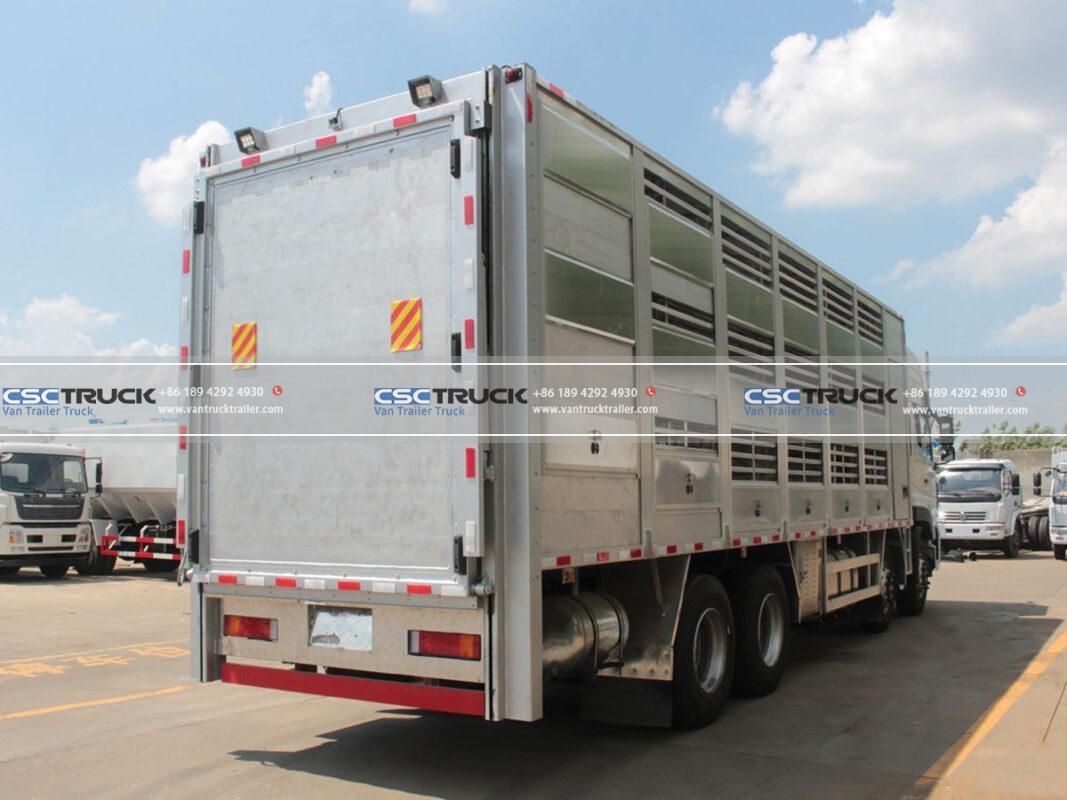
Implementing advanced features like robust hydraulic ramps requires a capable and adaptable foundation. This is where purpose-built platforms demonstrate their value. The CSCTRUCK Vantrucktrailer, while often associated with versatile cargo truck or professional dry van truck applications, exemplifies the engineering necessary to seamlessly integrate sophisticated livestock transport solutions. Its inherent structural strength provides the secure mounting platform essential for heavy-duty hydraulic ramp systems. The chassis design readily accommodates the necessary hydraulic power units and routing without compromising payload or operational space. Furthermore, the Vantrucktrailer’s focus on durability and ease of maintenance aligns perfectly with the demands of livestock transport, where equipment must withstand harsh conditions and rigorous daily use. When spec’d for livestock, this platform readily transforms from a standard cargo truck configuration into a modern, efficient, and welfare-conscious animal transporter, with the hydraulic livestock truck ramp being a cornerstone of that transformation. It underscores the reality that effective, humane livestock transport in 2025 relies not just on the ramp itself, but on the integrated capability of the entire vehicle system designed to support it. The silent, smooth operation of a hydraulic ramp is far more than a mechanical action; it’s the sound of an industry moving towards greater safety, efficiency, and responsibility.