In the complex ballet of road construction, where massive machinery roars and crews move with coordinated precision, one specialized vehicle often operates with quiet efficiency, its contribution fundamental yet sometimes overlooked: the asphalt distributor truck. Far more than just a tank on wheels, this sophisticated piece of equipment is the linchpin ensuring the longevity, safety, and performance of our paved infrastructure. While dump trucks deliver aggregates and cargo trucks haul materials, the distributor truck performs a unique, critical function that directly impacts the road’s very foundation. Understanding its role reveals why it’s not just useful, but absolutely essential for high-quality, durable roadwork.
The Fundamentals: What an Asphalt Distributor Truck Does
At its core, an asphalt distributor truck is a highly specialized vehicle designed to accurately apply liquid asphalt materials – primarily emulsions (water-based) and cutbacks (solvent-based) – onto road surfaces. These materials serve crucial preparatory and binding functions:
- Tack Coat Application: This is the distributor’s primary role. A tack coat is a thin layer of emulsified asphalt applied between layers of pavement (e.g., between an old surface and a new overlay, or between a binder course and the surface course). Its sole purpose is to create a powerful, waterproof bond, ensuring the layers act as a single, unified structural unit rather than delaminating under traffic loads.
- Prime Coat Application: Applied directly onto a compacted, untreated base course (like crushed stone or gravel) before the first layer of asphalt pavement is placed. The prime coat penetrates the base, binding loose particles, providing a waterproof barrier, and creating a stable, cohesive surface for the subsequent asphalt layers to adhere to.
- Fog Seal/Seal Coat: A lighter application of diluted emulsion used to rejuvenate aging asphalt surfaces, seal minor cracks, and improve surface texture and weather resistance, often as a preventative maintenance measure.
- Dust Control: Applying emulsion or specialized products to stabilize unpaved surfaces, reducing dust pollution and erosion.
The distributor truck is engineered to heat, store, transport, meter, and spray these often temperature-sensitive materials with exceptional precision and consistency.
Precision Application: Engineering Excellence on Wheels
The true value of a modern asphalt distributor truck lies in its sophisticated systems that guarantee accuracy and uniformity, far surpassing manual methods:
- Temperature Control Systems: Liquid asphalt binders must be maintained within strict temperature ranges (typically 140°F – 185°F / 60°C – 85°C for emulsions) for optimal viscosity and sprayability. Distributor trucks feature advanced heating systems (usually propane-fired) and insulated tanks to ensure the material arrives on site at the perfect application temperature.
- Computerized Spray Control: The heart of the machine. Modern distributors use onboard computers integrated with ground speed radar. This system constantly monitors the truck’s speed and automatically adjusts the pump and spray bar valves to deliver the exact application rate (e.g., gallons per square yard – gsy) specified by the engineer, regardless of speed variations or stops and starts. This eliminates over-application (wasteful and can cause slippage) and under-application (compromises bond strength).
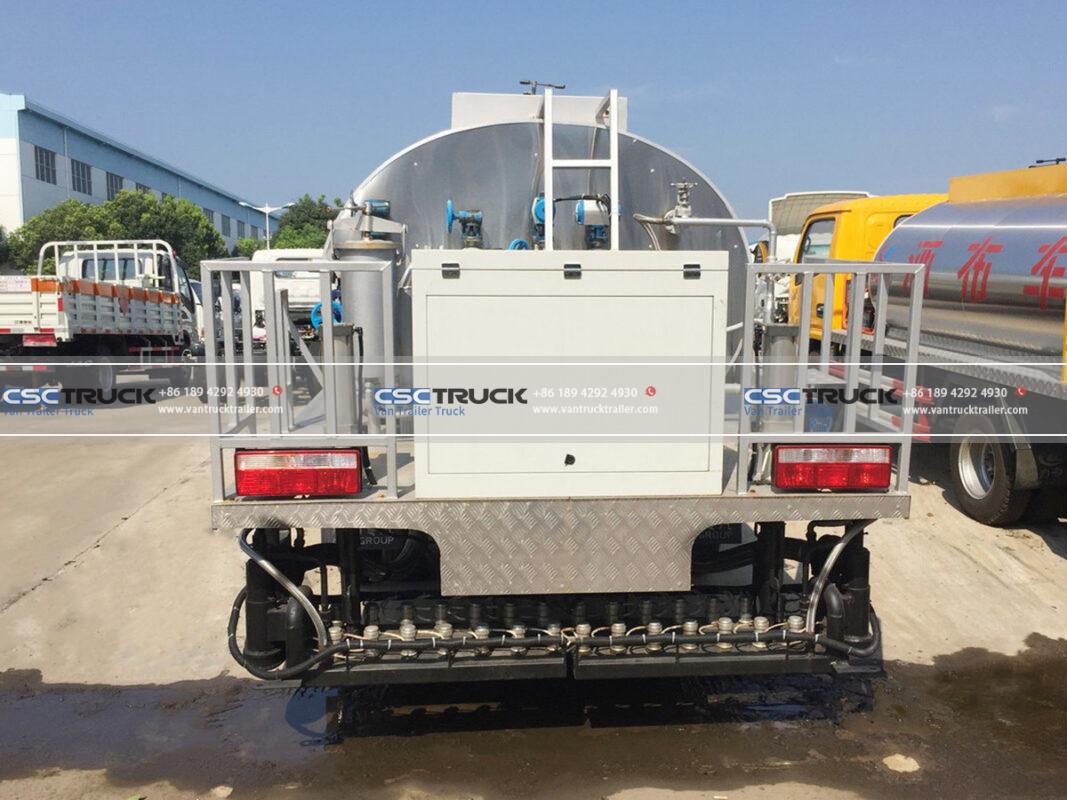
- Programmable Spray Bars: The spray bar, mounted under the rear of the truck, features numerous individually controlled nozzles. Operators can program patterns – full width, left/right side only, specific lane widths – ensuring material is applied only where needed, minimizing waste and protecting adjacent surfaces like curbs or structures. Spray width can often be adjusted hydraulically.
- Accurate Volume Measurement: Integrated meters provide real-time feedback and totalize the exact volume of material applied, crucial for quality control, project documentation, and billing.
Unmatched Efficiency and Productivity Gains
The integration of a distributor truck into a paving operation delivers significant time and labor savings:
- Rapid Coverage: Distributor trucks can apply tack or prime coat continuously at typical paving speeds (often 3-10 mph). A single truck can cover vast areas quickly, keeping pace with the high output of modern asphalt pavers and preventing costly delays. Manual spraying with wand systems is exponentially slower and less consistent.
- Reduced Labor Requirements: One distributor truck with an operator replaces multiple crew members required for manual spraying, freeing up personnel for other critical tasks.
- Optimized Material Usage: Precise computer control minimizes overspray and ensures the exact specified rate is applied, preventing costly material waste associated with guesswork or inconsistent manual methods.
- Faster Project Turnaround: By enabling the rapid, uniform application of preparatory coats, the distributor truck keeps the entire paving sequence moving efficiently. Delays in applying tack coat directly delay the paver, impacting the entire project schedule and increasing costs. The distributor ensures this critical step is done swiftly and correctly.
Elevating Pavement Quality and Longevity: The Performance Imperative
The consistent, accurate application provided by a distributor truck isn’t just about efficiency; it’s the bedrock of pavement performance and durability:
- Superior Interlayer Bonding: A uniformly applied tack coat at the correct rate is fundamental for achieving full, continuous adhesion between pavement layers. This prevents delamination (separation of layers), which is a major cause of premature pavement failure like potholes, cracking, and raveling. Weak bonds allow water infiltration, accelerating deterioration under freeze-thaw cycles and traffic.
- Enhanced Structural Integrity: When layers are effectively bonded, the pavement acts as a monolithic slab, distributing traffic loads more efficiently across the entire structure. This significantly increases fatigue life and resistance to cracking.
- Effective Waterproofing: A consistent prime coat seals the base course, preventing water from weakening the foundation. A properly applied fog or seal coat rejuvenates the surface, seals micro-cracks, and slows oxidation, extending the service life of the asphalt surface.
- Smoother Riding Surfaces: Delamination and base failures caused by poor bonding or unsealed bases lead to uneven surfaces, bumps, and roughness. Proper use of the distributor contributes to a smoother, safer, and more comfortable ride.
Safety and Environmental Responsibility
Beyond performance, distributor trucks contribute positively to jobsite safety and environmental management:
- Reduced Worker Exposure: Applying hot asphalt binders manually exposes workers to significant burn hazards from the material and the heat sources. Distributor trucks automate this process, keeping operators safely in the cab and minimizing crew exposure to hot materials and traffic.
- Improved Traffic Safety: A properly applied tack coat ensures the new asphalt surface bonds securely, reducing the risk of loose material (a major hazard for motorists, especially motorcyclists) immediately after paving and preventing future delamination-related failures that create hazards.
- Containment and Cleanliness: Modern distributors are designed to minimize drips and spills. Precise spray control ensures material goes only on the intended surface, reducing environmental contamination of surrounding soil and waterways. Cleaner operations also prevent material from being tracked onto public roads.
- Dust Suppression Capability: When used for dust control on haul roads or temporary surfaces, distributors significantly improve air quality for workers and nearby communities.
The Future of Distribution: Integration and Innovation
The role of the asphalt distributor truck continues to evolve, driven by technology and the demands of modern construction:
- Telematics and Data Integration: Distributors are increasingly equipped with telematics systems that track location, material usage, application rates, and temperatures in real-time. This data can be integrated with project management software for enhanced quality control, documentation, and process optimization.
- Advanced Emulsion Technologies: The development of new, specialized emulsion formulations (e.g., polymer-modified, quick-setting) requires distributors with even more precise temperature and application controls to handle these potentially more sensitive materials effectively.
- Automation and GPS Guidance: Integration with GPS machine guidance systems allows for even more precise application patterns, especially on complex geometries, and paves the way for higher levels of automation in spray control.
- Sustainability Focus: Innovations include improved burner efficiency for reduced fuel consumption, better insulation, and systems designed to handle bio-based or lower-temperature binders as they become more prevalent.
The Indispensable Link in the Construction Chain
While the dump truck delivers the aggregate, the cargo truck brings the asphalt mix, and specialized trailers like those from Vantrucktrailer might haul equipment, the asphalt distributor truck fulfills a unique and irreplaceable niche. It is the critical link that ensures all those materials and layers work together as a cohesive, durable whole. Its ability to apply vital bonding and sealing agents with unparalleled precision, consistency, and efficiency directly translates into roads that are safer, smoother, longer-lasting, and more cost-effective over their lifecycle. Investing in and utilizing a modern, well-maintained asphalt distributor truck isn’t merely an operational choice; it’s a fundamental commitment to building quality infrastructure that stands the test of time and traffic. It is, quite simply, the unsung hero ensuring the integrity beneath our wheels.