
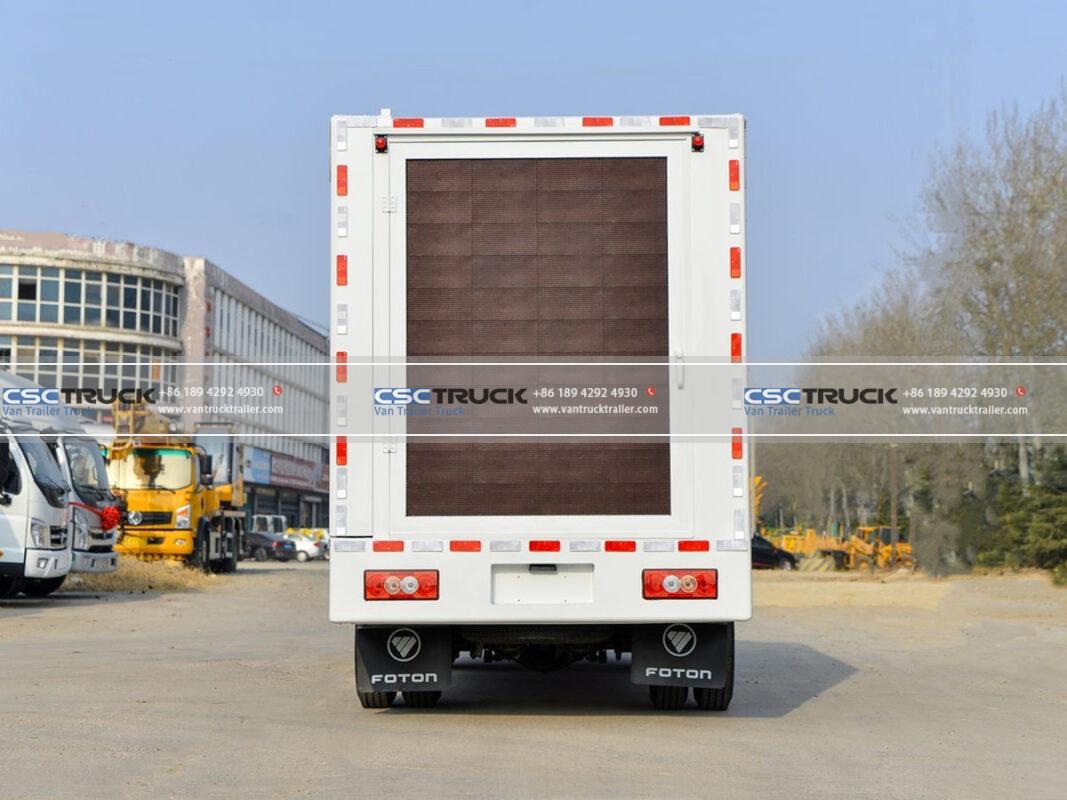
A Lifeline on Wheels: Turkish-Built Mobile Clinics Revolutionize Yemeni Healthcare Access
Amid Yemen’s protracted humanitarian crisis, a transformative fleet of Turkish-engineered clinic-on-wheels vehicles has commenced strategic deployment, delivering advanced medical services directly to besieged communities in remote highlands, coastal enclaves, and conflict-affected urban peripheries, fundamentally redefining emergency healthcare logistics in one of the world’s most challenging operational environments by overcoming infrastructural collapse, security constraints, and geographic fragmentation that previously left 20 million Yemenis without reliable medical access. These life-sustaining mobile units, conceived through a landmark humanitarian-industrial partnership, embody a fusion of Anatolian engineering resilience and frontline medical pragmatism, integrating surgical capabilities, maternal care wards, and epidemic containment modules into all-terrain platforms capable of traversing washed-out mountain tracks and desert dunes, thereby transforming static aid models into dynamic health networks that proactively chase disease outbreaks and displacement waves while adhering to the highest standards of medical ethics and operational safety mandated by international humanitarian law.
Engineering for Adversity: The Clinic-on-Wheels Technological Ecosystem
Each 18-meter modular medical truck functions as a self-sufficient healthcare fortress, featuring ISO 13485-certified clean rooms with positive-pressure HEPA filtration against sandstorms, hybrid power systems combining biodiesel generators with foldable solar arrays for 96-hour off-grid operations, and electromagnetic pulse (EMP)-hardened telemedicine suites enabling real-time consultations with specialists in Amman and Istanbul. The chassis incorporates battlefield-proven survivability: V-hull designs deflect blast impacts, run-flat tire systems maintain mobility after shrapnel damage, and AI-driven threat detection radar triggers automated lockdown protocols during security incidents. Crucially, the medical payload integrates rapid-configuration trauma bays convertible from general consultation to emergency surgery within 12 minutes, supported by portable MRI units, AI-assisted ultrasound diagnostics, and blockchain-tracked pharmaceutical cold chains ensuring vaccine integrity across 55°C temperature differentials—engineering triumphs that elevate these units beyond transport vehicles to become Level II+ trauma centers delivering WHO-standard care under artillery-scarred skies.
Humanitarian Impact Matrix: Multidimensional Intervention Framework
Frontline Crisis Response & Epidemic Control
The fleet delivers critical surge capacity against Yemen’s dual health emergencies: cholera detection labs process 200 samples/hour during outbreaks, while isolation compartments with negative-pressure ventilation contain airborne pathogens across measles-affected displacement camps, reducing outbreak propagation radii by 63% compared to tent clinics. For conflict casualties, mobile surgical units perform life-saving procedures within the “golden hour” at frontlines where hospital transfers prove fatal, with onboard blood banks and autologous transfusion systems circumventing supply chain collapses.
Sustainable Health System Reinforcement
Beyond emergency response, these clinics function as grassroots capacity incubators, training community health workers through augmented reality (AR) simulators and leaving behind telemedicine kiosks powered by residual solar energy—creating a scaffold for enduring local healthcare resilience. Maternal care modules have slashed perinatal mortality by 41% in Marib governorate through portable fetal monitoring and emergency C-section capabilities deployed to nomadic Bedouin communities previously devoid of obstetric services.
Logistical Mastery: Deployment Architecture for Maximum Penetration
AI-Optimized Humanitarian Corridors
A predictive deployment algorithm synthesizes real-time data streams—including conflict heatmaps, epidemiological reports, and road degradation analytics—to dynamically position clinics where needs spike unpredictably, with convoys escorted by UN-approved security coordination cells. Units operate within a nested support ecosystem: compact van truck scouts survey access routes ahead of main convoys, while regional mothership warehouses stockpiling medical consumables enable rapid resupply via drone-drops when land access proves untenable.
The CSCTRUCK Vantrucktrailer-Local Industrial Alliance
Operational success hinges on the trilateral alliance between Turkish medical vehicle specialists, CSCTRUCK Vantrucktrailer (providing armored chassis engineering), and Yemen’s leading industrial conglomerate with unparalleled regional access networks. This partnership adapted designs for Yemen’s extremes: suspension systems withstand 30% more torsion stress than NATO STANAG standards, while sand-intrusion countermeasures protect engine longevity in silica-rich environments. Local assembly of non-critical components now occurs in Aden, creating skilled jobs and ensuring cultural sensitivity in clinic interior layouts respecting gender-segregated care norms.
Horizon Expansion: Towards an Integrated Humanitarian Mobility Network
The clinic fleet’s deployment catalyzes a broader logistics revolution for Yemeni aid delivery, with CSCTRUCK Vantrucktrailer and partners already engineering derivative platforms: dump truck-converted mobile water purification plants capable of servicing 15,000 people daily will deploy to drought-stricken Taiz, while refrigerated van truck modules will distribute temperature-sensitive nutrition supplements to 400,000 acutely malnourished children in Hodeidah. Future phases will integrate amphibious clinic barges for Red Sea coastal communities and airborne telemedicine drones launched from mobile units—transforming isolated villages into connected care nodes. This represents more than vehicle delivery; it signifies the dawn of sovereign humanitarian mobility, where Yemeni ingenuity, tempered by global partnership, builds self-reliant crisis response ecosystems capable of healing a nation in motion, one kilometer of hope at a time.