
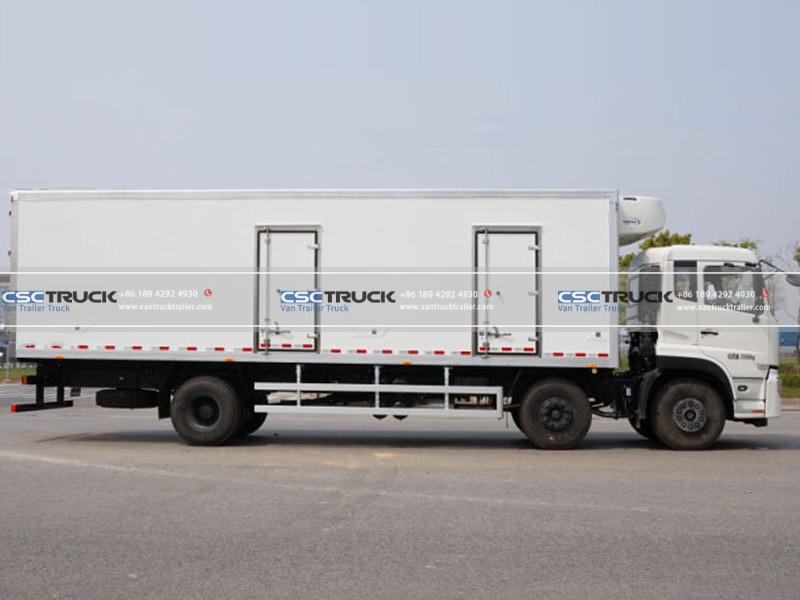
In the world of perishable logistics, refrigerated trucks serve as mobile cold storage units, ensuring that temperature-sensitive goods—from fresh produce to pharmaceuticals—arrive at their destinations in optimal condition. For businesses relying on these specialized vehicles, understanding their temperature control capabilities is critical for compliance, product safety, and operational efficiency. This article explores the temperature ranges refrigerated trucks can maintain, the factors influencing performance, and how to select the right unit for your cargo needs.
1. Standard Temperature Ranges for Refrigerated Trucks
Refrigerated trucks, also known as reefers, are engineered to maintain precise temperature settings across diverse climates. Their capabilities are broadly categorized into three ranges:
Chilled (Fresh) Storage: 32°F to 55°F (0°C to 13°C)
- Ideal for: Dairy products, fresh produce, and beverages.
- Key Consideration: Humidity control is often integrated to prevent dehydration in leafy greens or berries.
Frozen Storage: -10°F to 0°F (-23°C to -18°C)
- Ideal for: Frozen meats, seafood, and ready-to-eat meals.
- Performance Note: Blast-freezing capabilities may be required for rapid temperature drops.
Deep Frozen Storage: -20°F to -30°F (-29°C to -34°C)
- Ideal for: Pharmaceuticals (e.g., vaccines), specialty chemicals, and high-grade frozen goods.
- Equipment: Requires heavy-duty compressors and insulated cargo truck bodies.
2. Factors Affecting Temperature Consistency
Maintaining stable temperatures isn’t solely dependent on the refrigeration unit. External and internal variables play a decisive role:
Insulation Quality
- Materials: Polyurethane foam thickness (3–5 inches standard) impacts thermal resistance.
- Door Seals: Worn seals can lead to 10–15% energy loss, causing temperature fluctuations.
Ambient Conditions
- Extreme Heat: In desert climates, refrigeration systems may struggle to maintain sub-zero temperatures without auxiliary power.
- Frequent Door Openings: Delivery routes with multiple stops risk thermal leakage, especially in box truck configurations.
Load Distribution
- Airflow Blockage: Overpacking obstructs vents, creating hot spots. Palletized loads should allow 4–6 inches of clearance from walls.
3. Refrigeration Unit Types and Their Capabilities
Not all refrigeration systems are created equal. The choice between mechanical and cryogenic units depends on cargo needs:
Mechanical Refrigeration
- How It Works: Uses a compressor, condenser, and evaporator cycle.
- Temperature Range: 32°F to -30°F, with multi-zone options for mixed loads.
- Best For: Long-haul routes with consistent power supply.
Cryogenic (Liquid Nitrogen/CO2) Systems
- How It Works: Cools via vaporized gases; no compressor needed.
- Temperature Range: Can reach -112°F (-80°C) for ultra-low applications.
- Best For: Short-distance pharmaceutical transport or temporary cold chain gaps.
4. Compliance and Monitoring Standards
Regulatory bodies enforce strict guidelines to ensure cargo safety:
FDA Food Safety Modernization Act (FSMA)
- Requirement: Perishable food must be transported at or below 41°F (5°C).
- Documentation: Digital temperature logs with GPS timestamps are now industry standard.
EU ATP Agreement
- Class A: -13°F to 50°F (-25°C to 10°C) for frozen and chilled goods.
- Class B: Below -13°F (-25°C) for deep-frozen products.
Real-Time Telematics
- IoT Sensors: Alert drivers to deviations exceeding ±2°F from set points.
- Backup Power: Some cargo truck fleets install secondary batteries to prevent system failure.
5. Choosing the Right Refrigerated Truck for Your Business
Selecting a refrigerated unit involves balancing cost, capacity, and technical specs:
Assessing Cargo Needs
- Volume vs. Temperature: A 26-ft box truck with a 5,000-lb payload may suffice for local flower deliveries but lacks the -20°F capability required for ice cream distribution.
Fuel Efficiency Trade-Offs
- Diesel vs. Electric: Electric reefers reduce emissions but may sacrifice 8–12% of payload for battery weight.
Future-Proofing Investments
- Hybrid Systems: Emerging dual-mode units switch between electric and diesel to optimize energy use.
- Modular Designs: Companies like vantrucktrailer.com offer customizable trailers with interchangeable cooling systems for seasonal demand shifts.
In an era where a single temperature lapse can spoil thousands in inventory, investing in the right refrigerated truck—and understanding its limits—isn’t just logistics; it’s business preservation.