Why Choose a Van Truck for Urban Delivery?
Urban logistics has become one of the most strategically complex segments of the transportation industry, driven by rapid e-commerce growth, tighter delivery windows, rising customer expectations, and increasingly restrictive municipal regulations. For business owners operating in densely populated cities, selecting the right vehicle platform is not simply a purchasing decision; it is a critical operational choice that directly influences delivery efficiency, driver productivity, compliance exposure, and overall profitability. Among the various commercial vehicle options available, the van truck has emerged as one of the most practical and cost-effective solutions for urban distribution.
While traditional platforms such as the cargo truck and larger box truck configurations continue to play essential roles in regional and heavy-duty logistics, the van truck occupies a unique and highly valuable position within last-mile delivery networks. Its combination of maneuverability, enclosed cargo security, moderate payload capacity, and operational flexibility makes it particularly well suited for urban environments where space, time, and access are constantly constrained.
Urban Logistics Challenges and Vehicle Selection Strategy
Operating in a city environment presents a distinct set of challenges that must be carefully evaluated before selecting a fleet vehicle. Narrow streets, congested intersections, limited loading zones, strict parking enforcement, low-clearance structures, and emissions regulations create conditions that differ dramatically from highway or rural logistics operations.
For many businesses, the temptation may be to deploy larger vehicles in order to maximize load volume per trip. However, in urban settings, bigger is not always better. Oversized vehicles often struggle with turning radii, restricted delivery points, and limited legal parking spaces. The operational delays caused by maneuvering difficulties can quickly offset the theoretical efficiency gained from higher capacity.
A van truck, by contrast, is typically designed with a compact wheelbase and optimized turning geometry, enabling drivers to navigate tight city streets, alleyways, and underground parking garages with relative ease. This agility reduces delivery time per stop and minimizes the risk of minor collisions, which are far more common in congested city traffic than on open highways.
From a business standpoint, the decision should be guided by route density, average package size, daily stop count, and regulatory constraints. When deliveries involve frequent stops within concentrated zones, the smaller footprint and accessibility of a van truck often deliver measurable operational advantages.
Payload Capacity and Operational Efficiency
One of the most common misconceptions is that van trucks are limited in capability compared to larger commercial vehicles. In reality, modern van trucks offer substantial payload capacities that meet the needs of many urban distribution operations without incurring the inefficiencies associated with oversized equipment.
Right-Sizing for Urban Routes
Urban delivery routes typically prioritize stop frequency over long-haul volume. For example, a company delivering parcels, pharmaceuticals, electronics, or catering supplies may prioritize vehicle agility and load organization over sheer cubic capacity. In these scenarios, a van truck provides ample space while preserving maneuverability.
By contrast, a heavy-duty cargo truck might excel in transporting palletized goods across longer distances but may prove impractical for inner-city final-mile distribution. Similarly, a large box truck offers significant cargo volume, yet its height and length can restrict access to underground facilities and narrow loading bays.
Right-sizing the vehicle reduces fuel consumption, driver fatigue, and unnecessary capital expenditure. It also improves route flexibility, allowing operators to adjust delivery zones quickly in response to demand fluctuations.
Improved Loading and Unloading Dynamics
Van trucks are typically designed with rear swing doors or roll-up doors, and many configurations include side access doors that significantly improve curbside delivery efficiency. In urban settings where drivers may need to park briefly and complete rapid drop-offs, easy access to cargo areas directly influences time per stop.
Efficient cargo layout systems—such as shelving, partitions, and tie-down mechanisms—can be integrated into van trucks to optimize internal organization. This reduces search time, protects goods during transit, and enhances driver productivity.
Cost Management and Total Cost of Ownership
From a financial perspective, vehicle acquisition decisions must account for both initial purchase price and long-term operating costs. Urban fleets operate under intense daily utilization, making reliability and cost predictability essential.
Fuel Economy and Maintenance
Van trucks typically offer superior fuel efficiency compared to larger commercial vehicles, particularly when operating in stop-and-go city traffic. Their lighter gross vehicle weight and smaller engines translate into reduced fuel expenditure, which becomes significant when multiplied across a fleet over time.
Maintenance costs also tend to be lower, as van trucks generally experience less drivetrain stress compared to heavier platforms designed for industrial hauling. Replacement parts are often more accessible and affordable, and downtime associated with repairs can be minimized through standardized fleet configurations.
Insurance and Licensing Considerations
Insurance premiums are often influenced by vehicle size, weight classification, and accident risk profile. Because van trucks operate within lower weight categories than many cargo platforms, businesses may benefit from more favorable insurance rates and simplified licensing requirements.
Additionally, many cities impose congestion charges, emissions restrictions, or access limitations based on vehicle class. Smaller vehicles are frequently subject to fewer restrictions, which reduces compliance risk and potential penalty exposure.
Driver Experience and Workforce Productivity
In urban logistics, drivers are not merely vehicle operators; they are brand representatives who interact directly with customers. The comfort, safety, and usability of the vehicle play a central role in workforce satisfaction and retention.
Ergonomics and Safety
Van trucks are often designed with driver-centric ergonomics, including improved visibility, lower step-in height, and car-like handling characteristics. In congested city traffic, enhanced visibility reduces blind spots and improves situational awareness, contributing to safer operations.
Lower step-in height becomes particularly important for routes involving frequent stops, as drivers may enter and exit the vehicle dozens of times per shift. Reduced physical strain contributes to lower injury risk and improved long-term productivity.
Advanced safety technologies, such as rear-view cameras, parking sensors, lane departure warnings, and collision mitigation systems, are increasingly available in modern van truck platforms. These features not only protect drivers but also reduce liability exposure for fleet owners.
Branding and Professional Image
Urban delivery vehicles often serve as mobile advertisements. A clean, well-branded van truck reinforces professionalism and builds brand recognition within local communities. Compared to larger vehicles that may appear industrial or imposing, van trucks project a more approachable and service-oriented image, which can be advantageous for businesses delivering directly to residential customers.
Adaptability for Diverse Urban Applications
Urban markets demand flexibility, and the van truck platform excels in its adaptability across multiple industries.
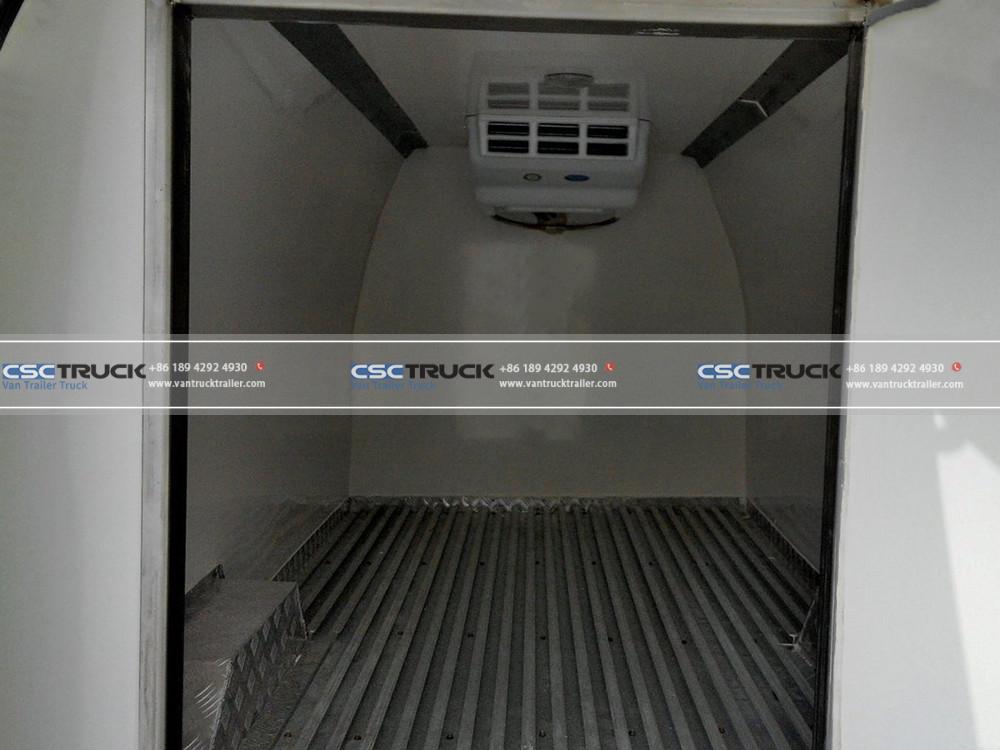
Whether configured for parcel delivery, refrigerated food distribution, medical supply transport, or mobile service operations, van trucks can be customized to meet specific business requirements. Refrigeration units, temperature-controlled partitions, tool storage systems, and shelving configurations can be integrated without significantly altering the vehicle’s footprint.
While a large box truck may be indispensable for bulk appliance delivery or furniture transport, and a heavy-duty cargo truck may be essential for industrial material movement, the van truck often bridges the gap between these extremes. It offers enough versatility to handle varied load types while remaining agile enough for dense city deployment.
For startups and growing businesses, this flexibility reduces the need for multiple specialized vehicles during early expansion phases. A single van truck can support evolving service models, allowing companies to scale operations strategically rather than overcommitting capital prematurely.
Long-Term Strategic Value in Modern Urban Logistics
As urban populations continue to grow and same-day delivery expectations become standard rather than exceptional, the efficiency of last-mile logistics will increasingly determine competitive advantage. Vehicle choice is a foundational component of that strategy.
Electrification trends are also reshaping the commercial vehicle landscape. Many manufacturers now offer electric van truck models specifically designed for urban use, combining zero-emission compliance with quiet operation and reduced fuel dependency. For businesses operating in cities with strict environmental policies, transitioning to electric van platforms can provide both regulatory compliance and brand differentiation.
Scalability is another strategic factor. Fleet operators can deploy multiple van trucks across defined micro-territories, optimizing route density and reducing travel distance per vehicle. This decentralized model often outperforms centralized distribution using fewer large vehicles in congested cities.
Ultimately, selecting a van truck for urban delivery is not merely a matter of size preference; it reflects a broader operational philosophy centered on agility, efficiency, cost control, and customer proximity. Business owners evaluating fleet expansion or replacement should consider long-term growth plans, regulatory trends, and evolving customer expectations before making procurement decisions. For those seeking detailed vehicle specifications, configuration insights, and commercial platform comparisons tailored to urban logistics environments, industry resources such as vantrucktrailer.com provide valuable guidance in aligning fleet investments with sustainable business objectives.