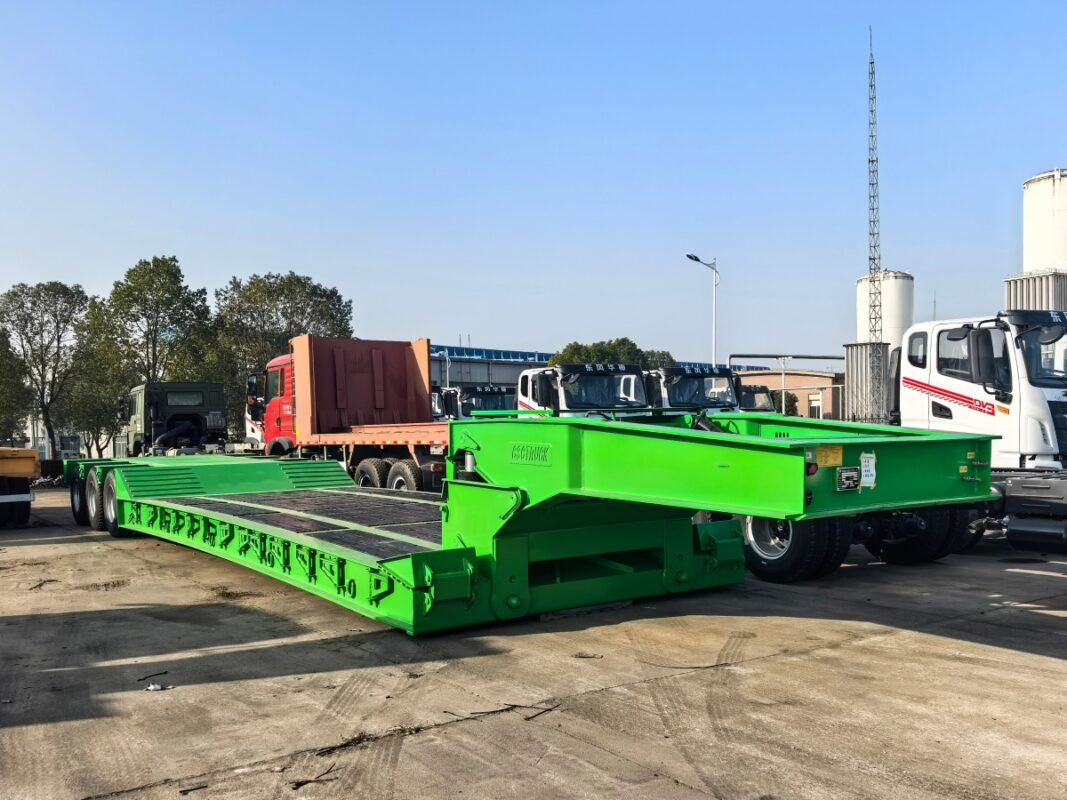
Choosing the right lowbed trailer is one of the most important decisions for companies transporting heavy machinery. Whether you’re moving excavators, bulldozers, wheel loaders, cranes, or mining equipment, selecting the wrong trailer can lead to safety risks, costly repairs, and reduced operational efficiency.
Many buyers focus only on price or maximum payload, but these factors alone don’t guarantee a successful investment. The ideal lowbed trailer should match your equipment’s weight, dimensions, loading method, and the road conditions it will encounter throughout its service life.
This guide highlights the three non-negotiable factors every buyer should consider before purchasing a lowbed trailer, helping you avoid common mistakes and choose a trailer that delivers reliable performance for years to come.
1. Match the Trailer’s Payload Capacity to Your Equipment
The first and most critical question is simple:
How much does your equipment actually weigh?
Many buyers only consider the machine’s published operating weight, but the real transport weight is often significantly higher. Attachments, auxiliary equipment, additional fuel, hydraulic oil, and accessories all contribute to the total load.
For example, an excavator equipped with a hydraulic breaker, quick coupler, and a full fuel tank may weigh several tons more than its standard specification.
Before selecting a trailer, calculate the fully loaded transport weight, including:
- The machine itself
- Buckets, breakers, grapples, or other attachments
- Fuel and hydraulic fluids
- Additional accessories
- Any spare parts or tools transported with the equipment
Always leave a reasonable safety margin. Operating a trailer at its maximum rated capacity every day accelerates structural fatigue, increases tire wear, and places greater stress on axles and suspension components.
A properly matched payload capacity improves safety, extends trailer life, and ensures compliance with local transport regulations.
2. Choose the Right Deck Design for Your Equipment
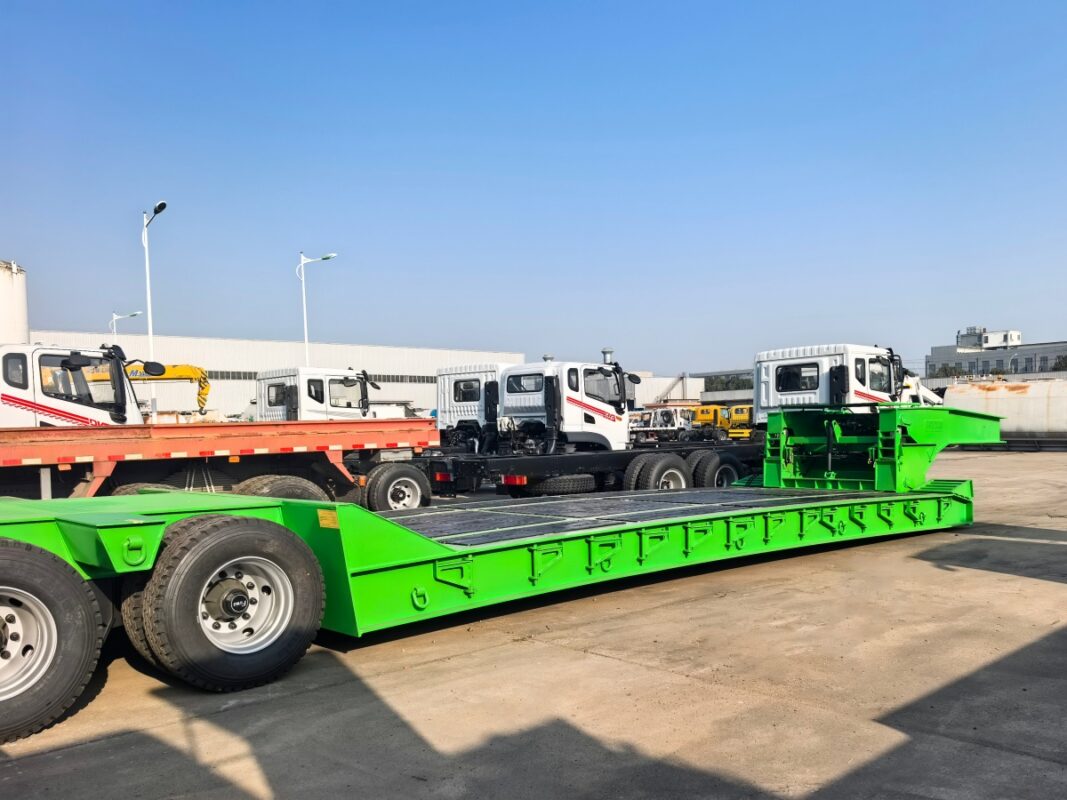
Not every lowbed trailer is built the same. The deck design directly affects how easily equipment can be loaded, transported, and unloaded.
Before making a decision, ask yourself:
- What type of machinery will be transported most often?
- How wide and tall is the equipment?
- Will the machines be driven onto the trailer or lifted by crane?
- Do you require loading from the rear or from the side?
For example:
Fixed Gooseneck Lowbed Trailer
Ideal for regular highway transport and equipment that can easily drive up loading ramps.
Suitable for:
- Excavators
- Wheel loaders
- Road rollers
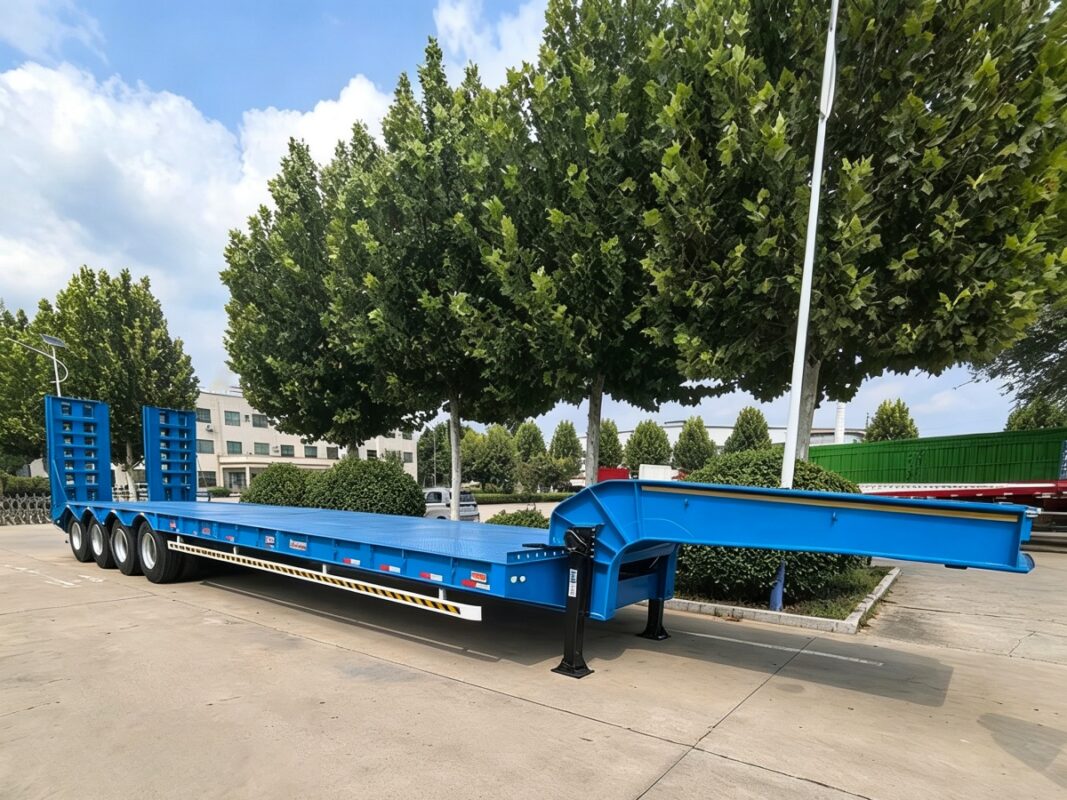
Detachable Gooseneck (RGN) Trailer
The front section can be detached, allowing machinery to drive directly onto the trailer from ground level.
Best for:
- Bulldozers
- Large crawler cranes
- Mining equipment
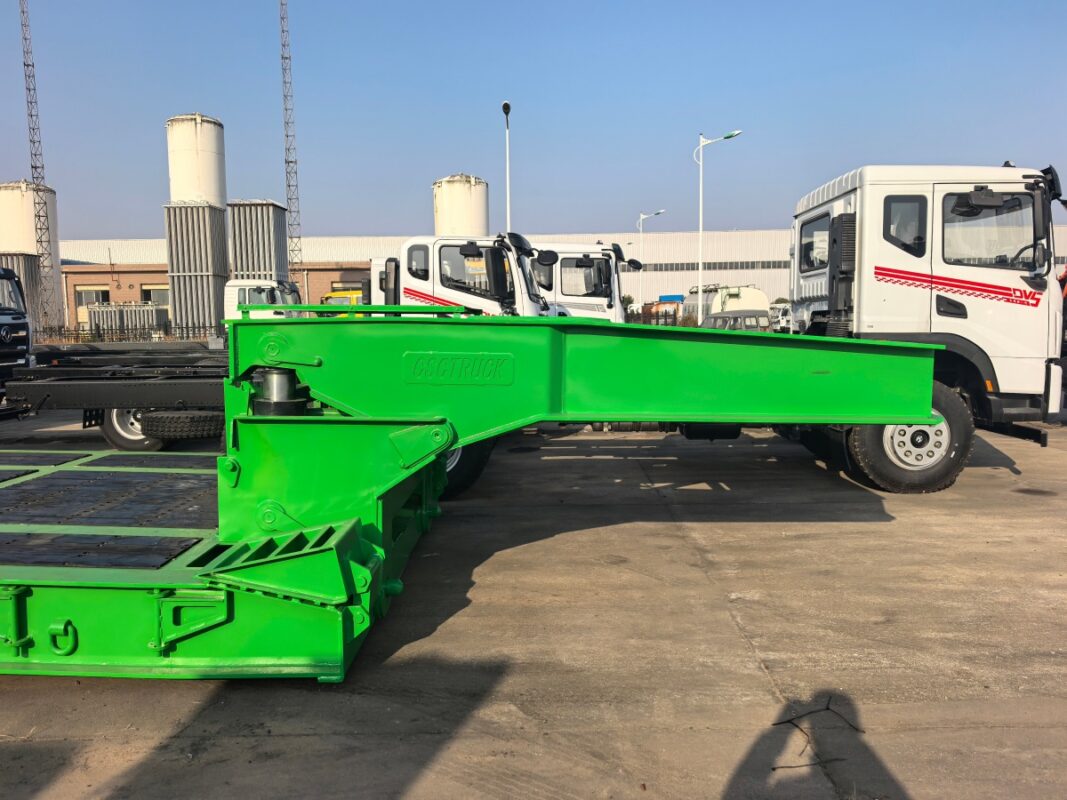
Besides the trailer type, buyers should also evaluate:
- Deck length
- Deck width
- Floor material
- Ramp capacity
- Ramp angle
- Anti-slip surface
A trailer with the correct deck configuration can significantly reduce loading time while improving safety for operators.
3. Consider the Actual Working Environment
One of the most common purchasing mistakes is choosing a trailer designed for highway transportation when the vehicle will spend most of its life on rough construction sites or mining roads.
Road conditions have a major impact on trailer durability.
Highway Transport
If your routes are primarily paved roads, priorities include:
- Lower trailer weight
- Better fuel efficiency
- Higher transport speed
- Reduced tire wear
Construction Sites
Construction projects often involve uneven ground, temporary access roads, and frequent loading cycles.
In this case, look for:
- Reinforced main beams
- Heavy-duty suspension
- Durable landing gear
- High-strength steel construction
Mining Operations
Mining environments place the greatest demands on a trailer.
Essential features include:
- Extra-heavy frame construction
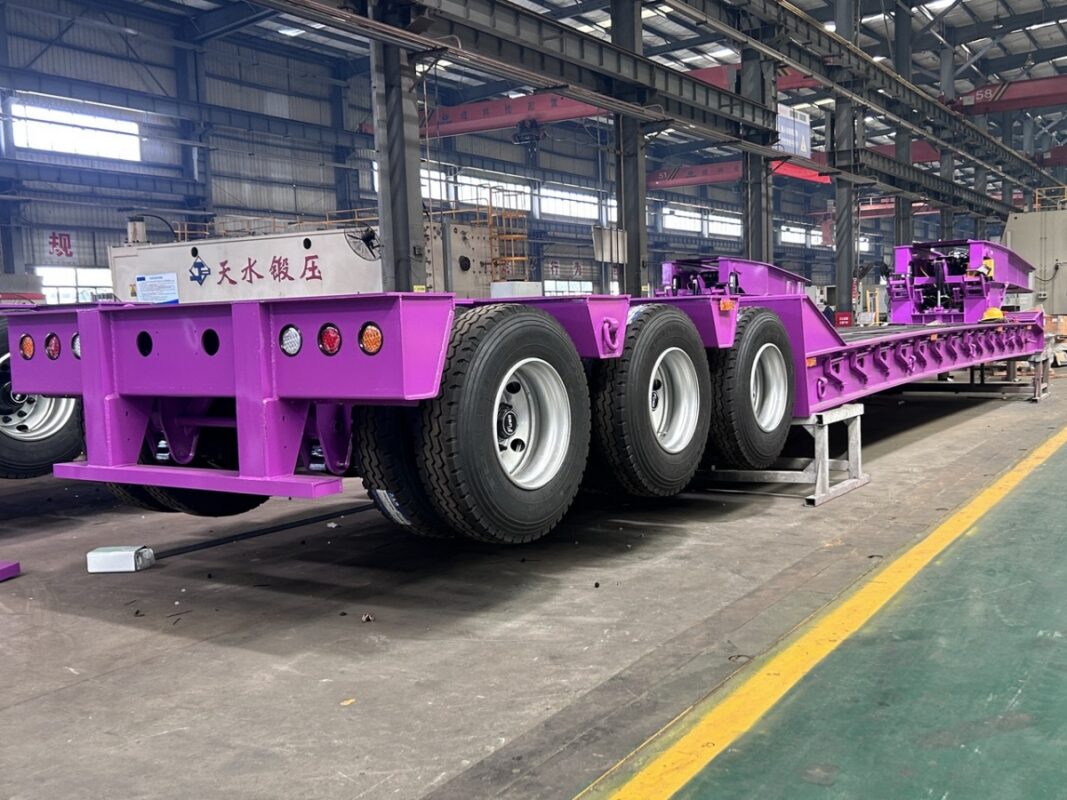
- Multiple axle configurations
- Heavy-duty suspension
- Wear-resistant steel flooring
- Corrosion-resistant coatings
Choosing a trailer designed for your working conditions reduces maintenance costs and extends service life.
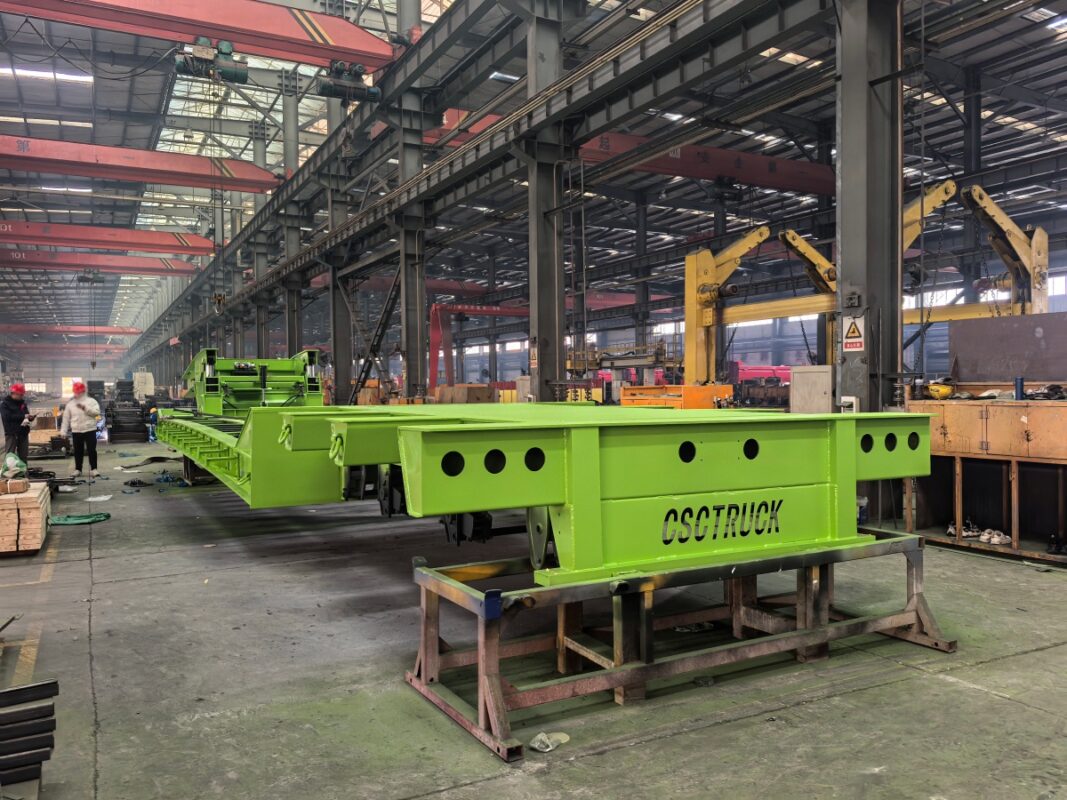
Common Mistakes Buyers Should Avoid
Even experienced fleet managers can make costly mistakes when purchasing a lowbed trailer.
Some of the most common include:
- Choosing the lowest price instead of the best long-term value.
- Ignoring the weight of attachments and accessories.
- Purchasing excessive payload capacity that increases operating costs.
- Failing to consider road conditions.
- Overlooking after-sales service and spare parts availability.
Avoiding these mistakes can save significant time and money over the trailer’s lifetime.
Buyer’s Checklist
Before placing your order, confirm the following:
✔ Equipment operating weight
✔ Total transport weight (including attachments and fuel)
✔ Required payload capacity
✔ Machinery dimensions
✔ Appropriate deck design
✔ Loading method
✔ Number of axles
✔ Suspension type
✔ Road conditions
✔ Local transport regulations
✔ Warranty and after-sales support
Conclusion
Choosing the right lowbed trailer is not simply about selecting the highest payload or the lowest purchase price. A successful investment begins with understanding your equipment, your loading requirements, and the environments in which the trailer will operate.
By focusing on payload capacity, deck design, and real-world durability, buyers can avoid costly mistakes, improve transport efficiency, and maximize the lifespan of their equipment. Taking the time to evaluate these three critical factors ensures your trailer is not only capable of carrying today’s machinery but is also ready to support future projects as your fleet grows.
Looking for a Lowbed Trailer Built for Your Operation?
CSCTRUCK manufactures a wide range of lowbed trailers for transporting construction machinery, mining equipment, agricultural vehicles, and oversized loads. We offer customized solutions with different payload capacities, axle configurations, deck designs, suspension systems, and loading options to meet your specific transport requirements.
Contact our team today to discuss your application and receive a customized lowbed trailer solution designed for your business.