In modern industrial development, many machines are simply too large, too heavy, or too specialized to be transported by conventional trailers. From massive mining equipment to oversized construction machinery and critical energy components, these loads require a transportation solution built for extreme conditions.
That is where lowbed trailers play a vital role.
Designed specifically for heavy equipment transport and oversized cargo transportation, lowbed trailers provide a combination of high load capacity, low loading height, and excellent stability, making them an essential part of global industrial logistics.
Whether moving equipment from a factory to a construction site, relocating mining machinery between operation areas, or delivering energy infrastructure across long distances, heavy duty lowbed trailers ensure that the world’s largest machines can reach where they are needed.
Without reliable lowbed transportation solutions, many large-scale industrial projects would face significant delays because the equipment required for operation could not be moved efficiently.

1. Mining Industry — Transporting the Machines That Drive Production
The mining industry relies on some of the largest and heaviest machines on earth. Equipment such as excavators, bulldozers, wheel loaders, and mining trucks are essential for excavation, material handling, and site development.
However, these machines are often too heavy and oversized to move using standard transportation equipment.
A lowbed trailer for mining equipment provides the necessary strength and flexibility to handle these demanding applications. Its low platform height reduces the overall transport height, allowing large machinery to pass through tunnels, bridges, and restricted areas more safely.
Key advantages in mining applications include:
- High payload capacity for transporting ultra-heavy machinery
- Reinforced chassis structure for harsh mining environments
- Low deck height for improved loading and transport stability
- Heavy-duty suspension systems to handle uneven terrain
- Secure cargo fastening systems for safe equipment movement
For mining companies, reducing equipment transfer time directly improves productivity. A reliable heavy equipment trailer helps minimize downtime and keeps expensive machinery operating where it generates the most value.

2. Construction Industry — Moving Equipment for Major Infrastructure Projects
Construction projects depend on the ability to move large equipment quickly and safely. From highways and bridges to industrial facilities and urban development projects, heavy machinery must frequently be transported between different locations.
Common construction applications include:
- Mobile cranes
- Crawler cranes
- Piling machines
- Concrete equipment
- Prefabricated structures
- Large construction machinery
Modern hydraulic detachable gooseneck lowbed trailers provide a major advantage in these situations. By removing the gooseneck section and lowering the front loading area close to the ground, machines can be loaded directly without requiring additional lifting equipment.
This improves:
- Loading efficiency
- Job site flexibility
- Transportation safety
- Project scheduling performance
For contractors, every hour saved during equipment relocation can reduce project costs. A well-designed lowbed semi trailer becomes an important tool for improving overall construction efficiency.

3. Energy Sector — Transporting Critical Infrastructure Components
The energy industry represents one of the most challenging areas for heavy transportation. Renewable energy projects, power infrastructure, and oil & gas operations often require the movement of extremely large and valuable components.
Typical energy-sector cargo includes:
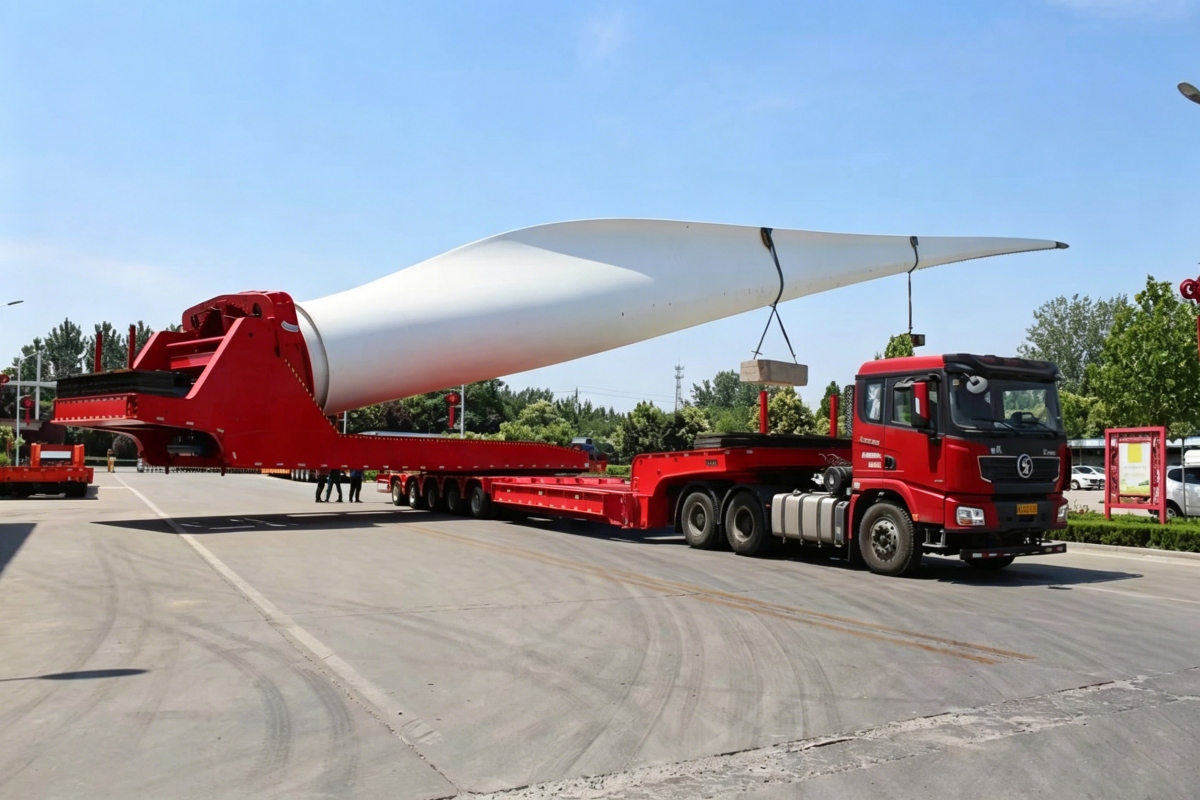
- Wind turbine blades
- Transformers
- Power generation equipment
- Drilling equipment
- Large industrial components
Transporting these items requires more than just capacity. It requires precise engineering, excellent stability, and reliable control throughout the journey.
Advanced lowbed trailers equipped with:
- Heavy-duty axles
- Air suspension systems
- Strong steel frame structures
- Hydraulic loading systems
provide the performance needed for complex energy logistics operations.
For renewable energy projects especially, transporting oversized components from manufacturing facilities to remote installation sites is only possible with specialized oversized cargo transport equipment.

Why Industries Choose Lowbed Trailers
Across mining, construction, and energy sectors, the value of a lowbed trailer goes beyond transportation.
A high-quality lowbed trailer provides:
1. Maximum Loading Flexibility
Features such as detachable gooseneck systems allow faster and easier loading of heavy machinery.
2. Superior Stability and Safety
Strong frame designs and advanced suspension systems protect both cargo and road users.
3. Higher Operational Efficiency
Faster loading, reduced preparation time, and improved reliability help companies lower operating costs.
4. Long-Term Durability
Built with high-strength materials such as Q355 steel, modern lowbed trailers are designed to perform in demanding environments.
The Connection Between Factories and Job Sites
A lowbed trailer is more than a transport vehicle — it is a critical link between industrial manufacturing and real-world operations.
It connects:
Factory → Transportation Route → Construction Site / Mine / Energy Project
From moving a new excavator into a mining area to delivering a massive transformer for a power project, lowbed trailers make large-scale development possible.
In industries where equipment size and weight create transportation challenges, lowbed trailers deliver the strength, flexibility, and reliability needed to move the world’s heaviest loads.