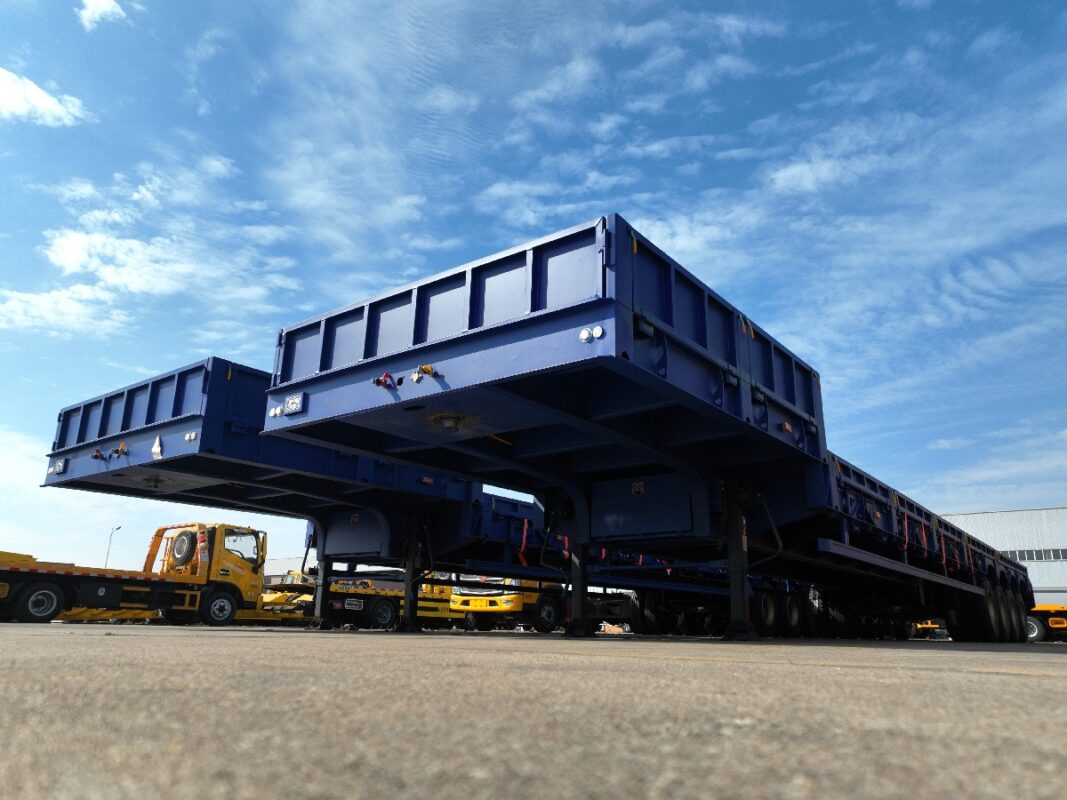
When people first see a Step Deck Trailer, the name may seem confusing. Why is it called a “step” deck? Is there an actual step involved?
The answer comes from its unique engineering structure.
Unlike a traditional flatbed trailer with one continuous platform height, a step deck trailer features a lowered deck section that creates a “step” between two different platform levels. This drop-frame design allows transport companies to carry taller cargo while staying within legal height limits.
Behind this simple-looking design is a clever balance between cargo capacity, road regulations, and transportation efficiency.
What Is a Step Deck Trailer?
A Step Deck Trailer is a type of semi-trailer designed with two deck heights:
- Upper deck near the tractor connection
- Lower deck closer to the ground
The transition between these two levels creates the “step” shape.
The lower deck is the key feature because it reduces the overall cargo height, allowing taller equipment and machinery to be transported without exceeding highway height restrictions.

The Engineering Logic Behind the Drop-Frame Design
The biggest challenge in heavy transport is simple:
How can you carry taller cargo while keeping the vehicle legal and safe on the road?
A normal flatbed trailer has a higher deck height. When loading tall machinery, construction equipment, or industrial components, the total transport height can quickly exceed legal limits.
The drop-frame design solves this problem by lowering the cargo platform closer to the ground.
This creates several advantages:
Lower Overall Transport Height
The lower deck reduces the vertical distance between the cargo and the road surface.
This means a step deck can transport:
- Excavators
- Agricultural machinery
- Industrial equipment
- Oversized components
while maintaining safer clearance under bridges, tunnels, and power lines.
Step Deck vs. Flatbed: Why the Difference Matters
A Flatbed Trailer is simple and versatile, but it has a higher loading surface.
A Step Deck Trailer provides additional flexibility because the lower platform creates extra vertical space.
Flatbed advantages:
- Simple structure
- High payload flexibility
- Easy loading from multiple directions
Step deck advantages:
- Lower cargo height
- Better for tall loads
- Improved legal clearance
- More suitable for specialized transportation
For many industries, the difference between these two trailer designs determines whether a shipment can move legally and safely.

How the Drop Deck Improves Loading Efficiency
The lower deck is not only about height—it also improves loading operations.
Because cargo sits closer to the ground:
- Equipment ramps require less steep angles
- Heavy machinery is easier to load
- The center of gravity is reduced
- Transportation stability improves
For construction and agricultural equipment, this can significantly simplify daily logistics.
Why Step Deck Trailers Are Popular in Heavy Transport
Many industries depend on Step Deck Trailers because they offer the ideal balance between capacity and flexibility.
Common applications include:
Construction Industry
Transporting:
- Excavators
- Loaders
- Bulldozers
- Generators
Agricultural Industry
Moving:
- Tractors
- Harvesting machines
- Farm equipment
Industrial Transportation
Carrying:
- Steel structures
- Factory components
- Large machinery parts

The Safety Benefits of a Lower Center of Gravity
A major engineering advantage of the drop-frame design is improved stability.
Lower cargo placement helps:
- Reduce trailer sway
- Improve cornering stability
- Lower rollover risk
- Create smoother highway handling
For heavy and tall cargo, every reduction in height improves transportation safety.
The Evolution of Step Deck Trailer Design
Modern Step Deck Trailers continue to evolve with improvements such as:
- Stronger lightweight materials
- Improved suspension systems
- Hydraulic loading solutions
- Extendable deck designs
Manufacturers are constantly balancing:
- Payload capacity
- Structural strength
- Weight reduction
- Road compliance
The goal is to transport larger and heavier loads more efficiently.
Conclusion
The name Step Deck Trailer comes from its unique stepped platform design, but the idea behind it is much more than a shape.
The drop-frame structure is an engineering solution designed to solve one of transportation’s biggest challenges: moving taller cargo safely within road height limits.
By lowering the cargo deck, improving stability, and increasing loading flexibility, step deck trailers have become an essential tool for heavy-duty transportation across construction, agriculture, and industrial sectors.
The “step” is not just a design feature—it is the reason these trailers can carry what traditional trailers cannot.