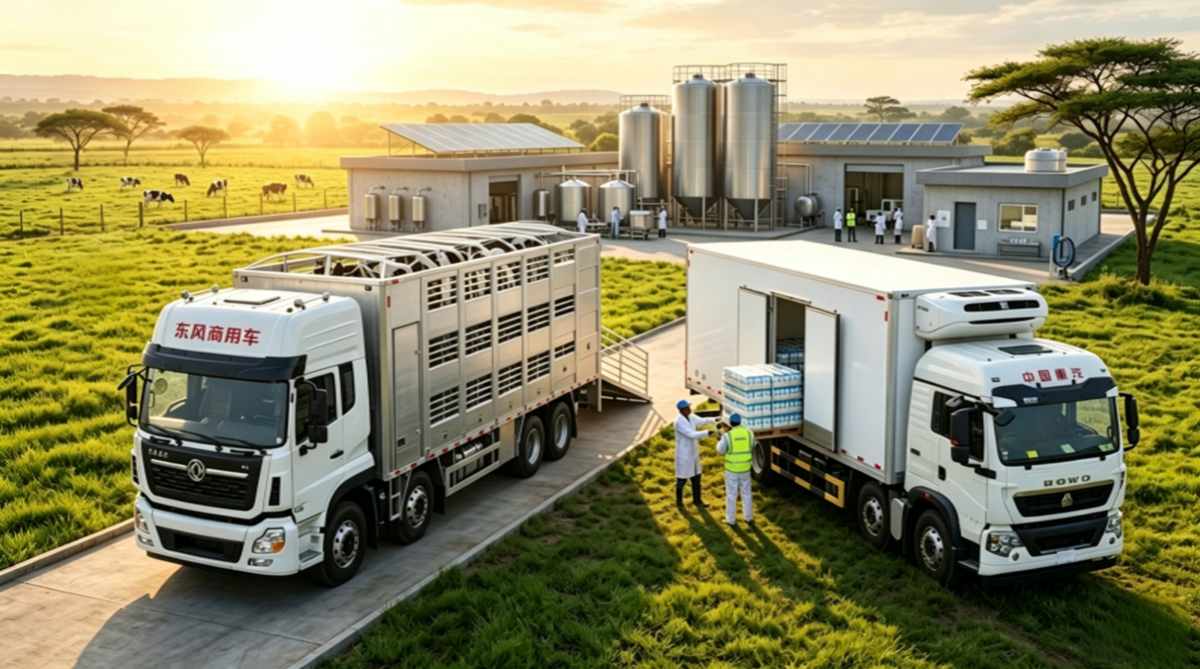
Kenya’s dairy industry is undergoing a major transformation driven by two critical logistics upgrades: modern livestock trucks for transporting cattle and advanced refrigerated trucks for transporting milk.
Together, these two transport systems are reshaping the entire dairy supply chain, improving efficiency, reducing losses, and increasing farmer profitability.
Livestock Trucks: Improving Animal Transport in Kenya
Modern livestock trucks are replacing traditional open and unsafe transport methods used by many rural farmers in Kenya.
Unlike conventional vehicles, new livestock trucks are specifically designed for live animal transportation.
Key features of modern livestock trucks:
- High-ventilation airflow systems
- Non-slip flooring to prevent injuries
- Safe loading and unloading ramps
- Internal partitions for animal stability
- Shock-absorbing suspension systems
Why livestock trucks matter:
Poor transport conditions used to cause:
- High animal stress
- Weight loss during transport
- Injuries and mortality
- Lower milk productivity after relocation
Modern livestock trucks in Kenya solve these problems by ensuring safer, faster, and more humane transportation of dairy cattle.

Refrigerated Trucks: Protecting Milk Quality Through Cold Chain Logistics
While livestock trucks move animals, refrigerated trucks are responsible for transporting raw milk from farms to processing facilities.
These vehicles are a core part of Kenya’s expanding cold chain logistics system.
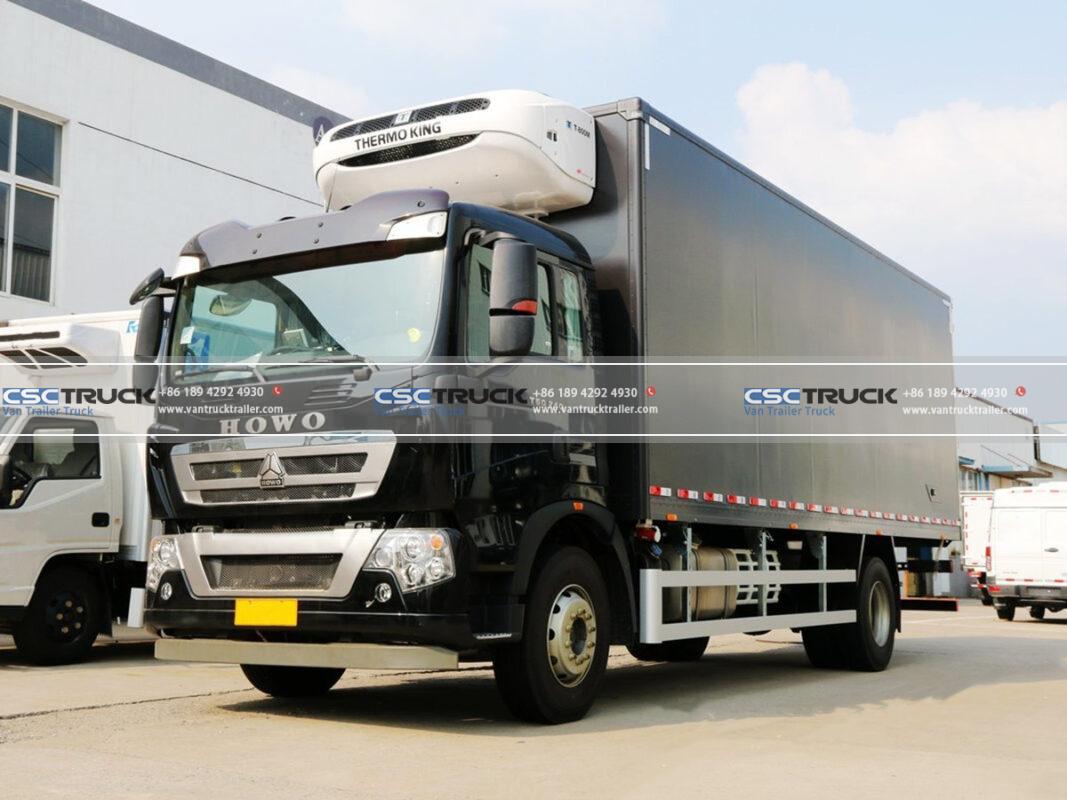
Key features of refrigerated trucks:
- Temperature-controlled storage (2–4°C)
- Insulated milk tanks or containers
- Continuous cooling systems
- Real-time temperature monitoring
- Hygienic sealed compartments
Why refrigerated trucks are critical:
Milk is highly perishable. Without refrigeration:
- Bacteria grow rapidly
- Milk spoils within hours
- Farmers suffer rejection and price loss
With refrigerated trucks, Kenya can:
- Extend milk freshness
- Reduce spoilage rates
- Improve food safety standards
- Access urban and export markets
Livestock Truck vs Refrigerated Truck: Why Both Are Needed
A major modernization shift in Kenya’s dairy sector is the clear separation of transport functions.
| Function | Livestock Truck | Refrigerated Truck |
|---|---|---|
| Cargo | Live cattle | Raw milk |
| Environment | Ventilated, open airflow | Cold storage (2–4°C) |
| Purpose | Animal welfare | Product preservation |
| Risk if misused | Animal stress | Milk spoilage |
This separation is what makes Kenya’s modern dairy logistics system more efficient and scalable.
How These Trucks Are Transforming Kenya’s Dairy Industry
The combined use of livestock trucks and refrigerated trucks is creating a fully modernized dairy ecosystem.
1. Reduced Losses Across the Supply Chain
- Less animal stress
- Lower milk spoilage
- Reduced rejection rates at processing plants
2. Higher Farmer Income
Farmers benefit from:
- Better cattle health after transport
- Higher milk quality grades
- Improved pricing from processors
3. Stronger Dairy Cooperatives
Cooperatives can now coordinate:
- Scheduled livestock movement
- Milk collection using refrigerated fleets
4. Expansion of Rural Market Access
Even remote farmers can now connect to:
- Urban dairy processors
- Large commercial buyers
- National distribution networks
The Shift Toward Integrated Dairy Logistics in Kenya
Kenya is now moving toward a dual-system model:
- 🐄 Livestock trucks → move cattle safely between farms and markets
- 🥛 Refrigerated trucks → move milk through cold chain networks
This integration creates a high-efficiency dairy logistics system, reducing waste and improving national food security.
Future Outlook of Kenya’s Dairy Transport System
Industry experts expect continued growth in:
- Expansion of livestock truck fleets in rural counties
- Investment in refrigerated truck cold chain networks
- Digital tracking of dairy logistics routes
- Cooperative-owned transport systems
This will position Kenya as one of Africa’s most advanced dairy logistics markets.
Conclusion
The modernization of Kenya’s dairy sector is being driven by two key pillars:
- Livestock trucks → improving animal transport efficiency and welfare
- Refrigerated trucks → protecting milk quality through cold chain logistics
Together, they are not just improving transportation — they are redefining the entire dairy supply chain in Kenya.
For farmers, cooperatives, and investors, this dual-logistics system represents a major opportunity for long-term growth and stability.