Introduction: The Challenge of Distance
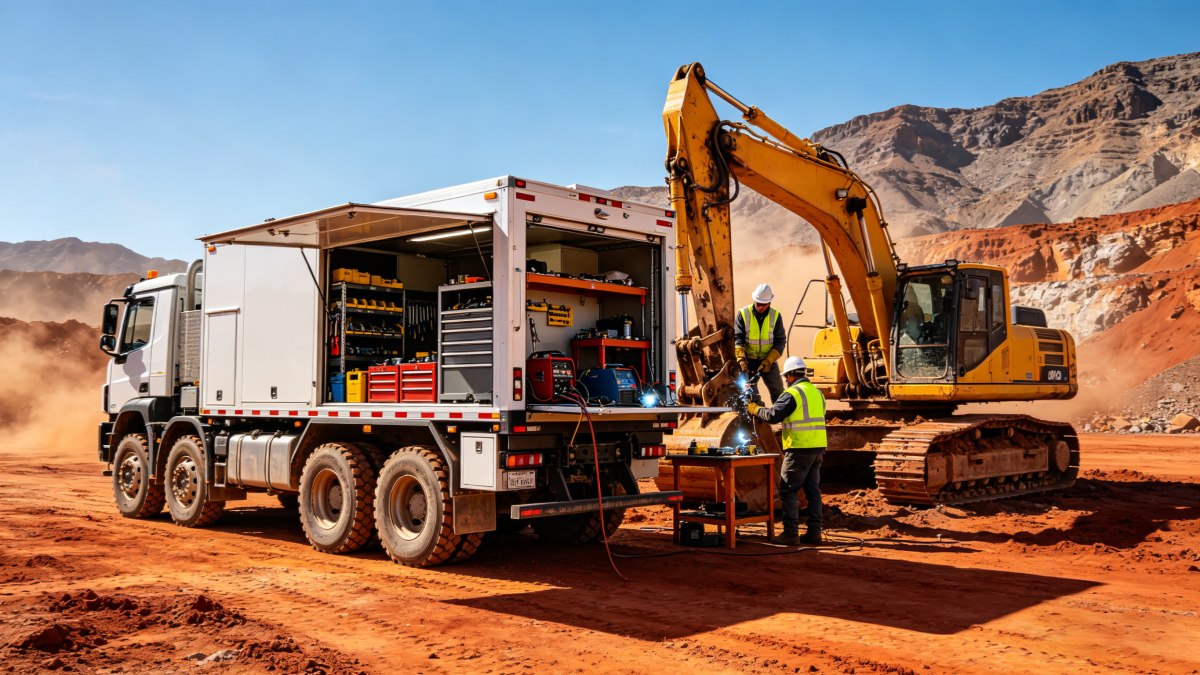
In remote mining sites, sprawling agricultural operations, disaster-stricken regions, and far-flung construction zones, one thing is certain: when heavy equipment breaks down, help is rarely just around the corner. The nearest fixed workshop could be hundreds of kilometers away, and transporting a broken excavator, bulldozer, or generator to a service center is not only time-consuming but often prohibitively expensive.
This is where mobile workshop trucks step in. These purpose-built service vehicles are transforming how industries operate in isolated environments. Fully equipped with tools, machinery, power generation, and storage compartments, they bring the workshop directly to the point of need, ensuring that operations keep running even in the world’s most remote locations.
This article explores what mobile workshop trucks are, the industries that rely on them, their core features, and why they are becoming indispensable assets for remote-area operations.
What Is a Mobile Workshop Truck?
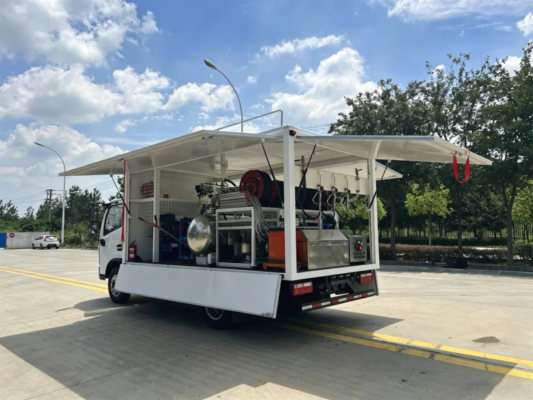
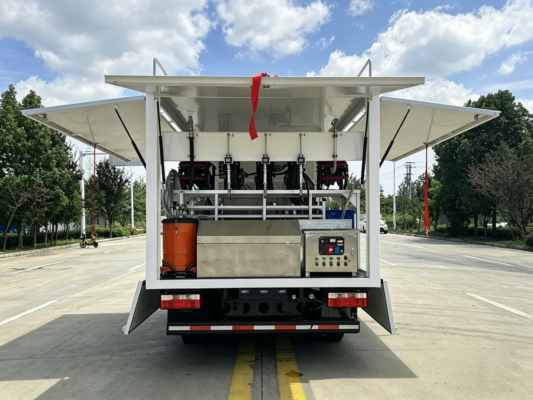
A mobile workshop truck is a vehicle specifically outfitted to perform on-site maintenance and repair work. Unlike standard service vans, these trucks offer a larger workspace, heavier-duty equipment, and the capacity to handle complex mechanical, electrical, and even fabrication tasks directly in the field.
Typical configurations include:
- Tool cabinets and workbenches for organized access to equipment
- Onboard power generation (e.g., diesel generators or inverters) to operate tools without external electricity
- Air compressors and welding equipment for pneumatic tools and metal fabrication
- Diagnostic tools for troubleshooting vehicle and machinery systems
- Spare parts and fluid storage to enable immediate repairs
In essence, a mobile workshop truck functions as a rolling repair station — capable of performing everything from routine preventative maintenance to emergency breakdown response, all without moving the broken equipment to a fixed facility.

Key Features and Equipment
Modern mobile workshop trucks are equipped with a comprehensive suite of tools and machinery. A typical well-outfitted unit may include:
| Category | Equipment Examples |
|---|---|
| Power Generation | 40–50kW diesel generators, 400/230V 3-phase output |
| Welding & Cutting | Arc welding machines, oxy-acetylene cutting torches, and gas welding stations |
| Compressed Air | Piston air compressors (0.7MPa, 3kW), air tanks, pneumatic tool connections |
| Lifting Equipment | 2-ton chain blocks, hydraulic jacks, bottle jacks, transmission jacks |
| Machining Tools | Bench grinders, drilling machines, and hand electric drills |
| Diagnostic Tools | OBD scanners, multimeters, and electrical maintenance kits |
| Support Systems | Water tanks, battery chargers, workbenches with vices, and LED floodlighting |
| Safety Equipment | Fire extinguishers, first-aid kits, and ventilation systems |
Some advanced models also feature all-in-one multipower units that combine hydraulic power, compressed air, auxiliary electrical output, and DC welding into a single rugged package — ideal for remote maintenance where transporting multiple separate machines would be inefficient.
For more demanding environments, 6×6 off-road truck-mounted workshops with dual welding capabilities (electric + gas) and 55kW generators are available for military, disaster response, and heavy industry applications.
Industries That Rely on Mobile Workshop Trucks
Mobile workshop trucks serve a wide range of sectors where distance and accessibility are major challenges:
Construction & Heavy Equipment
Construction projects often take place far from urban centers. Mobile workshops can service excavators, bulldozers, cranes, and other heavy machinery directly at the job site, keeping projects on schedule and avoiding costly towing fees.
Mining Operations
Mining sites are typically located in extremely remote areas. Mobile workshop trucks enable machinery diagnostics, hydraulic line repairs, and preventive maintenance without hauling massive equipment back to a central workshop. As one industry report notes, companies operating in remote or dispersed locations require rapid, efficient solutions to minimize equipment downtime — and mobile workshop trucks fulfill this requirement by bringing essential tools and expertise directly to the field.
Agriculture
On large farms and ranches, tractors, harvesters, and other agricultural machinery must keep running during critical planting and harvesting seasons. A mobile workshop can perform on-site repairs that might otherwise take days to arrange, preventing crop losses due to equipment failure.
Remote Energy Projects
Wind farms, solar installations, and oil/gas pipelines are often located in inaccessible areas. Mobile workshop trucks provide tool and parts storage, generator servicing, and on-site maintenance for these critical energy assets.
Disaster Relief & Military
After earthquakes, hurricanes, or floods, infrastructure is often destroyed, and fixed repair facilities may be completely unavailable. Mobile workshop trucks (such as 6×6 off-road units) provide emergency vehicle support, generator repairs, and metal fabrication services in crisis zones.
Transportation & Logistics
Even in less extreme environments, mobile workshop trucks are becoming essential for fleet maintenance. They can perform roadside repairs, preventive maintenance, and diagnostics for trucks and delivery vehicles, eliminating the need for costly tows and lost driving hours.
Why Remote Areas Require Mobile Workshops
Remote regions typically lack three critical things:
- Service garages or repair facilities within a reasonable distance
- Reliable transport access for moving broken equipment
- Spare parts stores or skilled mechanics nearby
Mobile workshop trucks fill these gaps by enabling:
- Rapid on-site diagnostics and repair — technicians arrive with everything needed to fix the problem immediately
- Preventive maintenance without moving equipment — routine servicing happens where the machines already are
- Lower transport costs and downtime losses — no towing, no lost operating hours
- Operational independence — eliminates reliance on nearby infrastructure
When machinery breaks down in a remote area, every hour can mean significant financial losses. A mobile workshop can be immediately dispatched to restore operations, transforming what could be days of downtime into just a few hours of repair work.
The Strategic Value: Beyond Just Repairs
The value of mobile workshop trucks extends far beyond the ability to fix broken equipment. For fleet managers and business owners, they represent a strategic upgrade to overall operational efficiency.
Reduced Downtime
Perhaps the most obvious benefit: downtime is the enemy of productivity. With mobile service, vehicles and machinery can be repaired on-site, eliminating the hours or days required to tow equipment to a fixed shop. As one industry expert noted, “Every hour a vehicle is in the shop is an hour it’s not working”. Mobile maintenance solves this by bringing the shop to the vehicle.
Cost Efficiency
Mobile maintenance typically costs more upfront than taking equipment to a shop, but the savings from reduced vehicle downtime and increased efficiency often add to the bottom line. Costs for labor, logistics, fuel, and rerouting quickly add up when every maintenance appointment requires a trip to a static garage. By having technicians come directly to the equipment, fleets save on fuel, towing, and driver downtime.
Enhanced Fleet Availability
Instead of sending vehicles out of service for repairs, mobile maintenance allows scheduling during built-in downtime — when trucks are already parked at the lot. This means increased uptime and reliability without sacrificing a consistent maintenance schedule.
Equipment Longevity
Regular preventive maintenance is essential for extending equipment life. In remote areas, where access to service is limited, maintenance often gets deferred. Mobile workshop trucks make it possible to perform routine servicing on schedule, preventing small issues from becoming catastrophic failures.
Operational Independence
Perhaps most importantly, mobile workshop trucks eliminate reliance on nearby infrastructure. Whether operating in the mountains of Nepal, the deserts of Australia, or the mining belts of Africa, these units allow businesses to remain self-sufficient and mission-capable regardless of location.
Conclusion: Keeping Remote Operations Running
Mobile workshop trucks are far more than just vehicles — they are strategic field assets. By combining transport, tools, and technician capabilities into a single mobile unit, they ensure that even in the most isolated environments, maintenance never stops.
For industries operating in remote areas — mining, construction, agriculture, energy, disaster relief, and military — investing in a mobile workshop truck is not merely a convenience. It is a necessity. These rolling workshops reduce downtime, cut costs, extend equipment life, and provide the operational independence that remote operations demand.
As the global economy pushes further into frontier regions and infrastructure projects expand worldwide, the role of mobile workshop trucks will only become more critical. The market is growing, technology is advancing, and the businesses that embrace mobile service solutions will be the ones that stay ahead — wherever their work takes them.
Need a reliable mobile workshop truck for your remote operations? CSCTRUCK vantrucktrailer offers high-quality mobile workshop trucks with customizable options, delivering ideal solutions for a wide range of industrial field service applications.