Dump trucks are among the most recognizable and essential vehicles in construction, mining, and infrastructure work. Designed to carry and quickly unload loose materials, they play a critical role in keeping large-scale projects moving efficiently.
But what exactly are they used for, and why are they so important across so many industries?
What Is a Dump Truck?
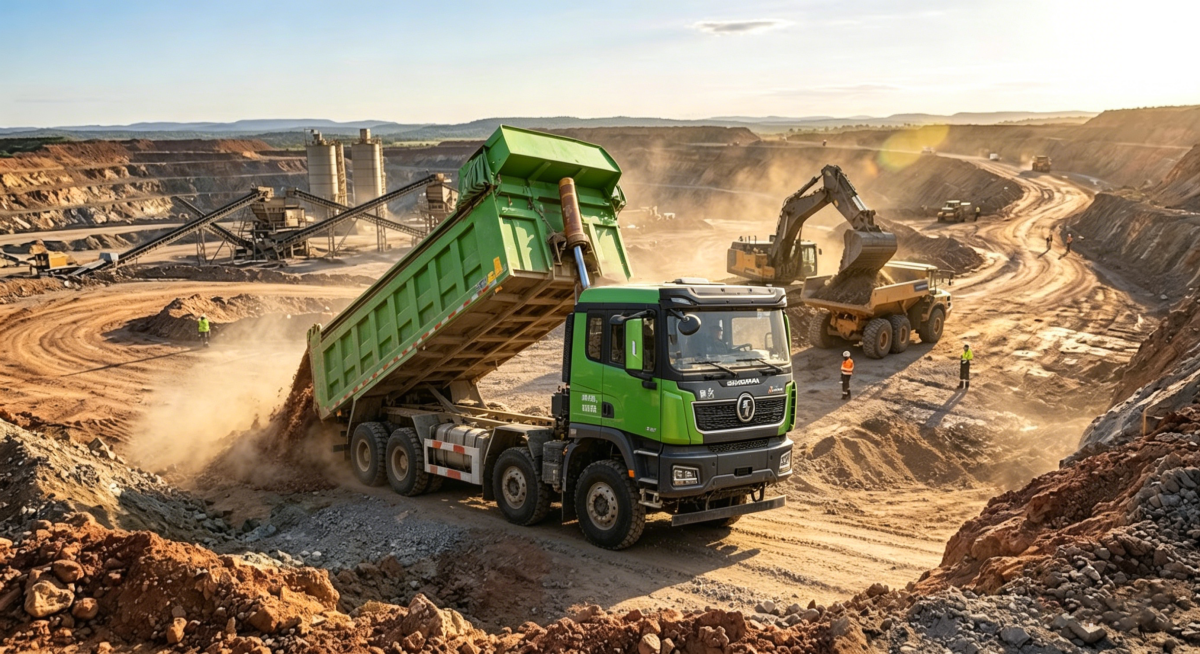
A dump truck is a heavy-duty vehicle equipped with an open-box bed that can be hydraulically lifted at the front. This allows materials to slide out from the back or side, making unloading fast and efficient.
The key idea is simple: transport heavy, loose material from one place to another—and unload it quickly with minimal labor.
1. Construction Projects
Construction sites are one of the most common environments for dump trucks.
They are used to move materials such as:
- Sand
- Gravel
- Soil
- Concrete debris
- Asphalt
Dump trucks also help clear waste from demolition sites, making it easier to prepare land for new structures. Without them, construction timelines would be significantly slower and more labor-intensive.

2. Mining Operations
In mining, dump trucks are absolutely essential.
They transport:
- Ore extracted from the ground
- Waste rock and overburden
- Large volumes of earth and minerals
Mining dump trucks are often massive, with some capable of carrying hundreds of tons in a single trip. In remote mining regions, they form the backbone of material movement between excavation sites and processing facilities.
3. Road Building and Infrastructure
Road construction depends heavily on dump trucks to deliver and distribute materials efficiently.
They are used for:
- Transporting asphalt for paving roads
- Delivering crushed stone and aggregates
- Supporting road repair and resurfacing projects
Because road projects often cover long distances, dump trucks ensure materials arrive quickly and in large quantities.

4. Landscaping and Agriculture
Smaller dump trucks are commonly used in landscaping and agricultural settings.
They help move:
- Soil and topsoil
- Mulch and compost
- Fertilizers and organic materials
In agricultural operations, they may also assist with transporting bulk feed or harvest materials, depending on the region and equipment available.
5. Waste and Disaster Cleanup
Dump trucks also play a key role in cleanup and recovery efforts.
They are used for:
- Construction debris removal
- Storm and flood cleanup
- Disaster recovery operations
- Municipal waste transport in some systems
Their ability to quickly load and unload large volumes makes them ideal for urgent cleanup tasks.
Different Types of Dump Trucks
Not all dump trucks are the same. Different environments require different designs:
- Standard dump trucks: rear unloading, most common type
- Side dump trucks: ideal for narrow or unstable areas
- Articulated dump trucks: designed for rough terrain and mining
- Transfer dump trucks: use detachable containers for added flexibility

Each type is optimized for specific working conditions.
Why Dump Trucks Matter
Dump trucks may seem simple, but they are critical to modern infrastructure. Without them, construction would slow down, mining operations would become inefficient, and large-scale cleanup would be far more difficult.
They are essentially the “material backbone” of heavy industry—moving the raw inputs and waste that keep projects running smoothly.
Conclusion
Dump trucks are used wherever large quantities of loose materials need to be transported and unloaded efficiently. From construction sites and mines to roads and disaster zones, they remain one of the most important tools in modern industrial logistics.
In short, if something needs to be moved in bulk and dumped quickly, a dump truck is usually the answer.
CSCTRUCK provides high-quality dump trucks and concrete mixer trucks—if you have any needs, feel free to contact us.