
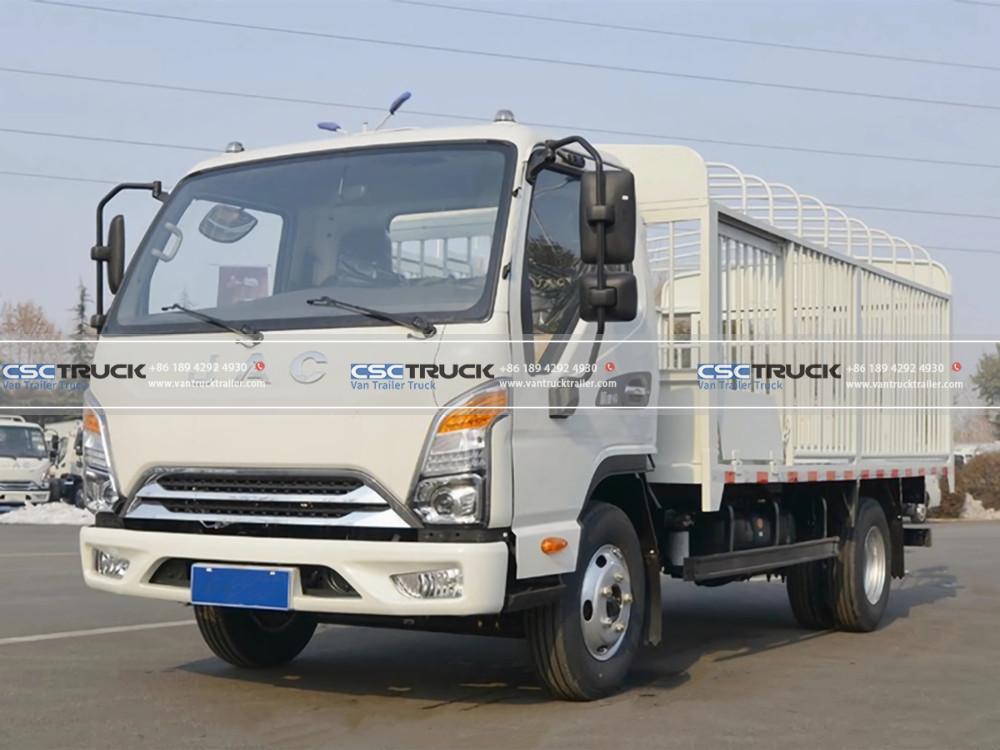
Ecuador’s US$1.8 billion cattle industry has achieved a transformative leap in animal welfare and supply chain efficiency with the introduction of a cutting-edge ventilated livestock truck fleet, a strategic collaboration between CSCTRUCK Vantrucktrailer and Ecuador’s leading beef export consortium. This innovation directly addresses the sector’s historic challenges—where heat stress and transport injuries previously caused 18-22% losses in livestock value—while positioning Ecuadorian beef to meet stringent international quality standards. Designed specifically for the Andean nation’s diverse microclimates, from the humid coastal plains to high-altitude pastures, these biosecure transport solutions combine German engineering with localized adaptations to revolutionize how cattle move from ranch to processing facilities across 23 provinces.
1. Solving Ecuador’s Livestock Transport Crisis
For generations, Ecuador’s cattle producers relied on makeshift solutions like retrofitted dry van trucks or open-platform vehicles, leading to systemic inefficiencies:
- US$36 million in annual losses from heat exhaustion during 8+ hour transits
- 15% carcass downgrades due to bruising from unstable transport conditions
- Disease transmission risks in poorly ventilated enclosures
The new ventilated livestock trucks introduce a paradigm shift with:
- Multi-zone airflow systems that adjust automatically from sea level to 3,000m elevations
- Non-slip rubberized flooring with urine drainage channels to prevent ammonia buildup
- GPS-linked ventilation control that responds to real-time weather changes
Early adopters report 30% fewer veterinary interventions post-transport and a 2.3% increase in premium carcass yields—critical metrics for Ecuador’s ambitions to expand beef exports to China’s US$12 billion import market.
2. Engineering Excellence: Features Redefining Animal Transport
Climate-Smart Innovations
- Altitude-compensating turbines maintain oxygen levels for highland breeds like Braunvieh
- UV-blocking polycarbonate roofs reduce solar stress in equatorial sunlight
- Modular partitions that reconfigure for calves (1.2m²/head) vs. bulls (2.5m²/head)
Operational Advancements
- Self-cleaning systems power-wash interiors between loads to meet OIE biosecurity standards
- Load-sensing suspension minimizes motion sickness on mountain switchbacks
- Ethanol-powered heaters prevent hypothermia during Andean night transports
These technologies render obsolete the previous generation of dry van trucks (which trapped heat and humidity) and dump truck adaptations (lacking proper animal restraints). The fleet’s 14% fuel efficiency gain through regenerative braking also aligns with Ecuador’s National Decarbonization Pact.
3. Driving Economic Transformation Across the Supply Chain
The CSCTRUCK Vantrucktrailer partnership delivers impact beyond hardware, embedding sustainable practices:
Farmer Empowerment
- Mobile app integration allows smallholders to book shared transports at 60% cost reduction
- Training hubs in Guayaquil and Quito certify drivers in low-stress livestock handling
Export Market Expansion
With blockchain-enabled traceability, Ecuadorian beef now meets:
- EU’s Farm-to-Fork animal welfare requirements
- GCC Halal Import Standards‘ 72-hour pre-slaughter care rules
Environmental Stewardship
- Methane capture systems convert livestock waste into biofuel for auxiliary power
- Closed-loop water recycling reduces per-transport usage by 8,000 liters
While dry van trucks continue serving feed distribution and dump trucks remain essential for Ecuador’s mining sector, this specialized fleet establishes new benchmarks for ethical livestock logistics in Latin America. Discover how CSCTRUCK Vantrucktrailer is transforming agri-mobility at vantrucktrailer.com.
This investment not only safeguards Ecuador’s 130,000 cattle-farming families but positions the nation as a pioneer in climate-resilient animal husbandry—where innovation bridges ancestral ranching traditions with 21st-century food systems.