Understanding Mixer Truck Capacity: Why It Is More Than Just a Number
Selecting the appropriate mixer truck capacity is not a simple matter of choosing the largest drum available or the most commonly sold configuration in your region; rather, it requires a thoughtful assessment of operational requirements, regulatory constraints, jobsite conditions, fleet structure, and long-term return on investment. For business owners in the construction, infrastructure, and ready-mix concrete industries, capacity decisions directly affect profitability, scheduling efficiency, fuel consumption, maintenance costs, and even client satisfaction.
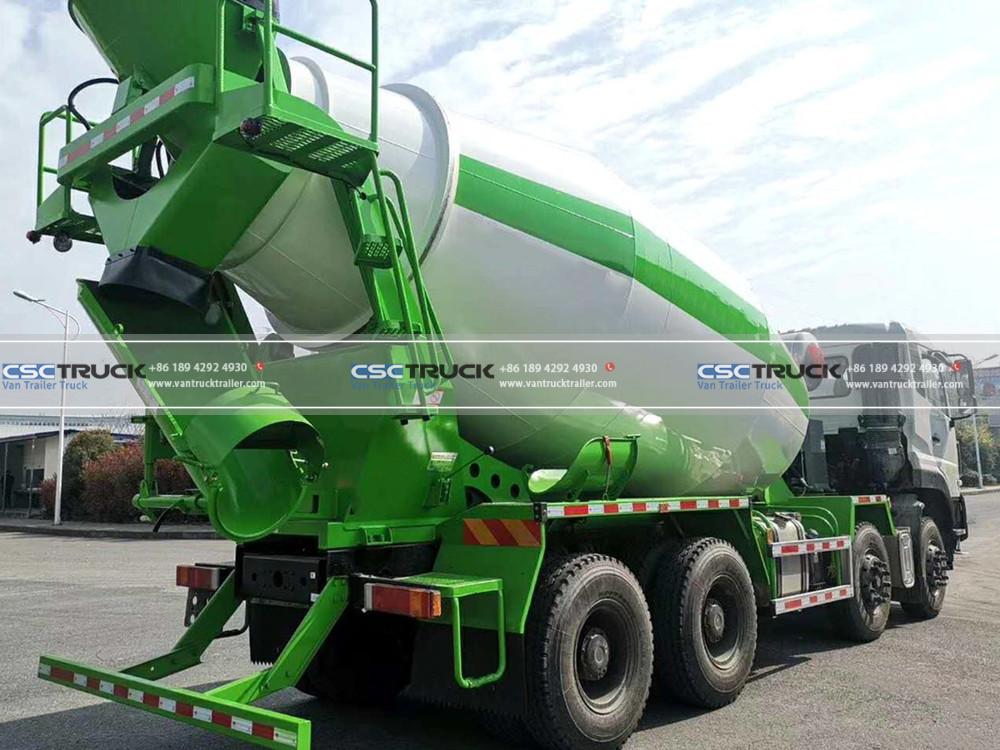
At its core, mixer truck capacity refers to the volume of concrete that the rotating drum can transport and keep agitated, typically measured in cubic meters (m³) or cubic yards. However, the practical capacity of a mixer truck is influenced by payload regulations, axle configuration, chassis strength, and local transportation laws. A truck that technically holds 12 cubic meters may not legally carry that amount in certain jurisdictions due to axle load limits, and therefore the real-world usable capacity may be lower.
Furthermore, capacity must align with the scale and rhythm of the projects you serve. Urban residential pours, mid-rise commercial developments, highway expansion projects, and rural infrastructure works all impose different logistical demands. An oversized mixer truck operating in tight city streets may become inefficient due to maneuverability challenges, just as a smaller unit may prove uneconomical on high-volume highway jobs that require continuous concrete flow.
Understanding capacity, therefore, is about balancing volume efficiency, operational flexibility, and regulatory compliance, rather than simply maximizing cubic output.
Standard Mixer Truck Capacities and Their Typical Applications
While manufacturers offer a range of drum sizes, most mixer trucks fall within several common capacity categories. Each capacity tier corresponds to particular operating environments and business models.
Small-Capacity Mixer Trucks (3–6 m³)
Smaller mixer trucks are often used in urban construction, renovation projects, residential neighborhoods, and locations with restricted access. Their shorter wheelbase and lighter gross vehicle weight allow them to navigate narrow streets, underground parking structures, and confined construction sites more easily than larger units.
For companies serving high-density city markets, these trucks can improve scheduling flexibility because they reduce the risk of traffic restrictions, road weight limitations, and jobsite congestion. Although the per-load volume is lower, the increased maneuverability often offsets this limitation through faster turnaround times.
Medium-Capacity Mixer Trucks (6–10 m³)
The 6–10 cubic meter range represents the most versatile category and is widely regarded as the industry standard in many regions. These trucks balance payload capacity with reasonable maneuverability and are suitable for mid-scale commercial construction, municipal projects, and infrastructure developments.
For many ready-mix operations, medium-capacity trucks offer the optimal ratio between operating cost and delivered volume. Fuel efficiency remains manageable, and the trucks can serve both suburban and semi-urban job sites without excessive logistical complications.
Large-Capacity Mixer Trucks (10–14+ m³)
Large-capacity mixer trucks are typically deployed on major infrastructure projects, including highway construction, large industrial facilities, airport runways, and major commercial developments. In these environments, continuous concrete flow is critical, and minimizing the number of trips significantly improves efficiency.
However, operating large-capacity trucks requires careful consideration of axle load limits, site access, and fleet coordination. Their size may restrict entry into older urban districts or regions with strict road weight regulations, and their higher acquisition cost demands a consistent workload to justify the investment.
Operational Factors That Determine the Right Capacity
Choosing the correct capacity is ultimately a strategic business decision. The following operational considerations should guide that decision-making process.
Project Volume and Pour Frequency
If your company regularly handles high-volume pours requiring sustained concrete delivery over extended periods, larger mixer trucks may reduce the number of trips needed, thereby lowering fuel costs per cubic meter and minimizing labor expenses. On the other hand, businesses focused on smaller, more frequent jobs may benefit from medium or small-capacity trucks that offer scheduling agility.
Consistency of demand is particularly important. A large-capacity mixer truck that operates below optimal utilization quickly becomes a financial burden due to its higher depreciation and maintenance costs.
Fleet Integration and Complementary Vehicles
Mixer trucks rarely operate in isolation. In most fleets, they coexist alongside vehicles such as the dump truck, which handles aggregates and construction debris, and the box truck, which may transport tools, equipment, or packaged materials. Capacity decisions should reflect how the mixer truck fits within this broader ecosystem.
For example, if your aggregate supply chain relies on high-volume dump truck deliveries to batching plants, aligning mixer truck capacity with plant output ensures a smooth operational flow. Similarly, in companies where box trucks handle site logistics and smaller material deliveries, coordinating vehicle sizes helps prevent bottlenecks and improves dispatch efficiency.
Fleet synergy often determines whether a particular mixer capacity truly enhances operational performance or merely adds complexity.
Distance to Jobsite
Transport distance significantly affects optimal capacity selection. For short-haul deliveries near the batching plant, smaller trucks may perform adequately because turnaround time remains minimal. However, when serving distant projects, larger capacity trucks reduce total trips, improve fuel efficiency per delivered cubic meter, and mitigate driver fatigue.
Distance also interacts with concrete setting time, traffic conditions, and climate, all of which must be factored into capacity planning.
Regulatory and Road Limitations
Local regulations often dictate maximum gross vehicle weight and axle loads. In certain countries or states, even if a drum is rated for 12 cubic meters, legal road limits may restrict actual payload. Ignoring these regulations can result in fines, increased wear on components, and reputational damage.
Careful analysis of legal limits is essential before committing to higher-capacity equipment.
Economic Considerations: Cost, Efficiency, and Return on Investment
Capacity decisions are ultimately financial decisions. The acquisition price of a mixer truck increases with drum size, chassis strength, axle count, and engine output. However, the largest truck is not automatically the most profitable.
Capital Expenditure and Depreciation
Larger trucks require greater initial investment and often higher financing costs. If utilization rates remain low, depreciation becomes a significant burden. Conversely, high-utilization fleets serving large projects may recover these costs quickly through increased delivery volume.
Business owners should calculate projected revenue per truck per month and compare it to total operating costs, including loan payments, insurance, maintenance, and driver wages.
Fuel Efficiency and Operating Costs
While larger trucks carry more concrete per trip, they also consume more fuel. The key metric is not fuel per trip but fuel per cubic meter delivered. In many cases, a fully utilized large-capacity truck proves more fuel-efficient per unit volume than multiple trips by smaller vehicles.
Maintenance expenses also scale with size. Larger drums, stronger chassis frames, and additional axles mean more components to service. Preventive maintenance planning must align with expected workload.
Utilization Rate and Demand Stability
A mixer truck’s profitability depends on how often it operates at or near full capacity. Seasonal fluctuations, regional construction cycles, and economic conditions all influence demand. Companies operating in volatile markets may prefer medium-capacity trucks to reduce financial exposure during slow periods.
Long-term contracts and infrastructure projects provide the stability necessary to justify higher-capacity investments.
Strategic Capacity Planning for Sustainable Growth
Selecting mixer truck capacity should be approached as part of a broader strategic growth plan rather than a one-time purchasing decision. Businesses anticipating expansion into infrastructure projects may gradually increase average fleet capacity to position themselves competitively for larger contracts.
At the same time, diversification across multiple capacity tiers can provide flexibility. Maintaining a mix of small, medium, and large mixer trucks allows dispatch managers to allocate vehicles according to specific job requirements, optimizing efficiency while maintaining service quality.
Technology also plays a growing role in capacity planning. Modern fleet management systems provide real-time data on load volume, fuel consumption, delivery times, and utilization rates. By analyzing this data, business owners can identify patterns that inform future purchasing decisions.
Environmental considerations are equally important. As emissions regulations become stricter, engine efficiency and weight distribution gain importance. Selecting the appropriate capacity reduces unnecessary trips and lowers overall carbon output per delivered cubic meter, enhancing both regulatory compliance and corporate reputation.
Ultimately, determining what capacity a mixer truck should have is not about following industry averages but about aligning equipment specifications with operational realities, financial objectives, and long-term strategic goals. For construction companies, ready-mix producers, and fleet managers seeking deeper insights into commercial vehicle configurations and transport solutions, resources available through vantrucktrailer.com can provide valuable guidance when evaluating the most suitable mixer truck capacity for sustained business success.