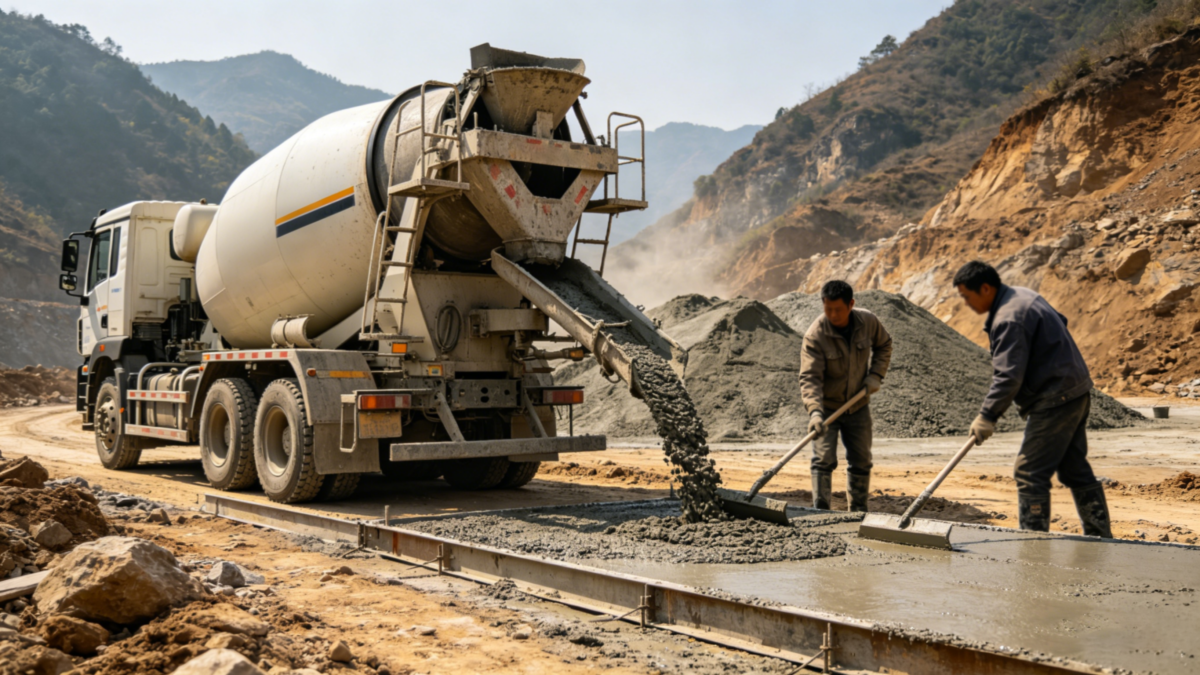
In modern construction projects, maintaining concrete quality during transportation is one of the biggest challenges—especially for remote construction sites located far from batching plants. Long transportation times, traffic delays, and harsh environmental conditions can all negatively affect concrete performance before it even reaches the jobsite.
One of the most common issues caused by delayed concrete delivery is the formation of cold joints. Fortunately, advances in on-demand concrete mixing technology are providing an effective solution for contractors and project managers worldwide.
What Is a Cold Joint in Concrete Construction?
A cold joint occurs when one layer of concrete hardens before the next layer is poured and properly bonded. Instead of forming a continuous solid structure, the concrete develops a weak connection line between pours.
Cold joints can lead to:
- Reduced structural strength
- Increased risk of cracking
- Water leakage problems
- Lower durability
- Poor overall construction quality
This issue is particularly common in projects where concrete delivery is delayed due to long distances or difficult transportation conditions.

Why Remote Delivery Creates Concrete Challenges
Traditional ready-mix concrete has a limited workable time after batching. Once mixed, the hydration process begins immediately, meaning the concrete gradually loses slump, workability, and bonding performance during transport.
Remote construction projects often face challenges such as:
- Long transportation distances
- Mountainous or difficult terrain
- Heavy traffic congestion
- High temperatures accelerate the setting time
- Limited access to nearby batching plants
In these situations, contractors may struggle to place fresh concrete before the initial layer begins setting, increasing the likelihood of cold joints.
The Rise of On-Demand Mixing Technology
To solve these delivery-related issues, the construction industry is increasingly turning to on-demand concrete mixing systems.
Unlike traditional mixer trucks that transport pre-mixed concrete, on-demand mixing vehicles carry raw materials separately—including cement, aggregates, water, and additives—and mix the concrete directly at the jobsite.
This approach ensures that fresh concrete is produced exactly when and where it is needed.
How On-Demand Mixing Prevents Cold Joints
Fresh Concrete at the Jobsite
Because the concrete is mixed on-site, the hydration process starts immediately before pouring. This allows contractors to work with freshly mixed concrete that maintains optimal consistency and bonding performance.
Continuous Concrete Supply
On-demand mixers can produce concrete continuously during pouring operations, helping crews maintain uninterrupted placement and avoid delays between layers.
Reduced Transportation Risk
Since raw materials are transported separately, the risk of concrete hardening during transit is eliminated. Even remote job sites can receive high-quality fresh concrete regardless of delivery distance.
Flexible Production Control
Operators can adjust the concrete mix design, slump, and production volume in real time based on actual project requirements and weather conditions.
Lower Material Waste
Traditional ready-mix deliveries often result in excess concrete waste due to estimation inaccuracies. On-demand systems produce only the amount required, improving cost efficiency and sustainability.

Ideal Applications for On-Demand Concrete Mixing
The advantages of on-demand mixing make it highly suitable for projects where delivery conditions are challenging or continuous pouring is critical.
Common applications include:
- Remote infrastructure projects
- Mountain road construction
- Bridge construction
- Tunnel engineering
- Rural housing developments
- Emergency repair projects
- Military and disaster-relief construction
In these environments, reliable access to fresh concrete can significantly improve construction quality and operational efficiency.
Improving Construction Quality and Efficiency
By eliminating transportation-related concrete aging, on-demand mixing technology helps contractors maintain consistent concrete performance throughout the entire pouring process.
This leads to:
- Stronger structural integrity
- Better bonding between pours
- Reduced repair costs
- Faster project completion
- Improved construction reliability
As construction standards continue to rise globally, contractors are increasingly adopting mobile mixing technologies to ensure better project outcomes.

Looking Ahead
With infrastructure projects expanding into more remote and demanding locations, the need for flexible and reliable concrete delivery solutions will continue to grow.
Advanced on-demand concrete mixing systems are helping the construction industry overcome traditional transportation limitations while improving quality, efficiency, and sustainability.
The future of concrete delivery is no longer just about transportation—it is about producing fresh concrete exactly where and when it is needed.
Looking for Reliable On-Demand Concrete Mixing Solutions?
Modern volumetric concrete mixer trucks provide an efficient way to eliminate cold joints, improve concrete quality, and support continuous pouring operations in remote construction environments.
CSCTRUCK offers advanced on-demand concrete mixing solutions, including customized volumetric mixer trucks designed for accurate material control, continuous fresh concrete production, and multi-scenario construction applications.
Fresh concrete. Better bonding. Stronger structures—wherever your project takes you.