
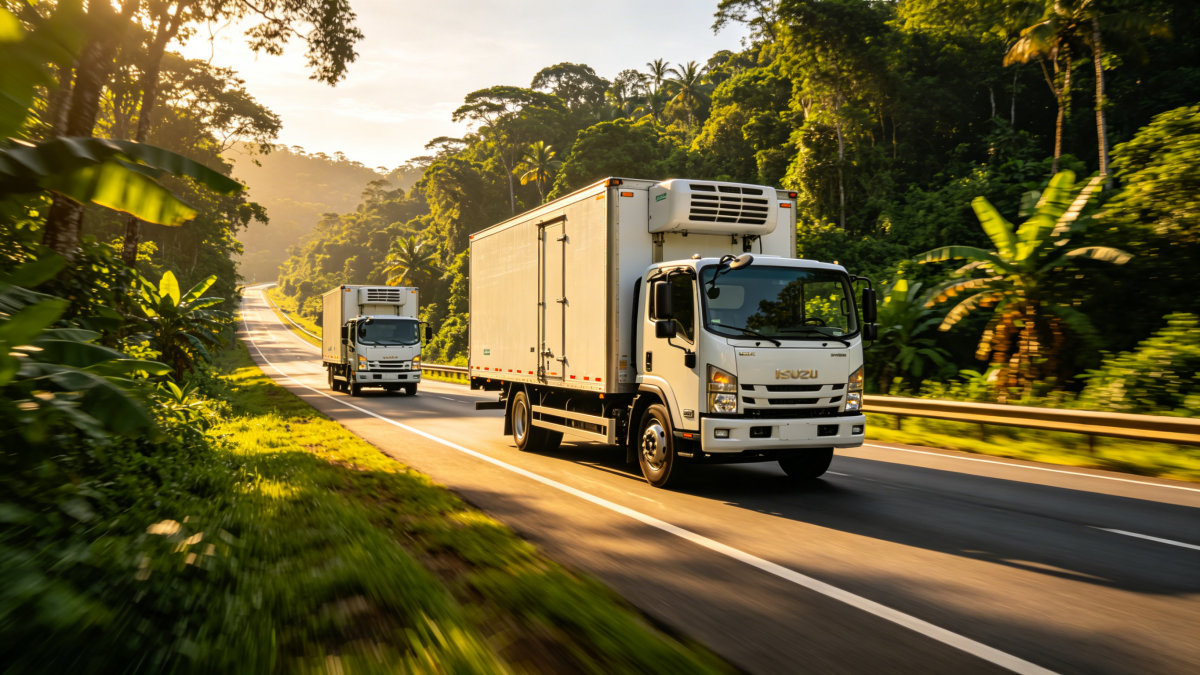
Brazil, the largest economy in South America, is rapidly becoming one of the most dynamic frontiers for refrigerated truck delivery and cold chain logistics. As demand for safe, high-quality food distribution and temperature-sensitive pharmaceutical logistics grows, the country’s refrigerated transport sector is evolving into a critical pillar of its supply chain infrastructure.
The Rise of Brazil’s Cold Chain Market
Brazil’s cold chain logistics industry is expanding quickly, driven by rising consumption of fresh and frozen foods, booming agribusiness exports, and stricter food safety regulations. Market studies estimate the sector is worth several billion dollars and continues to grow steadily, supported by both domestic demand and international trade for meat, seafood, dairy, and ready-to-eat products.
Refrigerated transport (reefer trucks) is one of the fastest-growing segments, reflecting the need for flexible, last-mile delivery of temperature-controlled goods across Brazil’s vast geography.
Why Refrigerated Trucks Matter in Brazil
Brazil’s size creates both opportunity and complexity. Goods often travel thousands of kilometers from production hubs to consumption centers, making cold chain reliability essential.
Refrigerated trucks are critical because they:
- Maintain strict temperature control
- Enable long-distance perishable goods transport
- Reduce food waste and spoilage
- Support export-grade quality compliance
Modern fleets increasingly use IoT sensors, GPS tracking, and real-time temperature monitoring to ensure product integrity throughout transit.
Key Drivers of Market Growth
1. Agricultural Export Powerhouse
Brazil is a global leader in beef, poultry, soy, fruits, and coffee exports, all requiring robust refrigerated logistics systems.
2. Urbanization and Retail Expansion
Growing cities are driving demand for frozen foods, dairy products, and convenience meals, increasing pressure on refrigerated delivery networks.
3. Pharmaceutical Cold Chain Demand
Temperature-sensitive products such as vaccines, insulin, and biologics rely heavily on precise cold chain systems.
4. E-commerce and Food Delivery Growth
The rise of online grocery platforms and quick commerce is accelerating demand for efficient last-mile refrigerated logistics.
Infrastructure and Technology Advancements
Brazil’s cold chain infrastructure is modernizing rapidly:
- Expansion of temperature-controlled warehouses
- Upgrades in refrigeration fleet technology
- Adoption of real-time logistics tracking systems
- Development of multi-temperature trucks
These improvements are strengthening the country’s ability to maintain end-to-end cold chain integrity.
Challenges in Refrigerated Truck Delivery
Despite strong growth, several challenges remain:
- High fuel and energy costs
- Uneven transport infrastructure
- Power reliability issues affecting storage systems
- Shortage of skilled logistics workforce
- Complex regulatory compliance requirements
These factors increase operational difficulty and raise barriers to entry.
Strategic Opportunities for Market Entry
1. Regional Cold Chain Hubs
Key logistics hubs in São Paulo, Rio de Janeiro, and Minas Gerais dominate distribution, while emerging regions offer untapped potential.
2. Pharmaceutical Cold Chain Expansion
Healthcare logistics is a high-growth segment due to increasing demand for biopharmaceutical distribution.
3. Sustainable Refrigeration Technology
Investments in energy-efficient refrigeration systems and low-emission transport fleets are becoming competitive advantages.
4. Value-Added Logistics Services
Services such as packaging, blast freezing, labeling, and inventory management are gaining importance in integrated cold chain solutions.
The Road Ahead
Brazil’s refrigerated truck delivery market is evolving from a fragmented system into a fully integrated, technology-driven cold chain ecosystem. As demand for safe and high-quality goods continues to rise, the importance of temperature-controlled logistics will only increase.
For global logistics companies, entering Brazil means more than transportation—it requires building resilient, scalable cold chain networks capable of supporting one of the world’s largest agricultural and pharmaceutical markets.
CSCTRUCK provides advanced van truck solutions and customized cold chain transportation vehicles, designed for reliable temperature control, high-capacity cargo transport, and intelligent fleet management integration. These vehicles are widely used in food distribution, pharmaceutical logistics, fresh produce transportation, and large-scale cold chain supply systems across global markets.