As industries move toward faster response times and more flexible operations, the mobile workshop truck has emerged as a powerful solution for on-site work. Whether in emergency repair, infrastructure maintenance, or remote construction, these vehicles transform almost any location into a fully functional workspace.
But what exactly makes a mobile workshop truck effective?
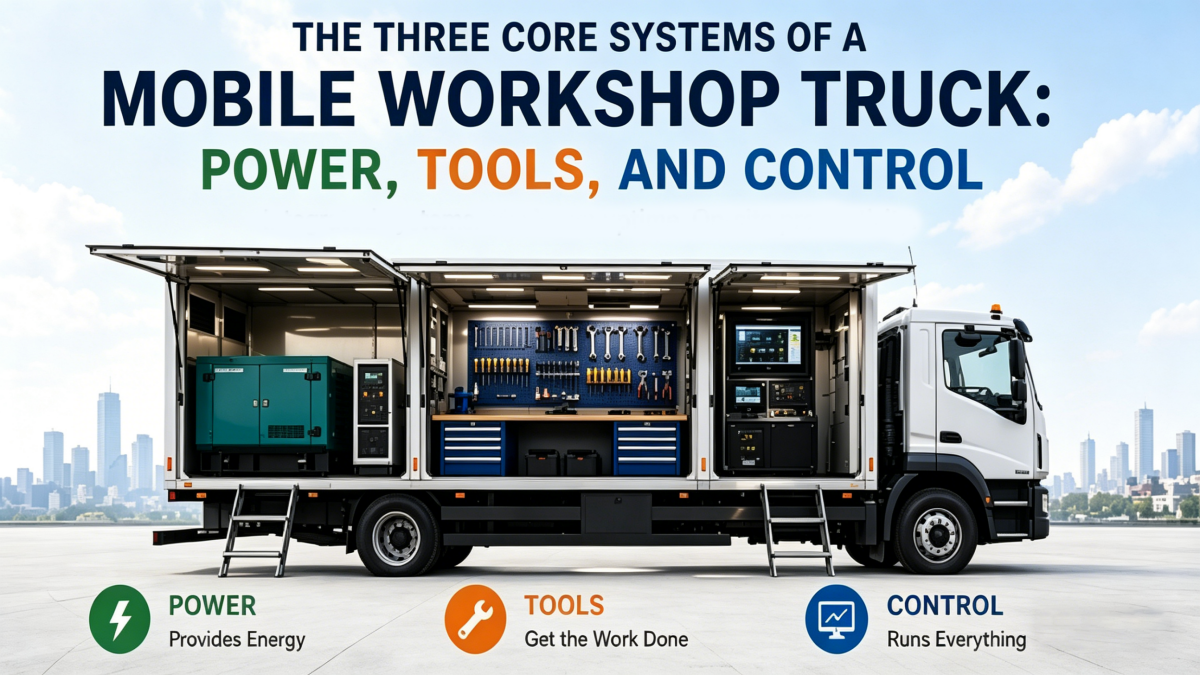
At its core, every well-designed mobile workshop truck relies on three integrated systems: power, tools, and control. Understanding how these systems work together is key to appreciating the true value of mobile workstations.
1. Power System: The Foundation of Mobility
No power, no work. The power system is the backbone of any mobile workshop truck.
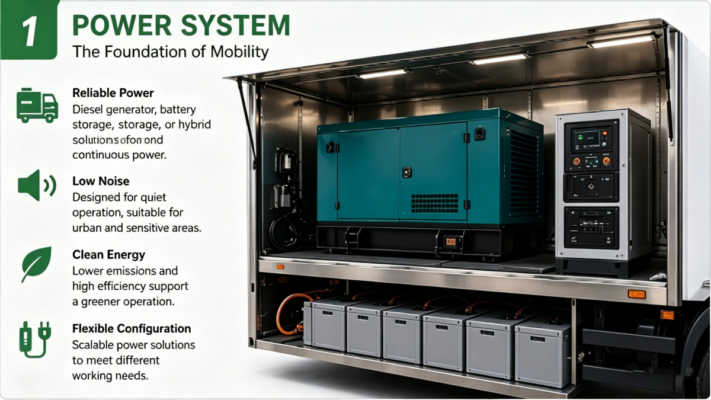
Unlike traditional workshops that rely on fixed grid electricity, mobile units must generate or store their own energy. This is typically achieved through a combination of:
- Diesel generators for high-load, long-duration operations
- Battery energy storage systems (ESS) for silent, clean power
- Hybrid setups that balance efficiency and reliability
A robust power system ensures that all onboard equipment—from lighting to heavy-duty machinery—can operate seamlessly. In critical situations such as emergency repairs or disaster response, reliability becomes even more important than capacity.
Modern trends are also pushing toward low-noise and zero-emission solutions, especially in urban environments where regulations are stricter.
2. Tool System: Turning Power into Productivity
If the power system is the foundation, the tool system is the purpose.
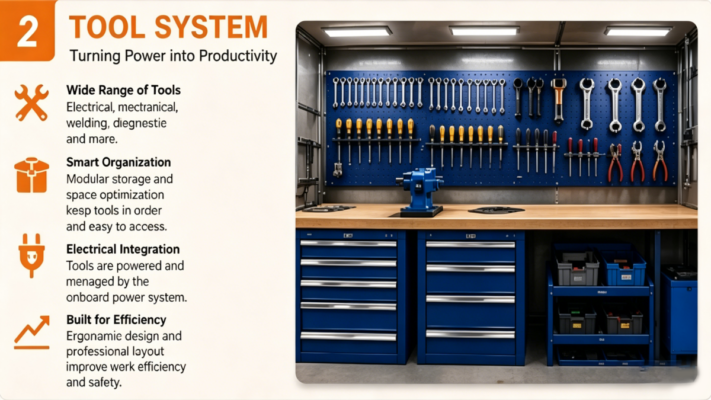
This system includes all the equipment that enables technicians to perform actual work on-site. Depending on the industry, this may include:
- Electrical tools (drills, cutters, testing devices)
- Mechanical repair equipment
- Welding and fabrication tools
- Specialized diagnostic instruments
What sets a mobile workshop apart from a simple service vehicle is not just the presence of tools, but how they are integrated. Smart layouts, modular storage, and ergonomic design allow technicians to work efficiently even in confined spaces.
In advanced setups, tools may also be:
- Electrically integrated with the onboard power system
- Digitally connected for data collection and reporting
This transforms the truck from a “tool carrier” into a fully functional mobile workspace.
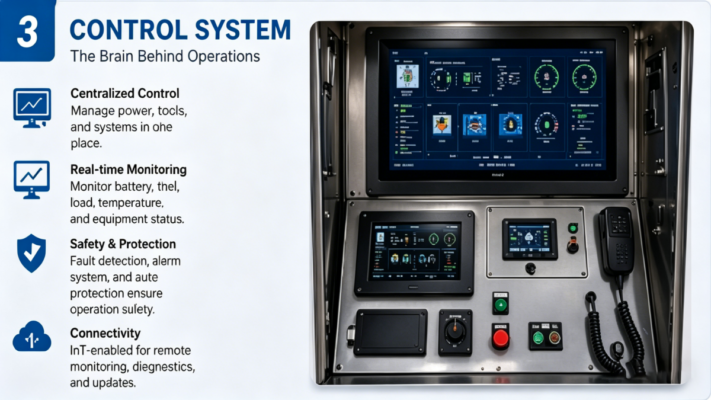
3. Control System: The Brain Behind Operations
The control system is often the most overlooked—but increasingly the most important—component.
It acts as the central nervous system of the mobile workshop truck, managing and coordinating all operations. Key functions include:
- Power distribution and load management
- System monitoring (battery levels, fuel consumption, equipment status)
- Safety controls and fault detection
- Remote diagnostics and communication
With the rise of smart technology, many mobile workshop trucks now feature:
- Digital control panels or touchscreens
- IoT connectivity for real-time monitoring
- Remote operation capabilities
This level of control not only improves efficiency but also reduces downtime and enhances safety—especially in complex or high-risk environments.
How the Three Systems Work Together
Individually, each system serves a clear purpose. But the real strength of a mobile workshop truck lies in integration:
- The power system supplies energy
- The tool system performs the work
- The control system ensures everything runs smoothly
When these three are well-designed and tightly integrated, the result is a self-sufficient, mobile operational unit capable of functioning in environments where traditional infrastructure is unavailable.
Final Thoughts
A mobile workshop truck is far more than just a vehicle with tools. It is a carefully engineered system designed to deliver mobility, independence, and efficiency.
As technology continues to evolve—especially in energy storage and smart controls—the role of mobile workstations will only expand. For industries that depend on speed, flexibility, and reliability, understanding these three core systems is not just useful—it’s essential.
In the end, the question is no longer whether mobile workshop trucks are valuable, but how far their capabilities can go.
CSCTRUCK provides a wide range of mobile workshop trucks and offers customized solutions tailored to different industries and operational needs.