Last-mile delivery is where logistics performance is truly tested. Whether you’re moving fast-moving consumer goods (FMCG), retail inventory, or e-commerce orders, the final leg from warehouse to store is often the most time-consuming and labor-intensive part of the supply chain.
For many logistics operators, traditional box trucks are no longer efficient enough. This is where the wing body truck—also known as a wing opening truck or side-opening cargo truck—is transforming last-mile delivery operations.
In this article, we explore how wing body trucks improve efficiency, reduce costs, and help businesses optimize warehouse-to-retail distribution.
The Last-Mile Delivery Challenge
From warehouse to retail outlets, logistics companies face several common problems:
- Slow loading and unloading due to rear-only access
- High labor costs for manual handling
- Limited access in urban delivery zones
- Tight delivery schedules and multiple stops per route
- Risk of cargo damage during repeated handling
Traditional box trucks rely on rear-door loading, which creates bottlenecks—especially when handling palletized goods or multiple delivery points.
The result: longer turnaround times and lower delivery efficiency.
What Is a Wing Body Truck?
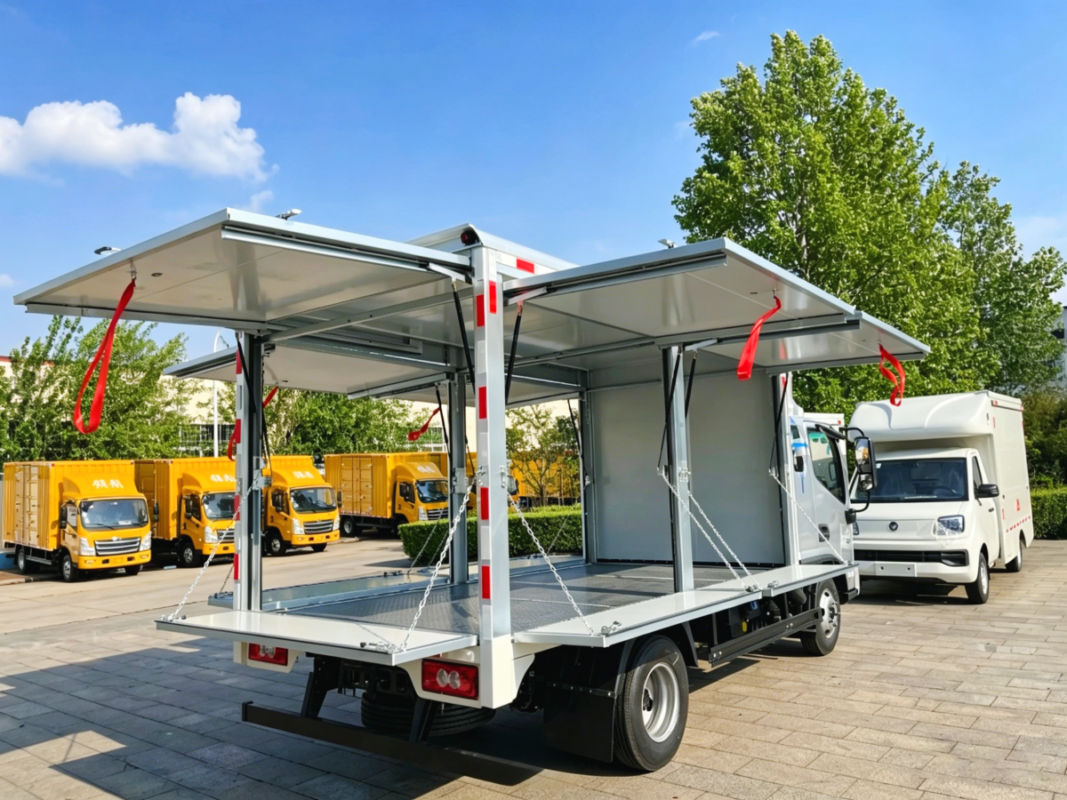
A wing body truck is a specialized cargo vehicle equipped with hydraulic side panels that open upward like wings, providing full side access to the cargo area.
Unlike standard trucks, it allows:
- Full side loading and unloading
- Forklift access from both sides
- Faster handling of palletized goods
- Better visibility and cargo organization
This design makes it ideal for high-frequency delivery operations where speed and efficiency matter.

How Wing Body Trucks Optimize Last-Mile Delivery
1. Faster Loading and Unloading
With both sides fully open, forklifts can access cargo directly without waiting for rear unloading.
- Load/unload multiple pallets simultaneously
- Reduce idle time at warehouses and retail stores
- Improve vehicle utilization
In many operations, loading time can be reduced by 30–50% compared to traditional trucks.
2. Higher Delivery Efficiency per Route
In last-mile delivery, vehicles often make multiple stops.
A wing opening truck allows drivers to:
- Access specific cargo sections quickly
- Avoid unloading unnecessary goods
- Reduce stop time at each location
This results in more deliveries per day and better route efficiency.
3. Lower Labor Costs
Because forklifts and pallet jacks can be used more efficiently:
- Fewer workers are needed for loading/unloading
- Manual handling is minimized
- Worker fatigue and injury risk are reduced
Over time, this leads to significant labor cost savings.
4. Better Cargo Protection
Repeated handling increases the risk of damage, especially for fragile goods like beverages, electronics, or packaged retail items.
With a side-opening cargo truck:
- Goods are accessed directly
- Less reshuffling is required
- Cargo stays more stable during operations
This improves delivery quality and reduces losses.
5. Ideal for Urban Retail Distribution
Urban environments present unique challenges:
- Limited loading space
- Congested streets
- Strict delivery windows
Wing body trucks are highly adaptable:
- Quick side access in tight spaces
- Faster unloading reduces parking time
- More suitable for city logistics
Wing Body Truck vs Box Truck: Which Is Better for Last-Mile?
| Feature | Wing Body Truck | Box Truck |
|---|---|---|
| Loading access | Full side + rear | Rear only |
| Loading speed | Fast | Slower |
| Labor requirement | Lower | Higher |
| Multi-stop efficiency | High | Moderate |
| Cargo handling | Minimal movement | Frequent handling |
For high-frequency distribution, wing body trucks clearly outperform traditional box trucks.

Best Applications for Wing Body Trucks
Wing body trucks are particularly effective in:
- FMCG distribution (beverages, packaged food)
- Retail supply chains (supermarkets, convenience stores)
- E-commerce logistics
- Pharmaceutical delivery
- Furniture and appliance transport
Any operation that relies on fast turnaround and frequent stops can benefit from this solution.
How to Choose the Right Wing Body Truck
If you’re considering upgrading your fleet, focus on:
- Cargo capacity and body size
- Hydraulic system reliability
- Material (aluminum vs steel panels)
- Ease of maintenance
- Compatibility with forklifts and pallets
Working with experienced manufacturers like CSCTRUCK can help you customize a solution based on your logistics needs, operating environment, and budget.
The Business Impact: Efficiency = Profit
Optimizing last-mile delivery isn’t just about speed—it directly affects your bottom line.
With wing body trucks, businesses can:
- Increase daily delivery volume
- Reduce operating costs
- Improve customer satisfaction
- Scale operations more efficiently
In competitive logistics markets, these advantages can make a significant difference.
Conclusion
The shift from warehouse to retail requires smarter, faster, and more efficient logistics solutions. The wing body truck is proving to be a powerful tool for optimizing last-mile delivery.
By enabling faster loading, reducing labor, and improving route efficiency, it helps logistics companies stay competitive in an increasingly demanding market.
Looking to Upgrade Your Delivery Fleet?
If you’re planning to improve your last-mile logistics performance, investing in a wing body truck could be the right move.
CSCTRUCK provides a wide range of wing body trucks and offers customized solutions tailored to different industries and operational needs.